


The wounds of this country’s recent history remain open. Not as a figure of speech, but as daily reality that insists on reminding us that the trauma of the Turkish invasion and ongoing occupation has not healed.
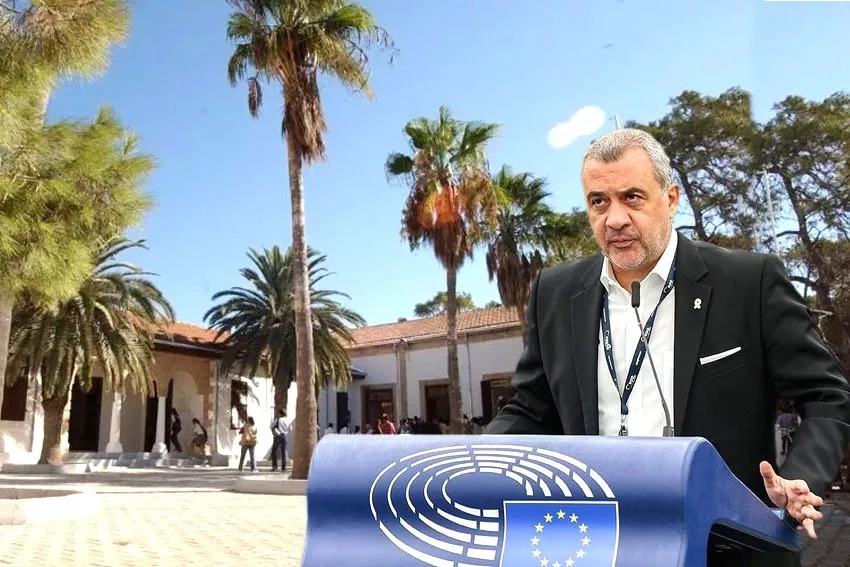
The findings of the European Parliament investigation—launched at the initiative of MEP Loucas Fourlas—confirm precisely this: that time has not acted as healer, but as witness to a protracted injustice.
Perhaps we’ve made our peace with too much. Perhaps the occupation’s flag on Pentadaktylos no longer shocks us. Perhaps the barbed wire has become part of the landscape. Somewhere along the way, an illegal reality morphed into everyday life, as we let time slip past without the strength or will to confront it.
The enclaved people of Karpasia are the most irrefutable proof that occupation still exists in Cyprus. People who live—or were born and raised—under peculiar and oppressive conditions. These conditions aren’t identical to those of the first years after the invasion, yet the testimonies remain harrowing: daily torment, physical and psychological violence, fear, insecurity. Some died alone and helpless. Others, under threat to themselves and their children, were forced to flee to survive.
Today, the facts may look different, but the occupation’s shadow continues to weigh on these people’s lives. They’ve learned, perhaps, to coexist with the monster. A monster that in some eyes appears tamed, without ever having ceased to be a monster.
The investigation’s findings starkly capture the unfree regime under which even the children live, those who claim the self-evident right to education. According to the latest recorded figures, 18 pupils attend primary school and 16 attend nursery.
As for Rizokarpaso Gymnasium and Lyceum, this academic year there are 15 students in total. Rizokarpaso Gymnasium, with a history stretching back to 1917, closed in the summer of 1974 and remained silent until 2005, when the bell rang again—not as a symbol of normality, but as an act of resistance.
The report is crystal clear: the trapped Greek Cypriots live under conditions of unfreedom, with serious restrictions on their personal, educational and religious liberties imposed by the occupation authorities. UNFICYP continues to play a mediating role, facilitating delivery of school textbooks and appointment of teachers. Yet again this year, however, the Turkish Cypriot side refused the use of seven Greek textbooks and rejected the appointment of seven teachers, causing severe problems for the operation of Greek Cypriot schools in Karpasia.
The investigation’s retrospective analysis references the Third Vienna Agreement, along with its systematic violation by the Turkish side, which had committed to guaranteeing the trapped a normal life, with access to education, healthcare and free exercise of their religious duties.
The most significant element of the report is that it paves the way for an on-site visit by the European Parliament’s Culture Committee (CULT) to Karpasia. To see, to document, to witness first-hand. This is the core aim of MEP Loucas Fourlas, who took the initiative to launch the investigation.
It’s the second time in roughly a year that a tragic aspect of modern Cypriot history has reached the European Parliament. It was preceded by the initiative for women who suffered rape and abuse, and the one where Greek Cypriot and Turkish Cypriot relatives of the missing spoke about their shared tragedy before MEPs.
Initiatives like these aren’t merely symbolic. They’re political acts of memory and responsibility. And for precisely that reason, they deserve publicity, continuity and support.

