


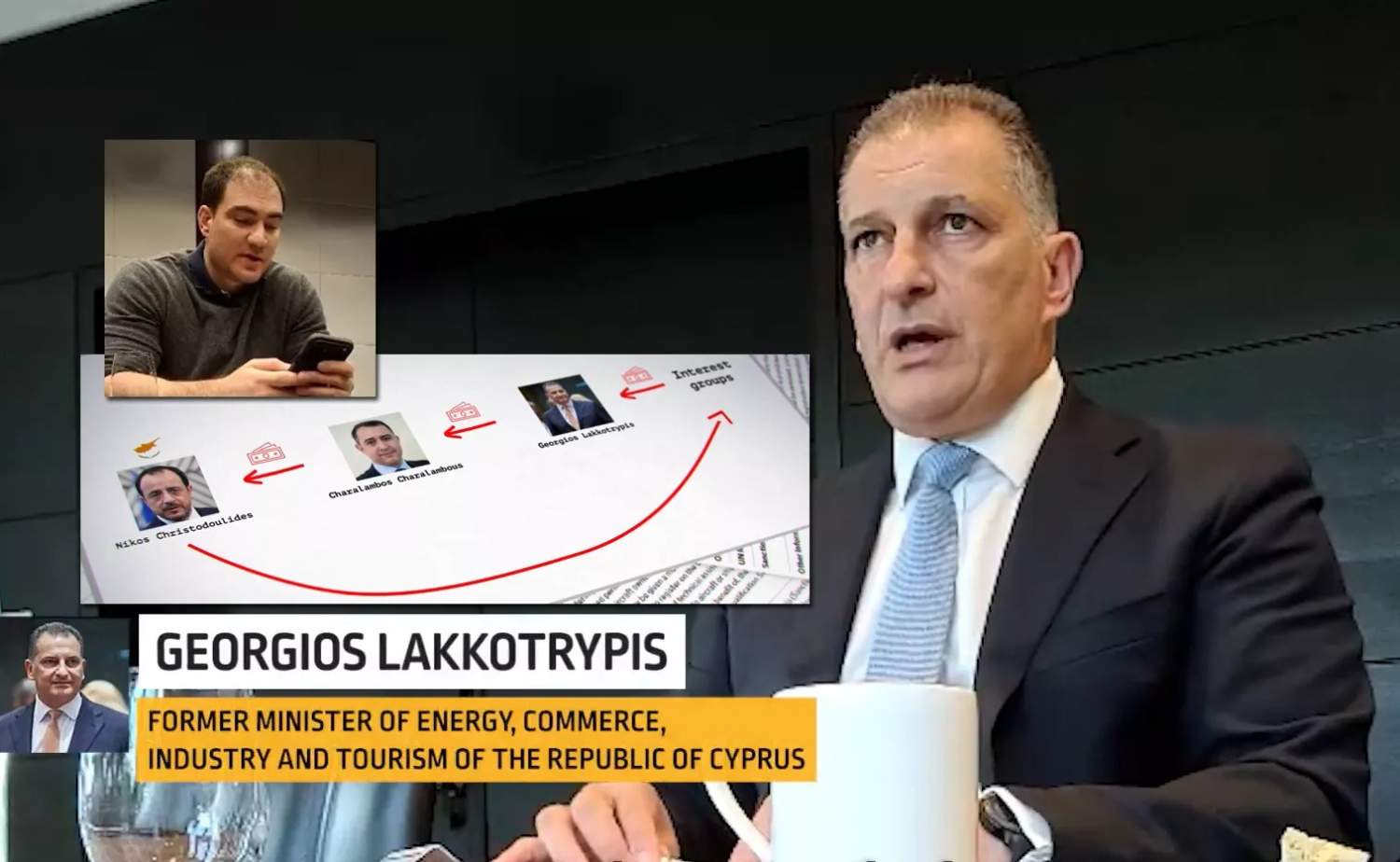
Philippa Karsera, buckling under the pressure unleashed by Videogate, has stepped down from her leadership of the Social Support Body. Charalambos Charalambous, buckling under the same pressure, has resigned as director of the President’s office. The Social Support Body itself, under the weight of Videogate, appears headed for abolition—as Nikos Christodoulides himself indicated yesterday.
But there’s still a hell of a lot more that needs to happen before we get anything close to full disclosure on the scandal that’s triggered a government crisis. Amidst all this upheaval, there’s one central figure the authorities need to focus on with laser precision: Giorgos Lakkotrypis.
This is the man who, as Energy Minister in the previous government, oversaw the Vasilikos projects. The ones that still aren’t finished. The ones for which the EU demanded—and we handed back—€67 million of its grant funding for that specific project.
If, until now, the authorities have scandalously failed to dig deep into the shambles that unfolded with that project (yet another national embarrassment), the notorious video leaves them no choice but to act.
Giorgos Lakkotrypis, who in the video advertises his relationship with Nikos Christodoulides, is the one who gives this scandal its gravest dimension. Because he appears as the man who—according to what can be heard in the video, even with its edits—was finding investors and taking them into the Presidential Palace. At one point, with references to financial compensation.
In other words, this is a textbook case of lobbying (transparency in public decision-making processes). So it’s worth looking at what exactly the relevant law provides.
Cyprus’s lobbying law, known as “The Transparency in Public Decision-Making Processes and Related Matters Law of 2022 (N. 20(I)/2022),” establishes a framework for transparency and ethical conduct in lobbying activities, requiring the registration and disclosure of lobbyists, whilst also defining exemptions from the definition of lobbying—such as chance encounters and contacts relating to foreign policy.
Key provisions of the law: Regulation and oversight – It establishes rules for professional lobbyists, seeking to ensure the integrity of public decisions.
Lobbyist Registry: Lobbyists must register in a public registry, disclosing whom they represent and what issues they’re promoting.
Transparency of contacts: Their contacts with officials and bodies must be transparent and recorded, typically through declaration of meetings.
Prohibitions and restrictions: Limits are set on gifts and benefits to officials.
The law also defines what is NOT considered lobbying (exemptions): Contacts within the framework of parliamentary debates. Public consultations. Contacts on foreign policy and defence matters. Chance social encounters. It’s abundantly clear that Lakkotrypis’s contacts fall under none of these exemptions.
It’s crucial to note that this law forms part of a broader effort to combat corruption and strengthen trust in public institutions by regulating an activity that can influence policymaking.
Why are we focusing specifically on Giorgos Lakkotrypis in relation to lobbying? Because the law stipulates that lobbyists must register in the Lobbyist Registry (overseen by the Independent Authority Against Corruption). They declare whom they represent, what their objectives are, and what their resources are. Their meetings are recorded so that contacts with officials are transparent.
Well, Giorgos Lakkotrypis does not appear to be registered (at least not as a natural person) in the Lobbyist Registry, which is posted on the Anti-Corruption Authority’s website and includes 256 natural and legal persons.
This is where the authorities’ investigation must begin. And it’s dead simple for the Anti-Corruption Authority to establish whether he’s registered or not. All it needs to do is check its own registry. From there, the police are duty-bound to scrutinise the Lakkotrypis case. Every detail of his contacts.
Some foreigners may have seized an opportunity by concocting the notorious video to damage Cyprus. But the behaviour of certain people handed them the ammunition. And those people must be punished.
Read more:

