


“If This Is a Man” was written in 1947 by Primo Levi, one of the few survivors of the Nazi concentration camp Auschwitz. It is considered one of the masterpieces of world literature and one of the most harrowing testimonies of our time.
Levi, during the year he lived in the camp, observed everything and would remember it all when he came to write it down later. The overcrowding in the barracks, the companions they discovered dead from hunger and cold and daily labour, the hangings, the trains, the crematoria.
Levi’s book concerns his own experience at Auschwitz but also his shock at the fact that he himself survived. It deals with human dignity and a so-called “dehumanisation” of those who lived through and especially those who survived Auschwitz.
For Levi, God had died at Auschwitz. According to his biographer, the great disillusionment for him was the development of the State of Israel.
While he offered his blood for the wounded Israelis of 1967, he condemned the invasion of Lebanon in 1982.
He had, after all, a romantic image according to which the State of Israel “would be founded by noble farmers who would drive their gentle oxen, singing revolutionary songs”.
But he was terribly surprised when he saw Israel become a modern country waging wars whose necessity he could not understand.
And had he not committed suicide on 11 April 1987, he would have confirmed his concerns: the two-thousand-year odyssey of the Jews, instead of leading to the promised land, ended ironically in a relentless political machine.
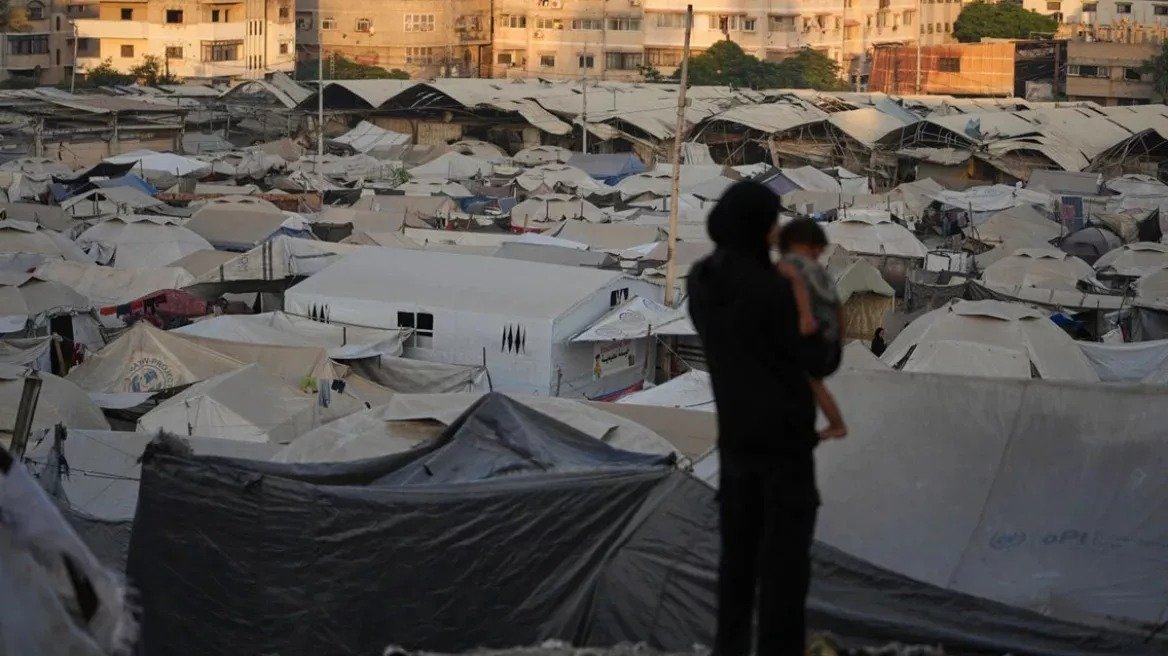
A machine that has levelled Gaza and is preparing to occupy it fully so that the tormented Palestinian people will never raise their heads again.
Let the genocide deniers forgive us, then, but we shall use an extract from “If This Is a Man”, which could describe the torment of the Palestinians: “Then for the first time we became aware that our language lacks words to express this offence, the demolition of a man. In a moment, with almost prophetic intuition, the reality was revealed to us: we had reached the bottom. It is not possible to sink lower than this; no human condition is more miserable than this, nor could it conceivably be so. Nothing belongs to us any more; they have taken away our clothes, our shoes, even our hair; if we speak, they will not listen to us, and if they listen, they will not understand. They will even take away our name: and if we want to keep it, we will have to find ourselves the strength to do so, to manage somehow so that behind the name something of us, of us as we were, still remains.”

