


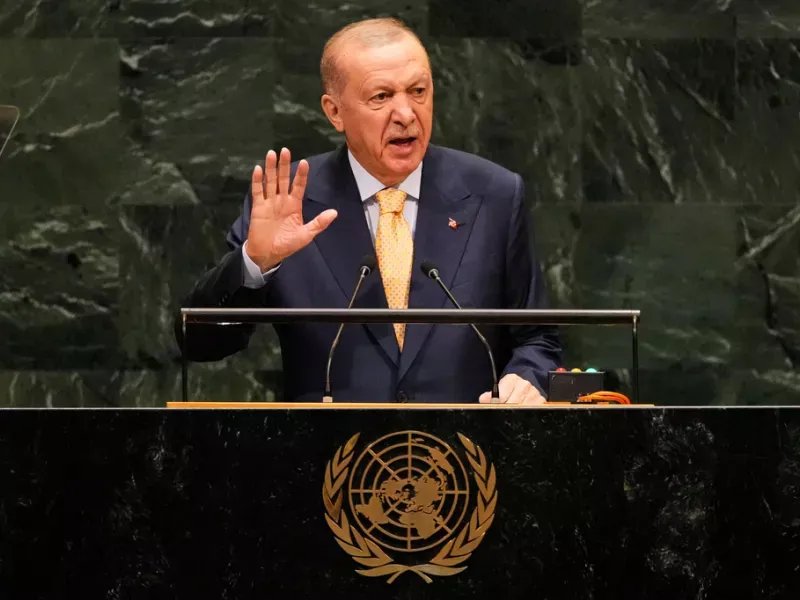
Recep Tayyip Erdogan, leader of the occupying power, stood at the podium of the UN General Assembly and once again urged the world to recognise the secessionist entity. In plain terms, he asked the international community to violate the UN’s own resolutions and decisions.
This “invitation” is really a provocation, and a well-worn one. He makes it at the UN, and Turkish officials make it in their talks with counterparts from other countries. The Turkish President wants the illegal made legal. And he doesn’t stop at asking. He is working to make it happen, systematically and methodically.
Ankara knows this is a very hard sell. But it isn’t giving up. After all, its dogged pursuit of extreme, maximalist and illegal demands has never met the international resistance it should have. That does not mean Nicosia accepts Turkey’s illegal and absurd demands. Far from it. Nicosia resists, and always has. It stands firm against Turkey’s scheming.
We will always oppose Turkish policies designed to damage the Republic of Cyprus and legitimise the facts on the ground created by the invasion. That much is clear. And the occupying side knows it.
Erdogan also turned to Greek-Turkish relations, and struck a softer tone than usual. “Our wish is for the existing issues in the Aegean and the Eastern Mediterranean to be resolved on the basis of good-neighbourly relations and in line with international law,” he said. “Our proposal for a Conference on the Eastern Mediterranean will help create common ground.” As we have said many times, that conference is bound up with his expansionist claims.
Nor could he resist a message for the European Union. He stuck to his usual script: reach out with a warning. “A Europe in which Turkey is excluded from the security architecture cannot be stronger and safer,” he said. “We are shaping our future with the European Union with exactly this strategic vision. We expect the same vision from the Union.”
But how can an occupying power ask, even demand, a say in Europe’s security? It takes real brass neck to occupy part of an EU member state and still think you can guarantee a security system, or even belong to one.

