


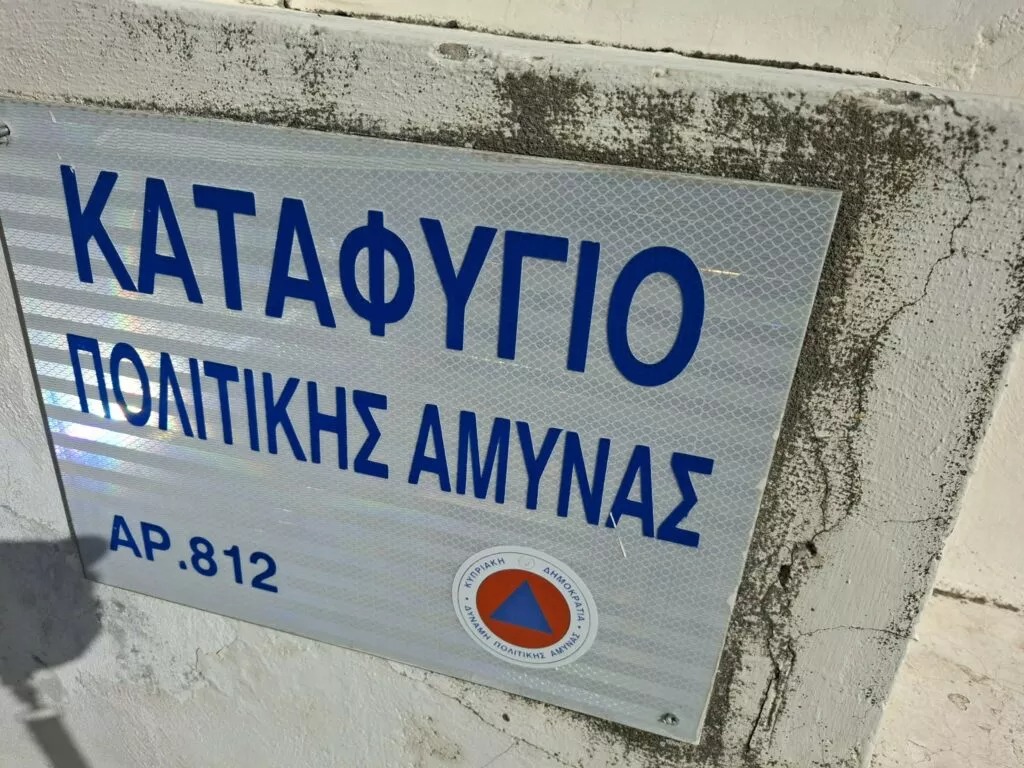
The war in Iran, and the crisis it dragged Cyprus into, has forced open a chapter nobody wanted to read: the Cypriot state’s near-total inability to manage a wartime scenario, and its chronic failure to build the infrastructure that would actually keep its citizens safe. These are not optional extras. They are the basic obligations of any functioning state.
The regional conflict — which brought Cyprus face to face with the real possibility of activating civil defence plans — exposed something we have long preferred not to examine too closely: our nakedness as a state. Not just in terms of readiness to respond, but in terms of the physical and operational infrastructure that response would require.
It shocked us, infuriated us, and alarmed us — in some cases, perhaps, to the point of hyperbole. But let’s be honest with ourselves. This is a country living under the permanent shadow of military threat. A country that has endured bombardment. A country that has been stuck in a fragile, open-ended armed truce for 52 years. And yet it took an explosive-laden drone crashing into the British Bases for us to suddenly “discover” that our civil protection plans are essentially fiction.
Yes, the state of most designated shelters is a disgrace. But who has seriously raised this in all these years? When did we ever genuinely ask whether these plans could actually work in practice? When were meaningful readiness drills ever conducted? When did civil society ever demand to be informed, let alone prepared?
All of this, in a country where almost every household keeps one or more military-issue rifles — handed out precisely because the threat of armed conflict is considered real and ongoing.
The blame falls, first and foremost, on the state and on every government that has passed through it. But a portion of that blame comes back to us — to each and every one of us. Public safety in times of military or other crisis should be a supreme political priority. It is the mark of a properly functioning state to build and maintain effective civil protection plans. And it is equally the duty of society to demand them.
The reality, however, is that no government has ever treated this as a genuine priority. Building real infrastructure, designing a functioning civil protection model — these things require long-term planning and political will. They yield no quick electoral dividend. They go unnoticed in peacetime, and nobody gives you credit for them when there is no immediate threat staring you in the face. That, unfortunately, is our political culture. That is how we operate.
Of course — and nobody would wish otherwise — may shelters and civil defence plans remain forever unnecessary. Nobody wants war. Nobody imagines themselves clutching their children and sprinting for cover in a life-or-death scramble.
We don’t want it. But it can happen.
These are not distant, abstract scenarios for Cyprus. Half a century ago, they were simply life. Not nightmares — daily reality.
And if — if ever— we ever find ourselves in that chaos again, we will go looking for someone to blame. We will curse those who failed to prepare the state and society, while simultaneously lamenting our fate. Except that in such a situation, we may not even have the “luxury” of venting our outrage on social media and demonstrating our magnificent hindsight.
Let this crisis, then, be the catalyst. Let it be the moment when the state finally begins building genuine infrastructure and workable civil protection plans — as, for instance, the proposal tabled at the Council of Ministers yesterday suggests.
Let us hope that this time something actually gets done. And above all, let us hope we develop the habit of checking and verifying our readiness on an ongoing basis — rather than remembering it only when the bombs and missiles start falling.
Because by then, it may be far too late.

