


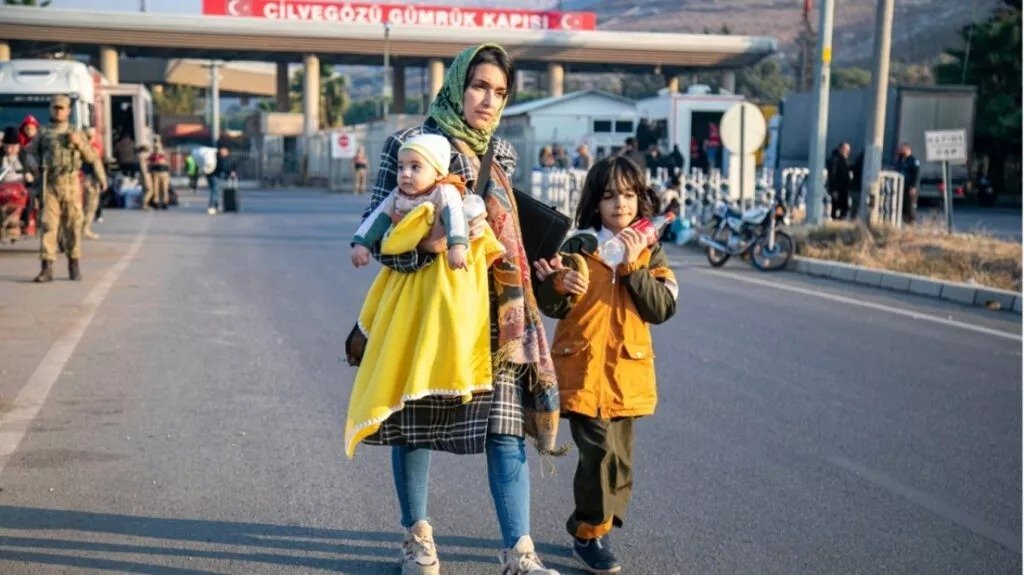
About 4-5 years ago, when it appeared that the Assad regime had prevailed over extremist rebels and ISIS, and hostilities had de-escalated, many people in Cyprus and elsewhere became adamant in demanding the immediate—and if necessary, forced—removal of Syrian refugees and asylum seekers or those seeking international protection.
“The war is over,” they claimed, questioning why Syrians should remain in Cyprus, why they continued to seek asylum, and why government services were still processing these applications.
Now that the Assad regime has collapsed within days under rebel siege, and hundreds of thousands of Syrians are either moving towards repatriation or preparing for it, these same people who wanted to expel them then because “there was no reason for them to stay in Cyprus, away from their homeland” are again demanding—with the same quality of political analysis—that the return of all these refugees to Syria be expedited.
They show no inclination to acknowledge their error when they bellowed that war and violence in Syria had ended years ago and that the Government should have initiated procedures for everyone to leave hastily and return to their country. Nor do they acknowledge their mistake in insisting that “Syrians as a whole are economic migrants rather than refugees and persecuted people.”
There’s no willingness to revise their views about these people’s motives, now that thousands are voluntarily flowing back to their country (thus proving they had valid reasons not to do so when Assad survived) and many more will follow if hopes for the country’s return to normality materialise.
It’s now confirmed, albeit belatedly, that thousands—indeed millions—don’t uproot themselves and risk their lives and their children’s lives unless directly threatened.
The same furore about the supposed elimination of the need for Syrian refugees to receive protection and asylum occurred in other EU countries, where hostility towards refugees and economic migrants is also cultivated and “flourishes.” Even the European Commission was—and perhaps still is—looking for ways to label Syria as a peaceful and safe country to shed its obligation to grant protected status to its citizens.
Those who failed to understand then, after Assad’s temporary victory as it turned out, that neither peace, democracy, nor security had returned to Syria, likely still don’t understand it today. Listening to ELAM’s press spokesman on CyBC yesterday, this becomes apparent. They’re still misreading developments and using them as a pretext to push forward their agenda driven by their aversion to refugees and migrants.
They should monitor the situation more carefully, as the European Commission and member state governments claim to do, and hope there isn’t another reversal that will vindicate those who fear the civil war in the neighbouring country might have several more episodes yet.
But what can one say about ELAM or others of the same political and humanitarian perspective in Cyprus, when European states are rushing one after another to announce—to please their anti-immigration audience—that they’re suspending the processing of thousands of pending asylum applications, as if everything had become hunky-dory because a conglomerate of armed extremists with a history of horrific mass crimes has prevailed?
And while they’re suspending asylum application reviews, creating a sense of urgency to expel Syrians, these same governments hypocritically recommend calm because the situation in Syria “is extremely unclear” and developments uncertain.
Read more:

