


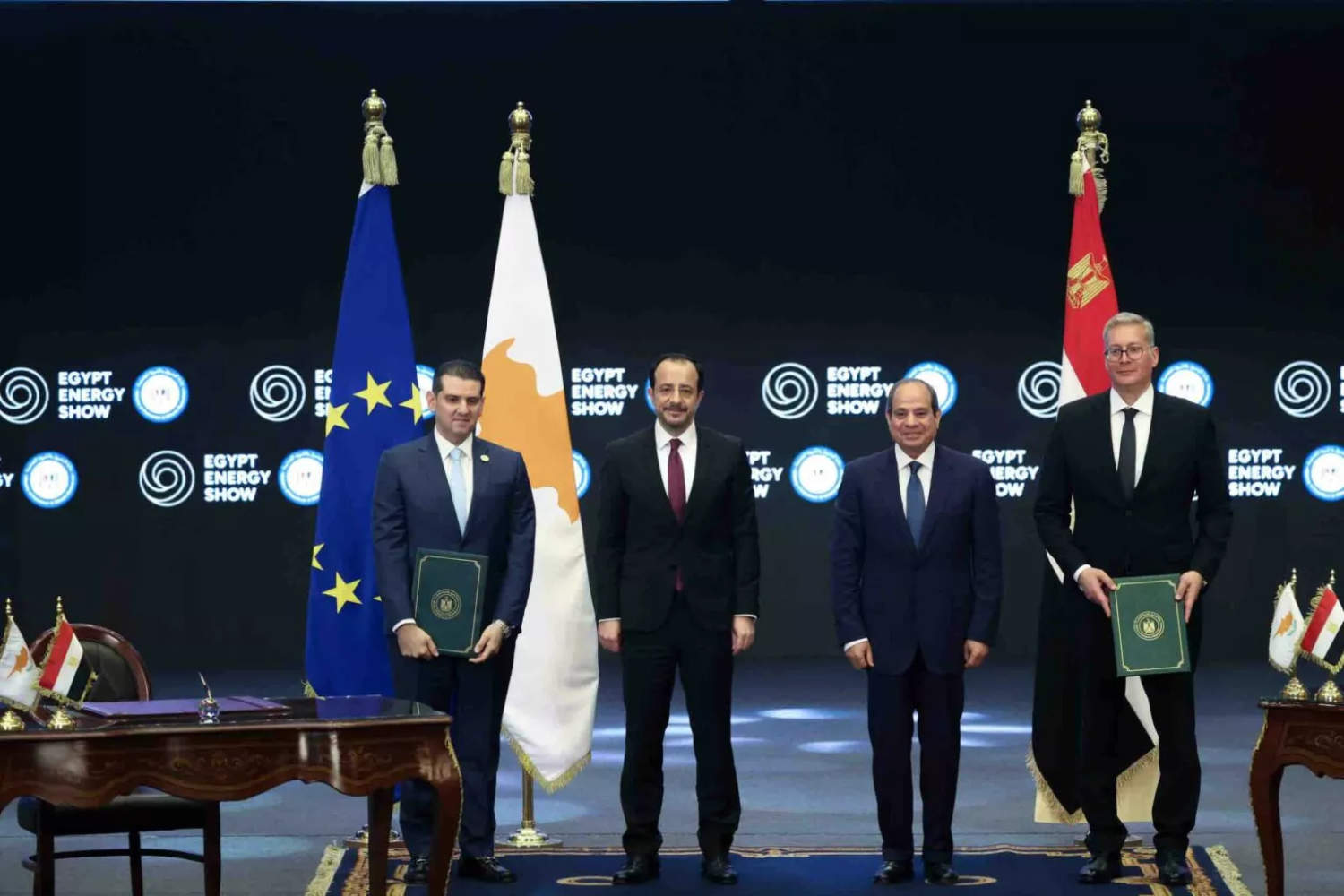
Cyprus and Egypt have signed a significant agreement for the development of hydrocarbon deposits within Cyprus’s Exclusive Economic Zone, including the Kronos and Aphrodite fields.
The agreement was signed by the energy ministers of both countries in the presence of President Nikos Christodoulides and Egyptian President Abdel Fattah el-Sisi, on the sidelines of the EGYPES 2026 conference in Cairo.
This is a very significant development, occurring at a critical juncture for the region, but also for energy issues affecting the entire planet. Measures to address energy challenges through long-term planning are imperative and necessary. Countries must have long-term plans and implement them.
Under the terms of the agreement, a joint committee will be established to negotiate the sale of natural gas to Egypt or its state-owned companies, with the aim of making the best possible use of Cyprus’s hydrocarbon reserves — including, among other things, meeting Egypt’s own energy needs.
The broader ambition, as stated, is to deepen cooperation between the two countries across the hydrocarbons sector, with further agreements to follow for the exploitation of Cyprus’s reserves.
The next steps must come quickly. The urgency is real. Results won’t materialise overnight — that much is understood — but the machinery must start moving now. President Christodoulides has said he expects results by 2027, or 2028 at the latest.
Egypt and Cyprus have long been bound by strong ties. They have marched in step, cooperated consistently, and are both recognised as pillars of stability in an unstable neighbourhood. That partnership can serve the wider region too — once the needs of the two countries themselves are met, others could benefit. That conversation, however, is for another day.
One thing must be said plainly. The first discovery within Cyprus’s Exclusive Economic Zone was made in 2011. It is now 2026, and for fifteen years, not a single meaningful step forward was taken. Therefore, yesterday’s agreement matters enormously.

