


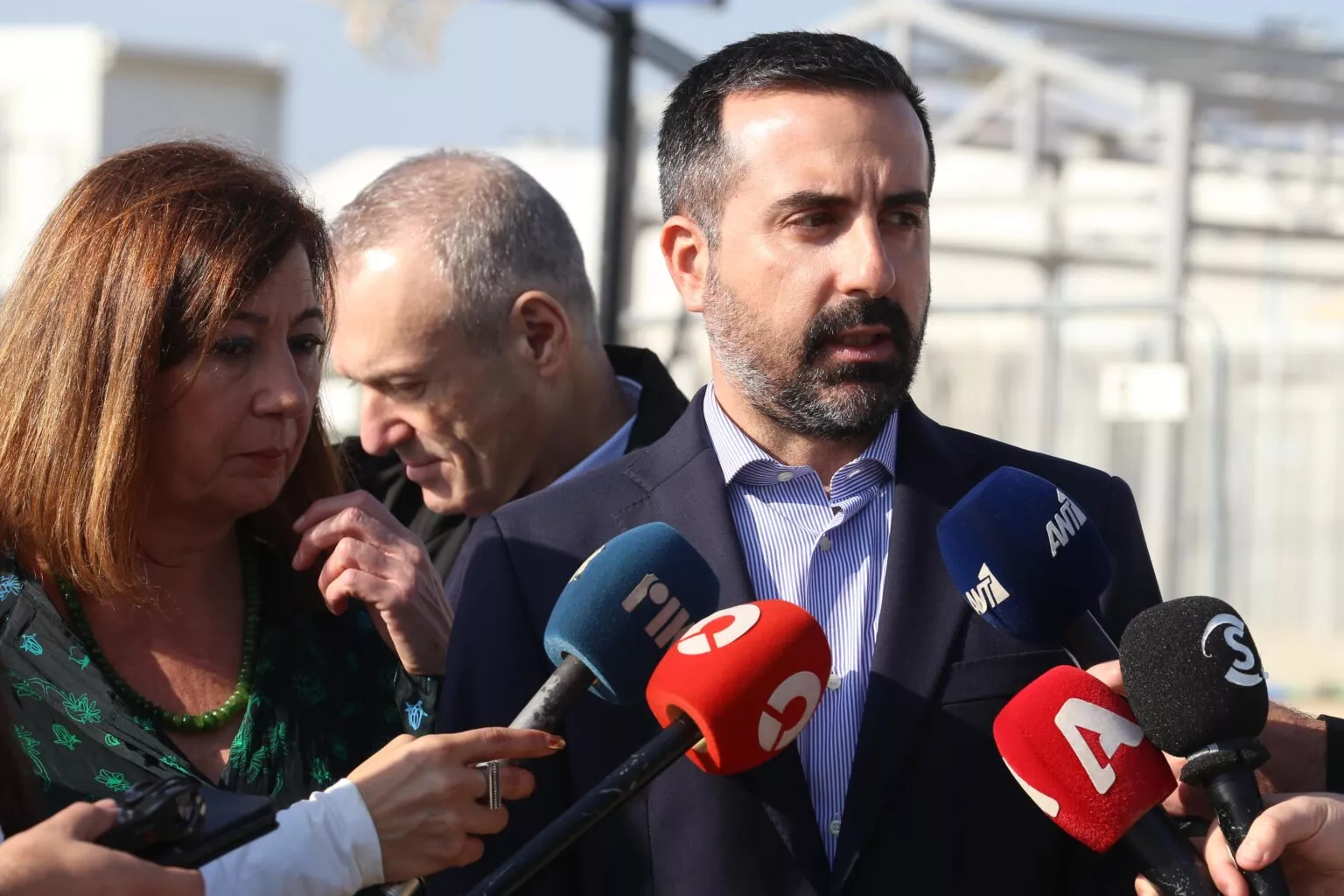
Giving credit is not our strong point in Cyprus, more so in political terms, when the ruling coalition sings praises for all or most of their ministers and the opposition puts any positives to one side, focusing to what can be critisised freely. This is the case with divisive issues of major socio-economic concern for the country, such as immigration, if not top of the pile at least making the three highest considerations for Cypriot citizens at the present time.
This is a case where admittedly, an official has pulled off a successful outcome, with a number of practical results to show for it, particularly in the tough proposition of immigration. Nicholas Ioannides, was the first deputy minister in this new post, facing numerous challenges in managing a problem that even came to threaten the very core, essence and make up of the state up to a couple of years ago.
In an interview with senior Phileleftheros reporter Michalis Hadjivasilis, it is clearly established, based on today’s realities, that Ioannides did not shy away from responsibility and faced undocumented immigration head on, removing the ‘failed deterrent’ fence from the buffer zone, dealing with the issue of dozens of immigrants being trapped in the buffer zone and complimented by the EU for the number of returns Cyprus has achieved.
Ioannidis considers the greatest challenge of his post to balance international obligations to immigrants and refugees with maintaining security and social cohesion. ‘We will never allow threats against vital Republic interests and structures to materialise, taking action within the legal framework’, he noted, the goal being to keep numbers at low levels.
The capacity of the country to host immigrants cannot exceed that of its structures, he added, confidently stating that Cyprus is no longer an attractive destination.
The deputy minister of immigration says that the decisive turn in managing immigrant flows to the point that Cyprus is now a European model for other frontline countries, is down to the government’s decisive action and new strategy, focusing on reducing arrivals, speeding up the process of evaluating asylum applications, improving infrastructure and increasing returns.
‘In this first phase, we reduced massive, mainly African flows, initially arriving in the occupied territories through ‘student’ visas and then pushed onto the human trafficking networks who got them over the Green Line to government controlled Republic of Cyprus territory’, Ioannides stressed.
He further added that through diplomatic means and EU pressure on Turkey, there’s now more control and a significant reduction of people arriving in Turkey with the goal of crossing through to the occupied territories and then Republic controlled territory. In 2024, he says that repatriations exceeded undocumented arrivals, evidence of policy effectiveness.
Ioannides met with the FRONTEX Executive Director on March 12th, during which meeting, he praised Cyprus for its repatriations work, underlining that the country is now a model. In addition, asylum seekers applications are now processed inside a few weeks, allowing the country, as he said, to provide international protection to those who genuinely need it and reject those who don’t satisfy the criteria.

