


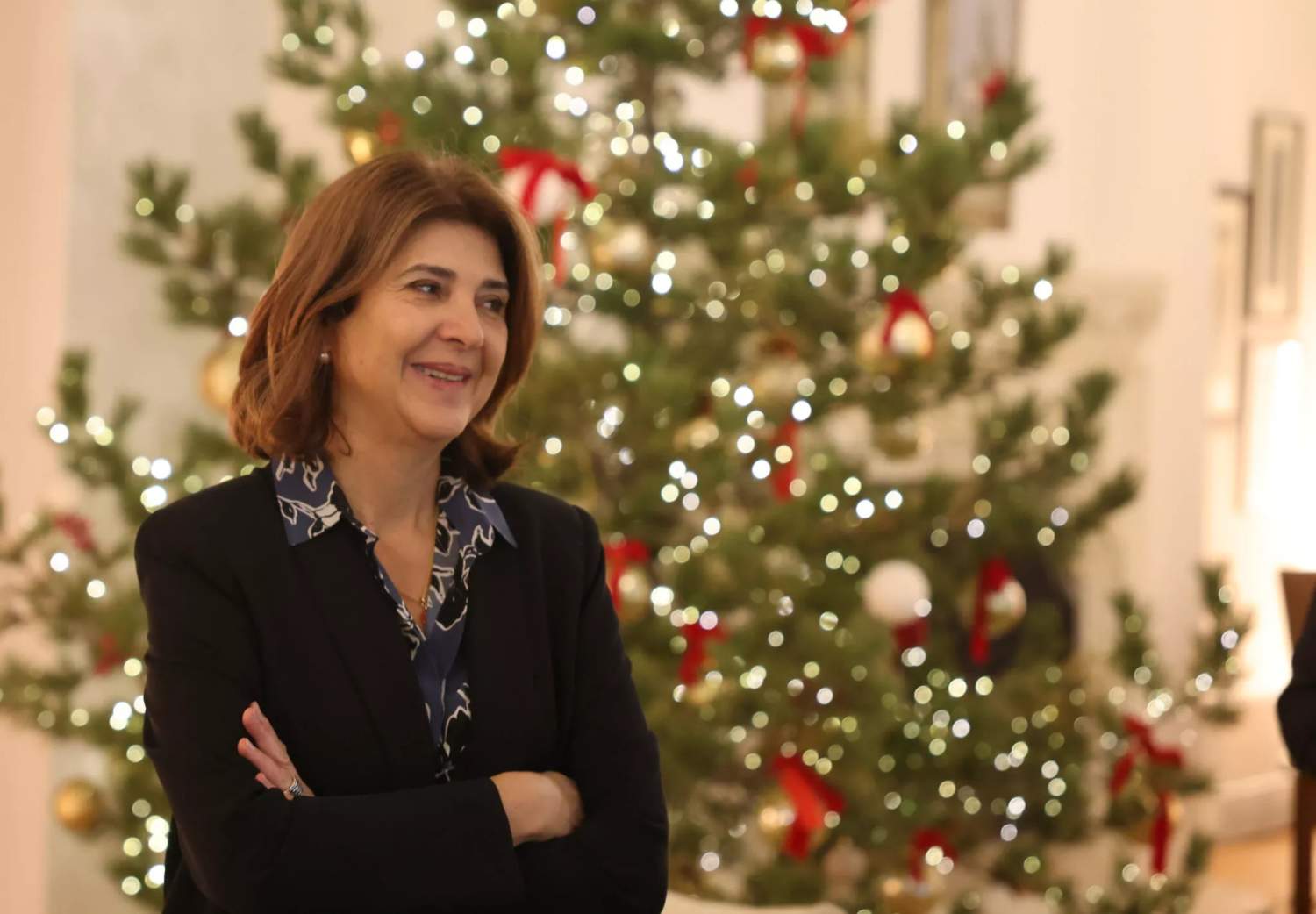
The commitment by the two leaders that their goal is to solve the Cyprus problem with political equality, as described in UN Security Council resolutions, “is not a small achievement,” María Ángela Holguín, the UN Secretary-General’s personal envoy, tells Phileleftheros in an exclusive interview.
She stresses that discussions on the substance of the Cyprus problem and confidence-building measures are interconnected and mutually reinforcing.
Regarding a new informal 5+1 conference, she says, “It would be premature at this stage to propose a timeline,” and notes that such a meeting “must be well prepared and have realistic chances to advance the process”.
Is this a good start? How optimistic are you about continuing this effort?
I believe so. The discussion between Mr Christodoulides and Mr Erhürman was in-depth, sincere and very direct. For me, this is a very good start. For the first time in over five years, a discussion took place on basic political issues during the two leaders’ meeting on 11 December.
In the final press statement, both leaders agreed that their goal is to solve the Cyprus problem with political equality, as described in UN Security Council resolutions. Such a commitment had not been expressed by the leaders since 2020. This is not a small achievement.
After spending three hours with the leaders, what do you want to see from them in the future?
This dialogue is taking place between two new leaders who have a fresh and creative vision for the island. As in many other conflict resolution processes, this is a substantial factor. Mr Christodoulides has full knowledge of all the details being examined. This greatly helps the effectiveness of the dialogue process.
During the meeting, both leaders were able to quickly identify the issues that need to be addressed before substantive negotiations begin. The duration of the meeting reflected the detailed nature of the discussions. I was pleased to see both leaders engaging in such detailed discussions.
Going forward, the role of the leaders’ representatives will be crucial for effectively preparing future meetings that will take place at leader level. I hope more systematic and results-oriented efforts will be made at negotiator level, so that leaders can focus more on substance during their future meetings.
What is needed most now is maintaining political will, consistency and clear willingness for substantive engagement. Both leaders have significant responsibility towards their communities, and it will be necessary for them to demonstrate determination, flexibility and leadership spirit in the coming period.
I hope to see them continue the dialogue with a spirit of mutual respect and genuine willingness to find common ground. The UN can facilitate, but ultimately it is the leaders who must guide and agree.
One side talks more about substantive negotiations and the other about confidence-building measures. Can these proceed in parallel?
This is an important question. In my view, discussions on content and confidence-building measures are interconnected and mutually reinforcing.
Agreement and implementation of confidence-building measures are necessary to create a favourable environment that will allow the two leaders to address the basic substantive issues.
At the same time, negotiations on confidence-building measures cannot continue indefinitely without the substance being discussed by the leaders.
If handled properly, the two can reinforce each other. What truly matters is the common understanding that each step taken must contribute to building confidence and keeping open the road towards a comprehensive solution.
What are the prospects for a new 5+1 meeting, and when could it take place?
As I said earlier, the 11 December meeting was a significant step forward. Although encouraging, the dialogue process between the two leaders is still in its early stages. They agreed on certain confidence-building measures, and I hope they will be able to agree on more in the coming weeks and months.
More needs to be done to strengthen the initial momentum and create a genuine climate of confidence that will allow the Secretary-General to convene an informal 5+1 meeting. Several confidence-building measures are currently under discussion. I hope both sides will be able to make progress in the coming period.
The dialogue between the two leaders must be well prepared, well structured and will continue to require political will to move forward. Many on the island are hoping once again that the two leaders will manage to make history.
After so many failed attempts, this time we must be sure the process can truly succeed. For Cypriots and for the UN, this is of essential importance. Cyprus and the region cannot afford another failed round of negotiations.
A 5+1 meeting is certainly one of the possible next steps, but it would be premature at this stage to propose a timeline. What is important is that such a meeting must be well prepared and have realistic chances to advance the process. This is the primary goal of my cooperation with the leaders and the guarantor powers.
You regularly meet with civil society stakeholders during your visits in Cyprus. What do you take away from these meetings, and what, in your view, is civil society’s role?
Civil society is an essential partner in any peace process. In my meetings, I hear a strong desire for stability, security and a future in which the next generation will be able to live with far more opportunities.
Their views remind us that this process is not just about political leaders but primarily about people and how negotiations can lead to tangible improvements in their daily lives.
All parts of civil society can build bridges, promote understanding and create ideas that complement the official course of negotiations. Their participation brings energy and perspectives that are vital for maintaining momentum. I will continue to listen to them carefully.
Creativity, determination and willingness to truly understand the needs and expectations of people on both sides. The important work of the recently established Technical Committee on Youth is an excellent source of inspiration for everyone on this issue.
The UN Secretary-General wants to advance the Cyprus issue. Do you believe he will have greater success this time?
As you know, the UN Secretary-General remains deeply committed to supporting the sides in finding a mutually acceptable solution. He has devoted much time and political capital to help advance the Cyprus issue since the start of his term.
What we can do – and what the Secretary-General asked me to do – is to explore every possibility, encourage constructive cooperation and help create the conditions that will allow the resumption of talks with purpose. There is always hope when the sides are willing to cooperate.
Whilst the Secretary-General and I will continue to make every possible effort, it will depend entirely on the leaders and all Cypriots whether they will proceed on the road towards lasting peace and prosperity.
The UN’s role is to accompany the parties, not to impose solutions, and the success of the process ultimately depends on the determination of both the leaders and all Cypriots.

