


By Antonis Pastellopoulos, Postdoctoral Researcher, University of Cyprus
Following the 1974 Turkish invasion of Cyprus, Limassol became a key hub for the island’s recovering tourism sector. Benefiting from pre-existing urban infrastructure, the city became an early focal point for tourism-linked development; in an economy where the tourist industry contributed 15% of GDP by 1985. The rise of tourism as a driver of economic growth during the 1980s was swift – between 1980 and 1988 tourist arrivals surged from approximately 353,000 to over 1.1 million.
By 1985, the majority of tourists arriving in Cyprus came from European countries, with British visitors leading in numbers. The 1980s also saw a marked increase in arrivals from the Middle East, particularly from Lebanon and the Gulf Arab states, which together accounted for 16.7% of all tourist arrivals in 1985. Workers and entrepreneurs from Arab countries further contributed to the growth of Cyprus’s tourist industry, while the island maintained strong trade relations with the Arab world.
On Monday, August 12, 1985, newspapers reported that three Greek Cypriot men had been raped by three Lebanese men in Ayia Napa. Although no victim had come forward to file a complaint or provide testimony, Cypriot police launched an investigation independently. The investigation into the alleged rape, later determined to be unfounded, was triggered by a rumour that originated in a coffee shop in Larnaca. The story resurfaced in the press on Wednesday, August 14.
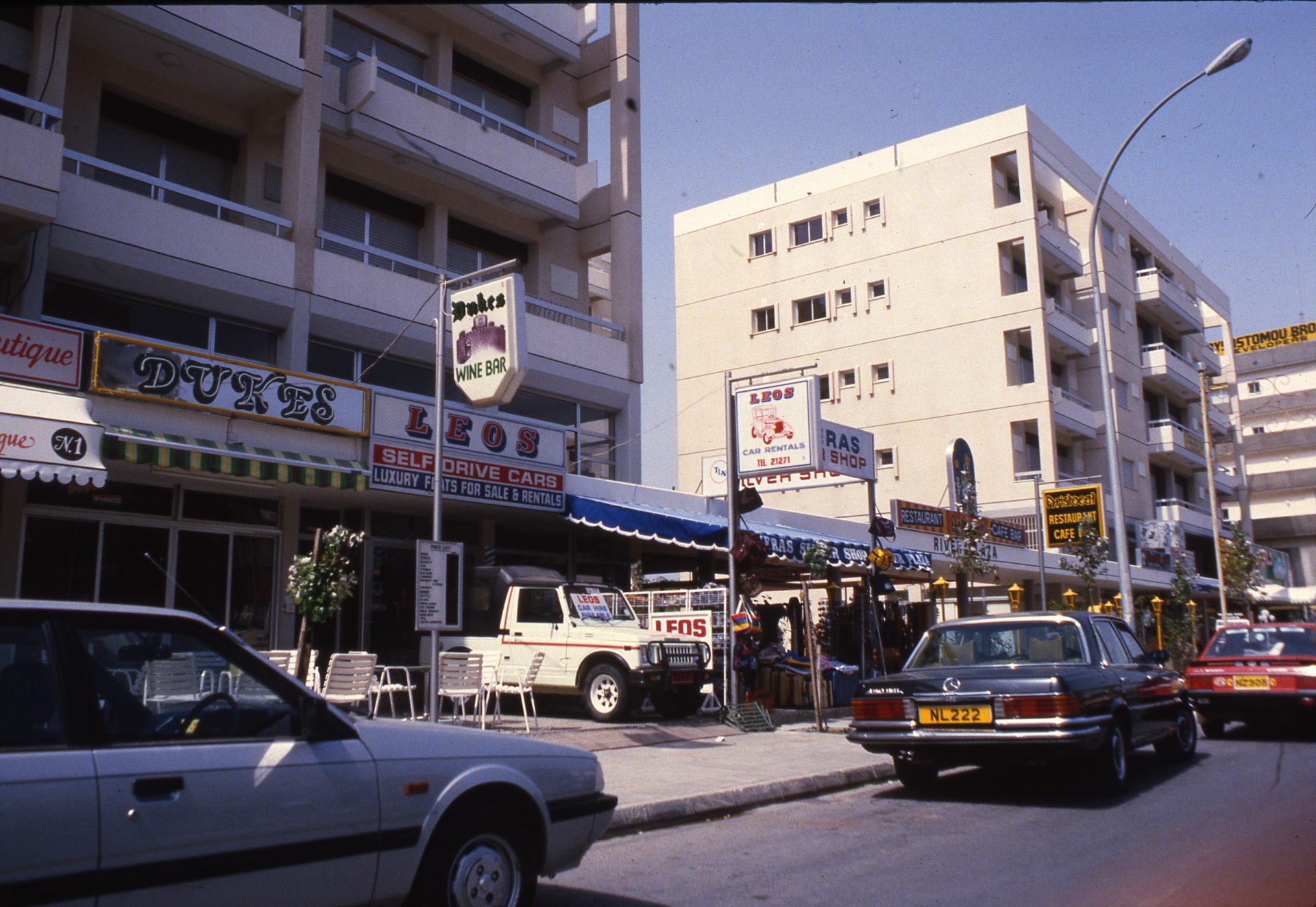
At around 21:00 on Saturday, August 17, a riot erupted in Limassol’s tourist area of Germasogeia, lasting until the early hours of Sunday. Armed with stones, wooden sticks, and chains, Greek Cypriots attacked Arab tourists, rental cars, Arab-owned businesses, and buildings bearing Arabic signage. Six Arabs and three police officers were injured. While there is no evidence that rioters knew the personal identities of those they attacked, they did damage the car of the Lebanese ambassador and threw stones at the apartment building housing the Libyan ambassador and his family.
Reports indicated that National Guard conscripts that were on leave that weekend also took part in the violence, and that the attack was premeditated. Interior Minister Dinos Michailides later stated that approximately 1,500 to 2,000 Greek Cypriot young men and youth had participated to some extent. The riot was condemned by all political parties, the government, and civil society associations. No subsequent clashes or attacks followed.
The immediate cause of the riot was widely reported to be the rape allegation that circulated in the media. The allegation was refuted by police, who stated that their investigation found no evidence of such an incident having occurred. The supposed victims themselves denied the claims in statements to the Simerini newspaper, attributing the rumours to falsehoods spread against them.
The police were widely criticised for their handling of the riot. It took three hours for the state to regain control, despite the deployment of the newly established Mobile Immediate Action Unit (MADD). Authorities were also criticised for calling officers to report to Limassol’s central police station via a public announcement on state radio, without explaining the reason, which contributed to public alarm. In the days following the riot, the police faced further criticism for failing to prevent the attack, despite reports suggesting they had prior knowledge of a possible planned assault on Lebanese tourists and residents.
In the aftermath, public discourse quickly gave rise to a moral panic focused on youth behaviour and a perceived decline in social values. Rather than confronting the ethnic targeting at the heart of the violence, media narratives framed the riot as a symptom of a broader moral crisis afflicting Cypriot youth. Newspapers widely described the rioters as hooligans, and attributed the disturbances to “hooliganism” itself, in a circular logic. Nonconforming youth were labelled “anti-social elements” and “weeds” that needed to be eradicated to protect the values, image, and security of Cyprus. The unrest was blamed on modern television and other media, as well as a lack of proper parenting and schooling, factors said to have led to moral decay, disorientation, and youth desocialisation. In doing so, newspapers constructed a narrative of cultural and national decline, demanded state intervention and intensified policing, and fuelled a classic moral panic centred on the perceived collapse of social order and decency. This framing diverted attention from the racist dimensions of the violence, emphasising instead concerns about societal control and the island’s image.
While Cyprus had experienced a painful cycle of ethnic violence during the intercommunal clashes of the 1960s, the 1985 Limassol riot stood apart in significant ways. Unlike previous episodes of conflict, this incident was not rooted in internal political disputes or the island’s longstanding ethnic divisions between Greek Cypriots and Turkish Cypriots. Instead, it marked what appears to be the first large-scale racially motivated attack in the Republic of Cyprus, with the violence directed specifically at the Arab tourist and local population.
The riot stood out as a xenophobic attack, with no obvious political leaders directing it and people being targeted simply because of their ethnicity and nationality — a pattern that set it apart from previous outbreaks of ethnic violence.
This article is part of a series exploring themes of refugeehood and emplacement in relation to Cyprus.
(Featured image by Andreas Droussiotis, showing the tourist district of Germasogeia in 1985)
Read more:


