


The Supreme Court has unanimously rejected an appeal by a Limassol man arrested on suspicion of offences including espionage, after police evidence placed him near military bases with a large camera. He had argued that police accessed the contents of his seized phones and laptop before they obtained a warrant to do so.
The court dismissed all four grounds of appeal. It upheld a first-instance ruling that had refused him leave to apply for an order of certiorari.
The Limassol District Court issued the warrant on June 25, 2025, on a one-sided application by police under the law protecting the privacy of private communications. It allowed police to access, inspect and retrieve private communications recorded or stored on specific items seized from the man’s flat.
The appellant argued that police had already accessed the devices before the warrant was issued. He claimed the later court approval was an attempt to legitimise that access and data processing after the fact.
The investigation
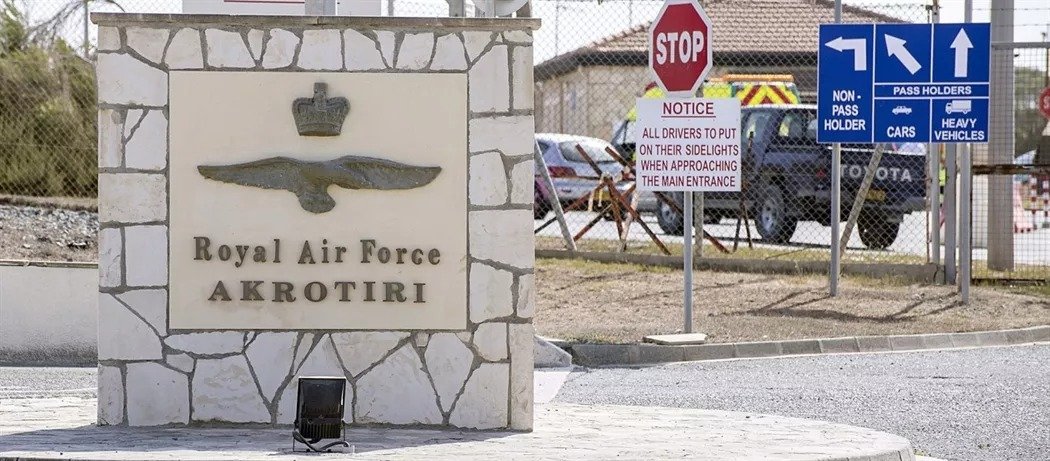
According to the evidence examined by the court, the man was arrested on a warrant for various offences, including offences under anti-terrorism legislation and espionage. Police evidence placed him in areas near the British Bases at Episkopi and Akrotiri, Paphos airport and the Andreas Papandreou Air Base, carrying a large camera and three mobile phones. He was allegedly taking photographs, talking on the phone and making notes.
A search of his flat turned up two mobile phones, three SIM cards, a laptop, a camera and a camera memory card. According to the evidence, the devices held a large number of photographs and videos of military and other installations, as well as aircraft and helicopters.
The ruling
The Supreme Court examined what investigators did between June 21 and June 25, 2025, before the warrant was issued. They had removed the laptop’s hard drive, made a forensic copy and then run an automated analysis of its contents. They had also carried out a forensic extraction of the contents of the phones and SIM cards and stored copies in electronic folders.
The court held that making and storing forensic copies, and the analyses described, had not been shown to involve accessing “recorded private communication content” as defined in the law.
The court also noted that mobile phones are multifunction devices that can also be used as cameras. Examining photographs or videos as photographic material is not in itself a matter of private communication, it said, unless the material has been sent to someone else.
The first-instance court was therefore right to find there was no arguable issue that would justify granting leave for a certiorari application, the Supreme Court said.
It also rejected the claim that the principle of proportionality had not been considered. The lower court had examined the issue and concluded that the principle had not been breached.

