


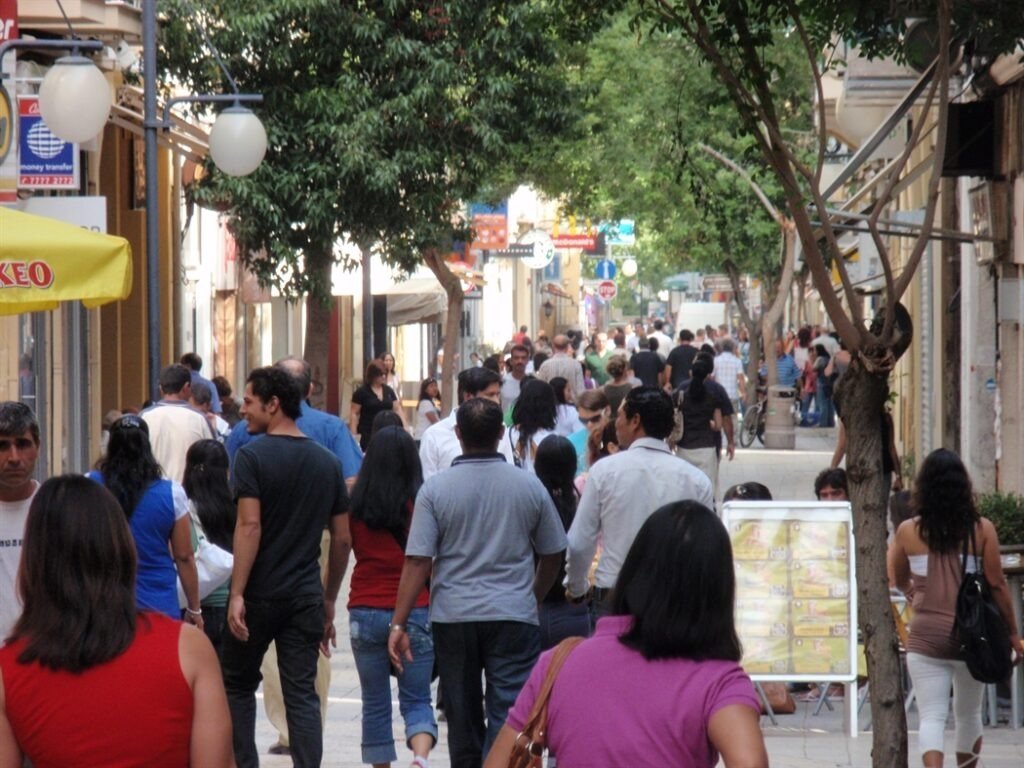
A recent demographic study has revealed that Cyprus is home to residents from at least 66 different countries, according to updated statistics from 26 November 2024.
The data, collected during the 2021 census, shows that non-Cypriot residents are split between EU and non-EU citizens, with 86,026 EU nationals from 26 countries and 142,514 non-EU nationals from 40 countries residing on the island.
Greeks form the largest EU community with 35,499 residents, followed by Romanians (19,714) and Bulgarians (16,231). Among non-EU nationals, British citizens constitute the largest group with 27,986 residents, followed by Russians (16,412) and Syrians (11,995).
The geographical distribution shows significant concentrations in urban areas. In Nicosia district, 30,727 EU citizens reside, with 25,369 in urban areas. For non-EU citizens, 40,714 live in Nicosia district, with 33,255 in urban areas.
Limassol district hosts 22,514 EU citizens and 42,777 non-EU citizens, whilst Larnaca accommodates 13,991 EU nationals and 22,780 non-EU residents. Paphos is home to 11,590 EU citizens and 29,431 non-EU residents, while Famagusta district, comprising solely rural areas, hosts 7,204 EU citizens and 6,812 non-EU residents.
The presence of foreign nationals in rural areas, particularly non-EU citizens, suggests substantial employment in the agricultural sector, the Statistical Service noted.
Other notable non-EU communities include Georgians (9,745), Filipinos (8,915), and Indians (8,165). The data also shows smaller but established communities from countries such as Nepal, Sri Lanka, and Ukraine.
Read more:

