


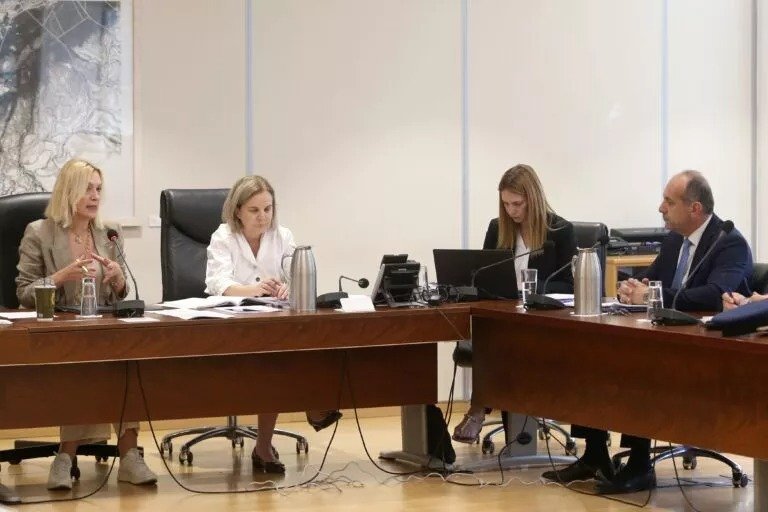
During today’s meeting of the House’s Human Rights Committee, professionals from the front line expressed questions and objections regarding the implementation and effectiveness of the “panic button” digital application for combating violence against women.
Concerns were also raised about the Police’s inability to specify a response time from the moment a woman in danger presses the button, due to unpredictable factors such as location and the time of the violent incident.
However, the Minister of Justice emphasised that the “panic button” will be ready for pilot implementation around late September or early October, with the aim of it becoming fully operational for the public in February 2025.
This is a digital application that can only be installed on smart phones. Victims will be able to notify the Police in cases of domestic violence so that police forces can intervene.
The Police will be informed within seconds via the Telecommunications Authority. It is noted that similar applications are already in use in other European countries.
The Scientific Director of the Association for the Prevention and Handling of Family Violence (SPAVO), Dr. Andri Andronicou, recommended paying particular attention to the way the tool is implemented, pointing out that victims must be educated and informed that the button will not offer them immediate safety and that they should always be on alert.
She emphasised that the publicity of the button should be done under very specific conditions, with secrecy and caution, as it may prompt the perpetrator to increase violence against the woman, given that the perpetrator always has control over the victim’s mobile phone.

According to the data presented by Dr. Andronicou, the publicity of the application increased violence by 10% in countries where it was activated. Threats and intimidation against victims also increased, and in some countries, its operation stopped due to a lack of foresight in the number of police officers monitoring victims and technical problems.
Dr. Andronicou suggested setting specific criteria for which cases of women would use the application, whether it would be used by victims who have filed a complaint with the Police or by women in shelters who need to reintegrate into society, etc.
It is noteworthy that 60% of women who arrive at shelters state that the perpetrator has access to their mobile phone, while 15% of them do not even have a mobile phone.
Dr. Andronicou further emphasised that perpetrators control almost all data on victims’ mobile phones, and that victims are almost unable to use their phones during a violent incident.
“The panic button can serve as a preventive measure against the recurrence of violence, but it cannot prevent a woman from losing her life,” she said.
She also suggested that the button be activated audibly so that the incident can be recorded for a few minutes and used in court. However, as stated in Parliament, for this to be feasible, the Constitution of the Republic of Cyprus would have to be amended.
According to additional data from SPAVO, in 2023, 4,000 cases of violence against women were recorded, of which 800 were in immediate danger and may have pressed the button if it had been operational.
The 1440 helpline recorded 1,015 calls, with 26% concerning women who had received death threats.
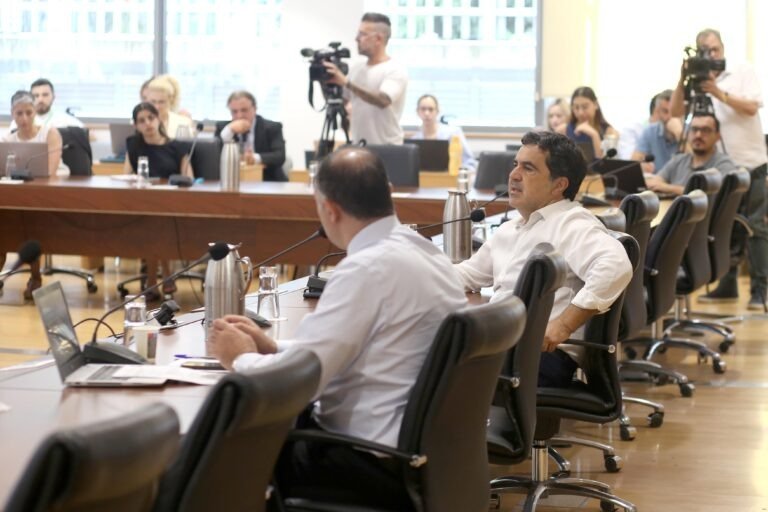
The Committee’s Chair and AKEL MP, Irene Charalambides, noted that the MPs were informed by the Government that steps are being taken to adopt the panic button.
However, she continued, serious issues arose, such as what happens in cases of victims of violence where there is technological illiteracy, the Police response time, and what happens in areas that may not be covered by 4G systems or there is a problem with network access.
“There are many questions that have been raised, and we will proceed with the bill and be in communication and collaboration with the Minister of Justice to ensure that before December, this particular application will be operational, even if it is to contribute to the prevention of violence incidents,” she added.
For her part, DISY MP Rita Superman said that the discussion is still in its early stages. “We need to set up response mechanisms, have a legal framework, and the relevant authorities must be able to respond based on the staffing available. The application should be given to specific individuals to ensure a specific response mechanism,” she said.
Read more:

