


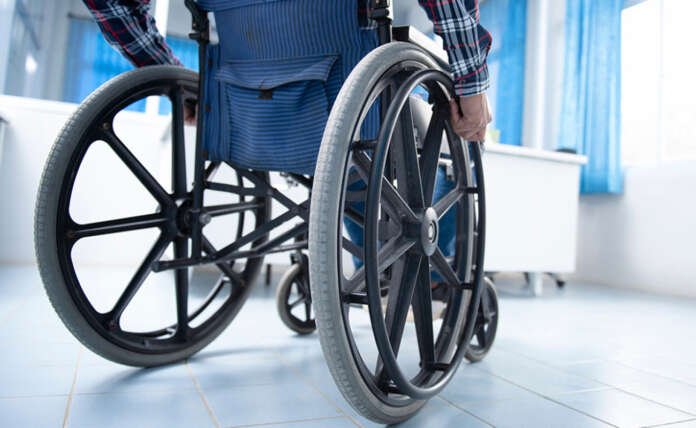
The Cyprus Paraplegics Organisation (OPAK) has written to the Ombudswoman asking for an update on a binding 2023 recommendation on the accessibility of health services, saying patients with disabilities continue to face clinics and hospitals that are difficult, and sometimes unsafe, for them to use.
In a letter sent on September 1, OPAK asked to be told what progress the Health Insurance Organisation (HIO) had made in implementing the recommendation, and where and how people could report cases of inaccessible healthcare. “We continue to find a lack of accessibility in health services,” the organisation said in the letter.
The Cyprus Federation of Patients’ Associations (CyFPA) says the right of people with disabilities to equal access to health services continues to be violated, with complaints covering both the offices of personal and specialist doctors and hospitals patients say lack the necessary accessible equipment.
Dimitris Lambrianidis, CyFPA’s press spokesperson and OPAK’s president, told Phileleftheros that complaints about inaccessible clinics and hospitals without accessible equipment continue. The gaps make equal access harder for people with disabilities and, in some cases, may put their safety at risk, he said.
He cited clinics of personal and specialist doctors without suitable parking near the entrance, examination beds that cannot be adjusted in height, and apartment buildings with lifts too small to fit electric wheelchairs. Access, he said, cannot be judged only by whether a building has an entrance; it covers a patient’s whole journey through to examination and treatment.
As a result, he said, people with mobility disabilities cannot always choose a doctor based on their health needs and must first find out which clinic they are able to visit. “People are being forced to choose a doctor based on accessibility, not the right criteria,” he said.
Lambrianidis said the same points, examples and suggestions had been repeated many times, and that the organisations had turned to the Ombudswoman, who issued recommendations. Some improvement had been seen compared with previous years, he said, but overall the problem remained largely unchanged.
The Ombudswoman, Maria Stylianou-Lotides, issued a binding recommendation to the Health Ministry and the HIO on July 21, 2023, calling for clear accessibility criteria to be set for the premises and equipment of health service providers. The recommendation followed a report in March 2023 in which she found that people with disabilities faced discriminatory treatment because of inadequate access to General Health System (GHS) services.
The recommendation asked the Health Ministry to draw up, together with disability organisations, a list of minimum requirements for facilities and equipment, and to push forward licensing rules, including for private clinics, that would tie accessibility to their operating conditions.
For the HIO, it proposed linking compliance with these criteria to new and renewed provider contracts under the GHS, with a transition period and consequences for providers that failed to make the required changes within a set deadline. It also called for on-site inspections, both regular and in response to complaints.
OPAK’s letter said that after the recommendation, the Health Ministry and the HIO had committed to setting accessibility criteria as a condition for GHS providers. Criteria had been set, or legislation proposed, for some categories of provider, such as radiology diagnostic centres, the letter said, but the framework for clinics and dental clinics remained pending. A related bill had gone to Parliament but was sent back to the Health Ministry for further consultation and had not returned to the Health Committee, OPAK said, asking what stage the bill had reached and what timelines, if any, were in place.

