


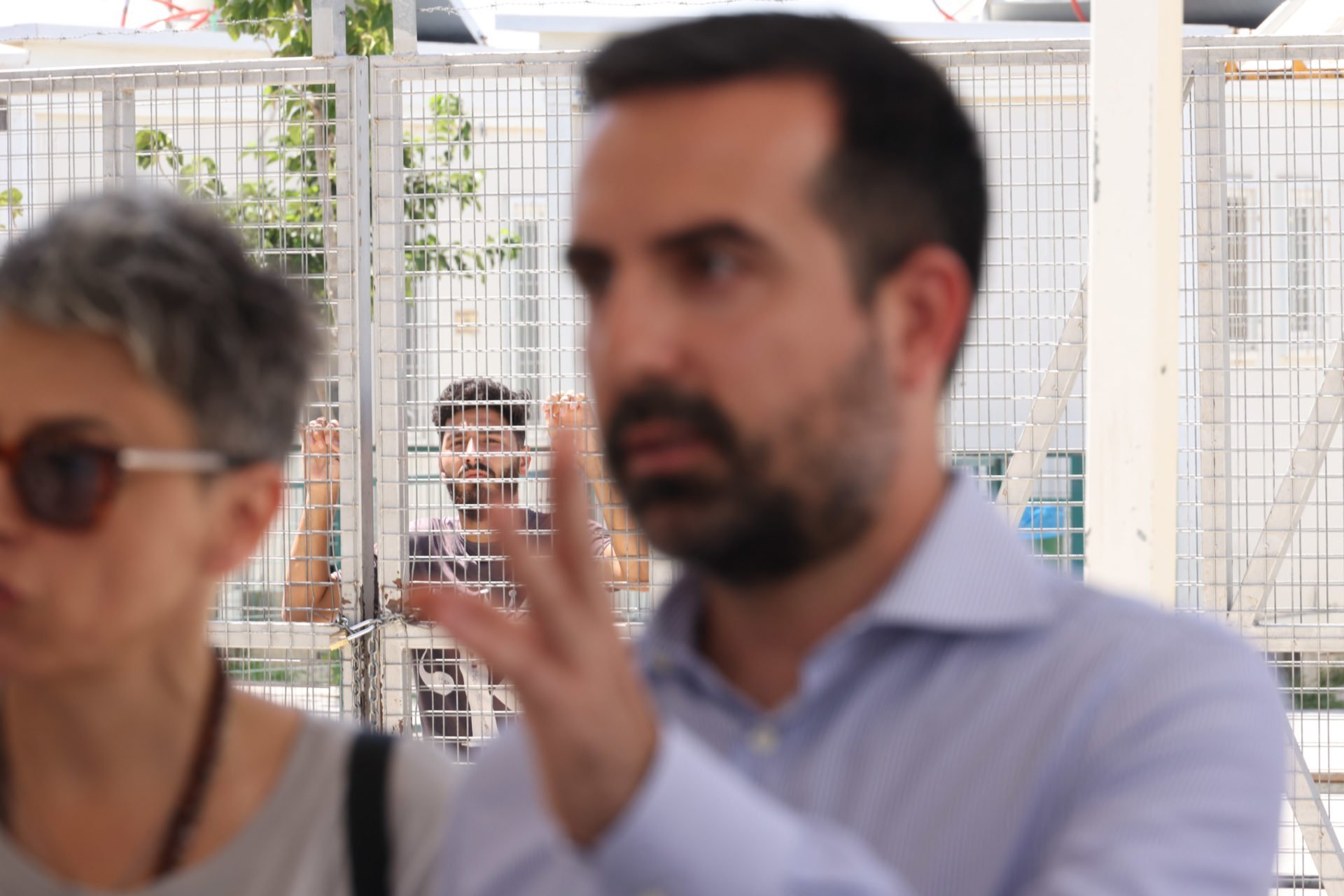
I had written in a previous article (21/11/2021) about the ways in which the Cypriot and Greek governments consciously instrumentalise migrant-refugees. When they deliberately expose them to danger at sea, turning people into “hazard warning signals” to deter other aspiring migrants – this is conscious instrumentalisation. Or when they imprison them in closed detention facilities, for the same reason.
When a national minimum wage is also introduced and the sectors of agriculture and domestic work – sectors in which migrants and asylum seekers are predominantly employed – are excluded from it, this is also deliberate and conscious instrumentalisation.
Conscious instrumentalisation also occurs when the governments exaggerate the extent to which Turkey controls migration flows. This allows the governments of Greece and Cyprus to take another step and talk confidently about Turkey’s “hybrid war,” which allows them to shift the focus in order to cover up domestic failures and responsibilities towards migrant-refugees and the international community. The idea of a “hybrid war” allows the two governments to recast migrant-refugees as offensive instruments of the Turks. The migrant-refugees are no longer themselves, but they have become a symbol, a sign of the attacking Turk. The migrant has become, in other words, a substitute, a stand in, for the Turkish invader.
What I had not understood in previous analyses is how this substitution (immigrant = Turk) is the work of a subconscious mechanism that has two psychological functions. One function is exculpatory: it allows the governments in question to divert the issue so that they are relieved of their conventional, moral, obligations to migrant-refugees under international law. The second function is one of subconscious instrumentalisation: it allows the nationalist subject to satisfy unfulfilled desires having to do with Turkey. Turkey is the Great Enemy against whom historical desires for revenge and redemption are pending. Irredentism has been sedimented into unfulfilled and frustrated desires for revenge.
These are desires with extremely dangerous and impermissible goals since the subject must really risk their life and probably be killed to satisfy them. With the idea of “hybrid warfare” a process of psychological transference is activated, where the target-objects of these desires are replaced by other objects which are more easily attainable, less dangerous, and which constitute easier targets for satisfying the desires. Thus, if the migrant refugees are seen as an extension of the Turkish conqueror, one does not need to attack the Mehmetçik to achieve victory over the Mehmetçik: one can attack a migrant refugee. And it is not necessary to throw any Turk into the sea; it is enough to throw a migrant into the sea. It will be like attacking the Mehmetçik and like throwing the Turks into the sea.
Through the transference, migrants are instrumentalised to satisfy desires that, under normal circumstances, one would have to properly risk one’s own life to satisfy.
*PhD in Philosophy
This op-ed was first published in Phileleftheros on September 4, 2022.

