


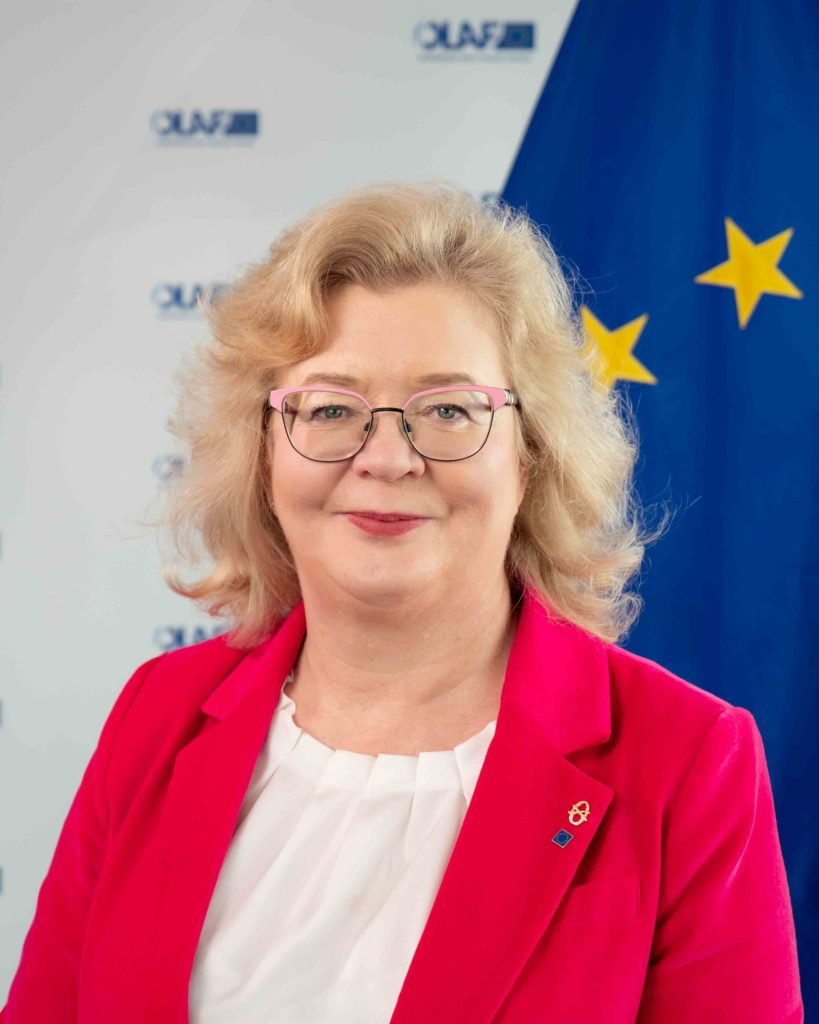
OLAF Director-General Salla Saastamoinen visited Cyprus last week for a series of meetings aimed at deepening cooperation with national authorities and strengthening the protection of the European Union’s financial interests.
Cyprus, she noted, faces the same exposure to fraud and mismanagement of EU resources as any other member state. “What we’ve seen over the years is a typical mix of issues, including manipulation of procurement, conflicts of interest and inflated invoices. On the customs side, we tend to see evasion of duties, smuggling, and counterfeiting. These are patterns we also observe in many other countries,” she said.
Against this backdrop, Saastamoinen highlighted the importance of Cyprus developing its own National Anti-Fraud Strategy and making full use of the tools offered through EU programmes to improve prevention, oversight and the training of competent authorities.
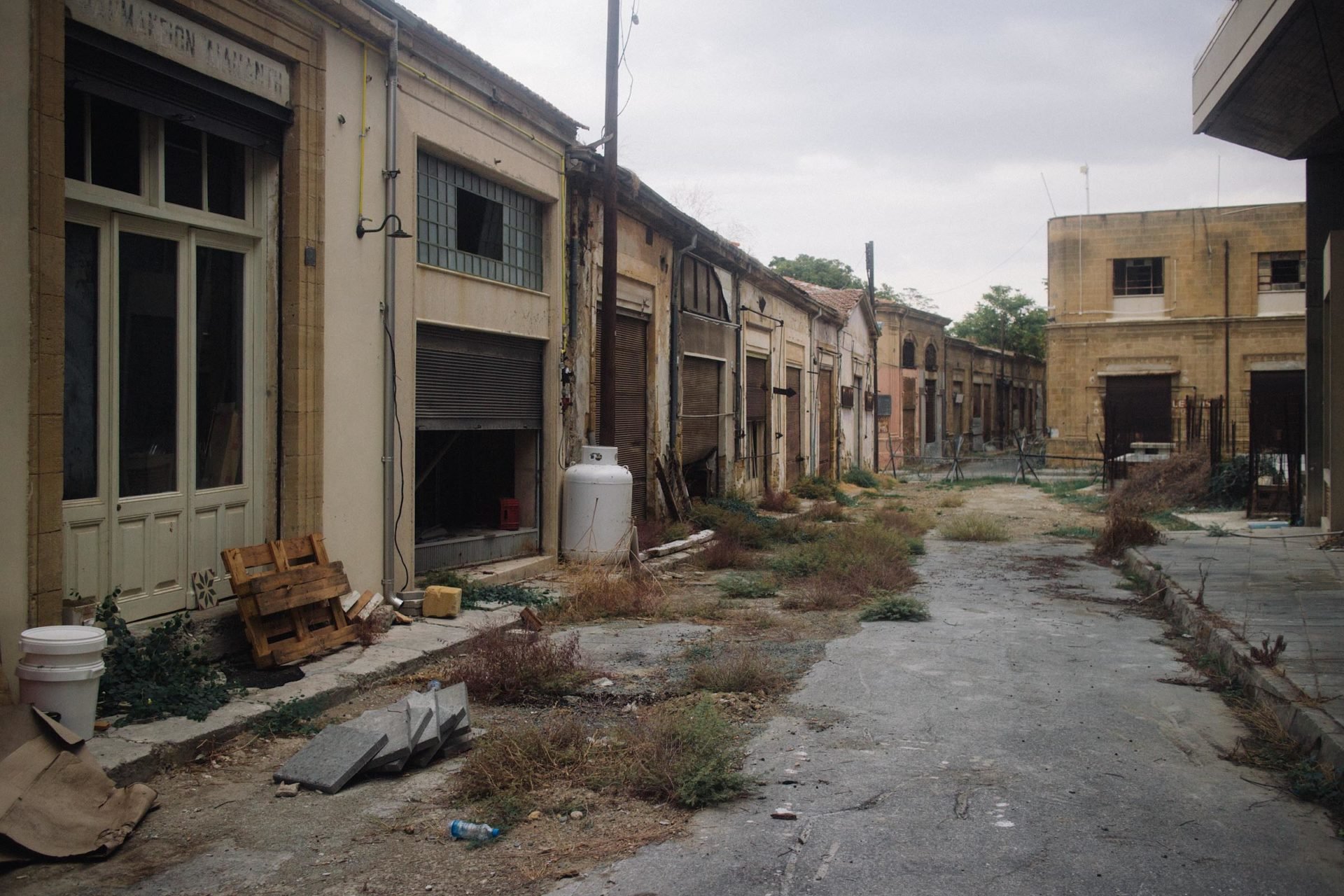
She placed particular emphasis on smuggling across the Green Line, describing it as a longstanding challenge. “Smuggling harms public finances, undermines public health and creates revenue streams that can be used by criminal groups for other illegal activities,” she stressed. The island’s geostrategic position, she added, compounds the difficulty of addressing the problem.
Despite these challenges, Saastamoinen underlined that Cyprus has the core supervisory structures needed to protect EU funds and, through close cooperation with OLAF, can contribute to a more coherent and effective European anti-fraud framework.
What brings you to Cyprus? What’s the purpose of your visit?
I’m very glad to be visiting Cyprus, especially at such an important moment. With Cyprus preparing to take over the Presidency of the Council of the EU, this is the right time for OLAF to strengthen our cooperation and make sure we are fully aligned for the months ahead. The Presidency will be dealing with major files on the protection of the EU’s financial interests, from the review of the Anti-Fraud Architecture to the negotiations on the next Multiannual Financial Framework. Therefore, I believe that early coordination is essential.
It’s also worth noting that this is the first time an OLAF Director-General has visited Cyprus, and I see that as a very positive step towards stronger cooperation Engaging directly with national authorities always brings real added value.
My visit also has a practical purpose. I wanted to meet the authorities we work with every day, understand how things function on the ground, and ensure our cooperation is as effective as it can be.
That is why I had a full agenda during my visit. Meetings with the Accountant General, the Auditor General, the Ministry of Finance, the Directorate General for Growth, the Commissioner of Transparency, and the customs authorities have given me a much clearer understanding of the challenges and opportunities in Cyprus.
Given your visit to Cyprus, how does OLAF assess the risk of fraud or mismanagement of EU funds on the island?
When we look at Cyprus, we don’t single it out as having a higher or lower risk than other Member States. No part of the EU budget or type of programme is entirely immune to fraud, and Cyprus is no exception. What we’ve seen over the years is a typical mix of issues: manipulation of procurement, conflicts of interest, inflated invoices, and so on. On the customs side, we tend to see evasion of duties, smuggling, and counterfeiting. These are patterns we also observe in many other countries.
What matters for us is not so much the risk level but the response capacity. And this is exactly why I’m here. Cyprus is currently developing its National Anti-Fraud Strategy, and that is a crucial tool for strengthening prevention and detection. From OLAF’s side, we also strongly encourage Cyprus to make better use of the Union Anti-Fraud Programme, which offers funding for technical assistance, training, and modern control tools. These resources can significantly reinforce national systems.
How does OLAF cooperate with national anti-fraud institutions in European Member States, and what role do local authorities in Cyprus play in that collaboration?
OLAF works with national authorities in every Member State through what we call the Anti‑Fraud Coordination Service (AFCOS) network – these are the national anti-fraud coordination services. They’re our main point of contact, and they help us exchange information quickly, support our investigations on the ground, and make sure that our administrative work links up properly with national law enforcement or judicial follow-up.
In Cyprus, AFCOS (the Directorate of Financial Control of European Funds (DFC) of the Treasury of the Republic of Cyprus, which falls under the jurisdiction of the Accountant General of the Republic of Cyprus) plays exactly that role. They coordinate between OLAF and the different national bodies, like customs, managing authorities, law enforcement, anyone involved in managing and overseeing EU funds. During this visit, we’re meeting several of these partners to see how cooperation works in practice and where it can be strengthened.
For us, local authorities are essential. We place great value on our cooperation with the Accountant General, whose support during this mission has been outstanding and with whom we enjoy excellent collaboration. We place a lot of trust in all our partners here.
OLAF can’t protect the EU’s financial interests alone: we rely on national systems that function well, share information, and act promptly when needed. In many cases, it’s the local services that first detect irregularities. Their expertise and proximity to the projects or customs operations make them important partners. And Cyprus is a full part of that joint effort.
How does smuggling through the occupied territories in Cyprus affect the economic interests of the EU? How does OLAF handle the situation? Has it made any recommendations to the competent authorities of the Republic of Cyprus?
Smuggling of tobacco products – including new products like heated tobacco- is a recurring issue across the EU, and unfortunately, it’s on the rise. In Cyprus, we are aware of course that smuggling across the Green Line is a longstanding problem. Smuggling affects public finances, it undermines public health, and it creates revenue streams that criminal groups can reinvest in other illegal activities.
OLAF’s role is to support the national authorities in tackling this. We provide intelligence, we share risk analyses, we maintain operational contacts, and we participate in joint operations when needed. Cyprus is part of that wider European effort.
We have regular exchanges with the competent authorities, including customs and law enforcement, and whenever we identify vulnerabilities or patterns that require attention, we make the appropriate recommendations. Our aim is always the same: to help ensure that the EU’s financial interests are protected and that smuggling networks are disrupted as effectively as possible.
Are the Cypriot authorities capable of adequately supervising and intervening to protect European interests when dealing with EU funds?
I believe that Cyprus has the essential structures to supervise EU funds, and overall cooperation with OLAF works well. The AFCOS is our main partner, coordinating both shared-management programmes and EU-funded projects involving Cypriot beneficiaries. That coordination is crucial for ensuring that information circulates quickly and that risks are identified early.
As I said, another of main reasons for my visit is to strengthen ties with AFCOS and other national authorities, see how cooperation works on the ground, and understand the realities they face – especially with Cyprus taking on a leading role during its upcoming Council Presidency.
But of course, there is room to further reinforce the system. That Cyprus develops a National Anti-Fraud Strategy (NAFS) is essential for us. Under the next Multiannual Financial Framework, a coherent, risk-based NAFS will be an important audit and control requirement. It helps tighten prevention, improve detection, and ensures that all competent authorities work in a coordinated way.
In which cases have recommendations been made to Cyprus? Do the Cypriot authorities respond promptly to OLAF’s requests?
I can’t discuss individual cases, as I’m sure you understand. But I can explain how the process works.
When OLAF completes an investigation, we issue a final report, sometimes with recommendations – these can be financial, judicial, administrative or disciplinary. They are non-binding, because it is for the national authorities to decide on the appropriate follow-up under their legal system.
What we do is monitor the follow-up very closely. We stay in contact with the European Commission and the competent national bodies to make sure that the process moves forward. And in general, the cooperation is good – communication is open and responses do come in a timely manner.
Of course, every country has its own legal constraints and procedural frameworks, and Cyprus is no different. That’s why the broader EU Anti-Fraud Architecture review is important: it aims to streamline roles and improve coordination between OLAF, the EPPO, Europol, Eurojust and national authorities. Stronger, more coherent structures mean more effective follow-up everywhere, including Cyprus.
Are there specific areas of EU funding in Cyprus where vulnerabilities appear more pronounced?
Not really – fraud doesn’t choose a sector. It can occur in agriculture, construction, digitalisation, green transition projects, cohesion funds… What we see in Cyprus is really what we see across the EU. The schemes may vary, but the modus operandi remain the same: procurement manipulation, conflicts of interest, collusion, inflated invoices, and so on.
That’s precisely why strong, horizontal systems are needed. A solid National Anti-Fraud Strategy, proper reporting channels, and the use of EU-level resources/options under the Union Anti-Fraud Programme all help reduce vulnerabilities across all sectors, not just in one.
What improvements would you like to see in Cyprus’ reporting, prevention or investigation mechanisms?
If I had to highlight one area for improvement, it would be more systematic reporting. Early information is extremely valuable for OLAF because it allows us to intervene in a timely manner, protecting EU taxpayers and helping to recover funds quickly.
Cyprus will soon take on the EU Presidency, and that gives the country a unique opportunity to show leadership in strengthening the EU’s overall Anti-Fraud Architecture. Strong national reporting, prevention, and investigation systems will send a very clear signal at EU level. That is why the National Anti-Fraud Strategy is so important in this context.
Lastly, I would also encourage Cyprus to make greater use of the Union Anti-Fraud Programme. It is designed to help Member States build capacity – through specialised training, IT systems, secure data-exchange tools, and customs equipment. With the new MFF, the programme’s budget will double, so it’s an opportunity that should not be missed.
Cyprus is a small but strategically positioned Member State. Does its geographic location create specific challenges for customs fraud or smuggling?
It is true that Cyprus has a unique geographic and strategic position. Being at the external border of the EU and close to several key transit routes means that it can face particular challenges when it comes to customs fraud.
However, the reality is that every Member State may be targeted by fraudsters, depending on a range of factors that make it vulnerable in one given context or the other. What matters is that we never forget that the EU is a single customs space, and that we need to work together to be successful. OLAF supports this with intelligence, rapid alerts, joint operations, coordination, and the use of its own investigative powers.

