


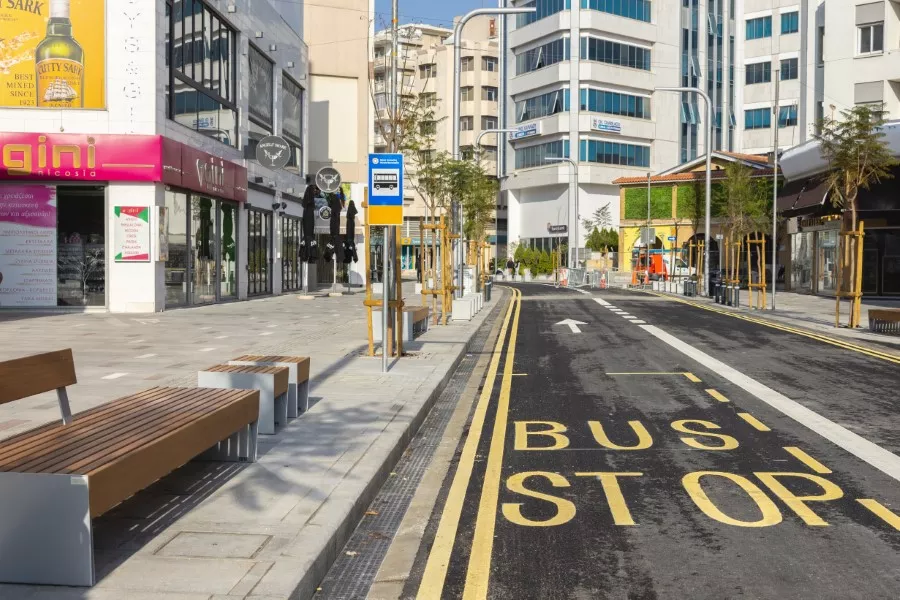
A proposal by the mayor of Nicosia to allow limited vehicle access on Makariou Avenue during weekdays has stirred political debate and business lobbying, potentially altering the pedestrian-focused character of one of the capital’s main commercial roads.
Mayor Charalambos Prountzos has proposed reopening the avenue to vehicle traffic from 9 a.m. to 7 p.m. on weekdays, while maintaining a fully pedestrian zone over the weekend. Under this plan, even buses would be barred from using the road on Saturdays and Sundays.
The plan, which has been submitted to the municipal council, is aimed at balancing traffic flow with urban sustainability. If approved, it would make Makariou Avenue one of the largest car-free spaces in central Nicosia during weekends.
However, the proposal has met with pushback from some business groups, who are pressing for vehicle access to extend to side streets in order to facilitate deliveries and customer visits. The mayor has resisted these calls, citing safety concerns. “I will not risk the safety or lives of citizens,” he told local newspaper “Phileleftheros.”
Amid growing lobbying efforts, the Democratic Party (DIKO) municipal group requested a postponement of the vote on the proposal, which many see as a direct response to pressure from affected stakeholders.
In a letter dated November 15, 2024, the business coalition “Nicosia – Capital of Cyprus” urged the mayor to reassess traffic restrictions, arguing that easing access would boost commercial activity and allow for better use of nearby parking infrastructure.
Makariou Avenue, along with nearby Stasikratous and Evagorou streets, was part of a recent urban redevelopment project meant to revitalise the city centre and enhance its appeal to pedestrians, aligning with broader environmental goals.
Meanwhile, previous efforts by the municipality to enforce traffic restrictions using surveillance cameras were halted due to data privacy concerns, requiring a change in national legislation. Increased policing was also ruled out by the Chief of Police, leading to a lack of enforcement.

