


Russia has secretly constructed an Arctic undersea surveillance network to spy on NATO, using technology acquired through front companies, including a Cyprus-registered firm, according to a joint investigation by the International Consortium of Investigative Journalists (ICIJ) and other international media partners such as The Washington Post and German state media. The publication is part of the cross-border investigation Russian Secrets.
The company has been revealed to be Mostrello Commercial Ltd., which, according to the Cyprus Registrar of Companies, was registered at 155, Arch. Makarios III Avenue, Proteas Tower, 5th Floor 3026 in Limassol.
The US Treasury included Mostrello Commercial Ltd on its sanctions list targeting Russia’s marine sector procurement, published on October 30, 2024.
According to the US Treasury, Mostrello owns “Russian-flagged vessels that have been used by Russia-based UPT to conduct maritime missions”.
Russia-based UPT performs cable laying and associated support functions for the Russian government, including the Russian Ministry of Defence.
The international report, published Wednesday, revealed that the surveillance grid was assembled from Western-made components procured through the Cyprus-registered firm Mostrello Commercial Ltd., which investigators say acted as a Russian front company.
The surveillance network, known as “Harmony,” is designed to shield Moscow’s nuclear ballistic-missile submarines and challenge US and NATO naval dominance in the Arctic region.
According to documents reviewed by the Washington Post and the ICIJ, the Harmony system relies on fixed acoustic arrays planted on the seafloor to detect submarines entering key Arctic waters. These passive sensors feed data via fibre-optic links to onshore command centres.
Leaked Mostrello records reveal that the Cypriot entity’s business dealings involved more than 50 suppliers — mostly Europeans — which provided sensitive components for the “Harmony” network, according to the ICIJ report.
Procurement records show Mostrello purchased US-made hull-mounted survey sonars from companies including EdgeTech and R2Sonic.
These systems allow high-resolution seabed mapping, essential for precise sensor placement. Invoices and contracts cited in the investigation included Russian-language terms and Moscow-based lessees.
Vessel-tracking data suggests the Harmony network forms an arc stretching from Murmansk eastward to Novaya Zemlya and north to Franz Josef Land, effectively creating a tripwire guarding the Northern Fleet’s principal bases.
Norwegian authorities reportedly blocked the sale of a high-speed acoustic positioning system from Kongsberg to Mostrello after domestic intelligence flagged the transaction. Earlier records indicate Russia began acquiring similar systems as early as 2015.
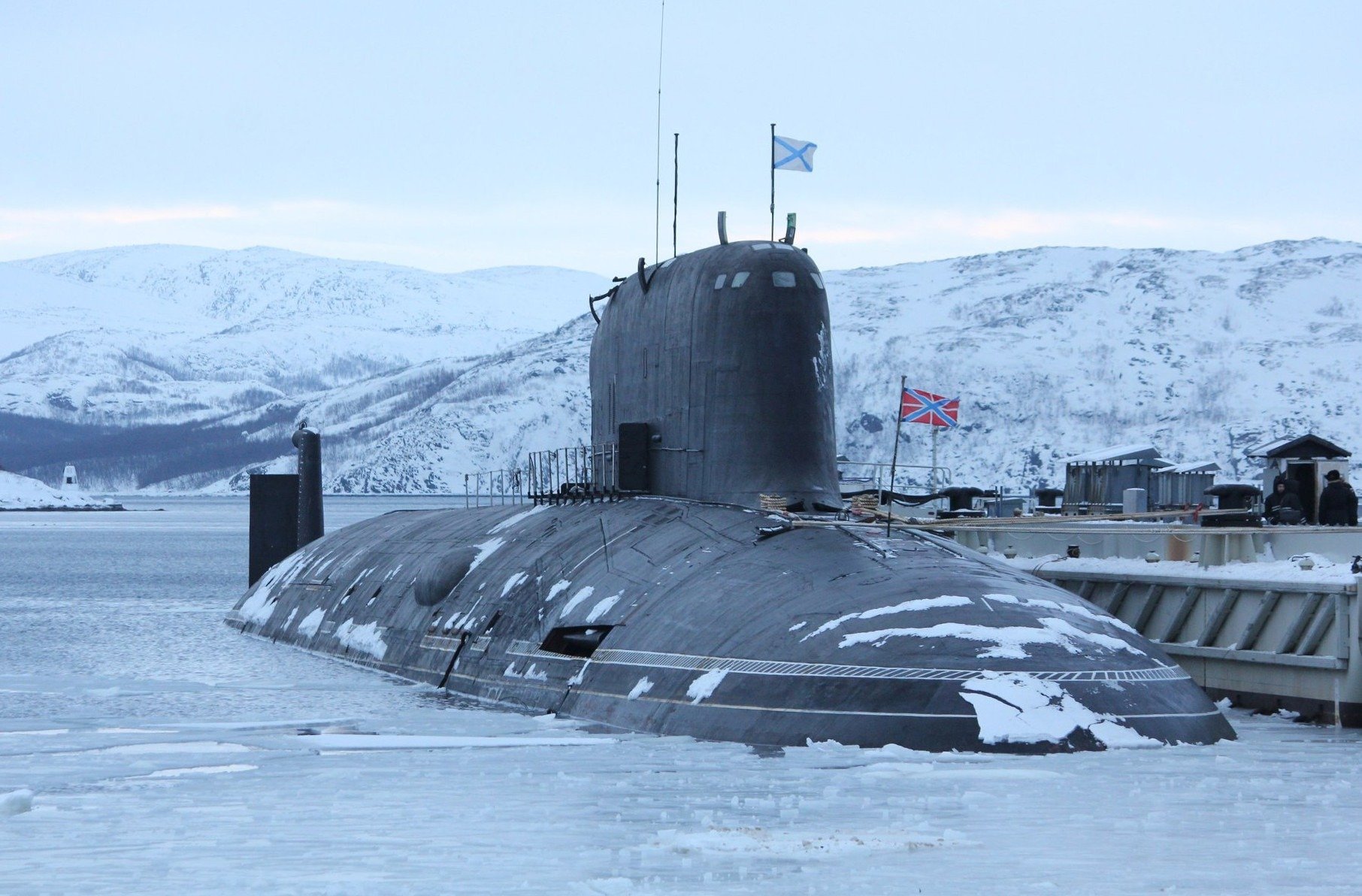
Military analysts told the Washington Post that Harmony extends Russia’s layered anti-submarine defence, giving its ballistic-missile submarines, such as the Borei-class, greater security as they leave port.
A German-led probe in 2024, aided by US intelligence, concluded that Mostrello operated as a front for Moscow-based UPT, a firm with historical links to Russian security services. The US Treasury subsequently sanctioned Mostrello and related entities.
In a statement to Norwegian broadcaster NRK, Vice Admiral Nils Andreas Stensønes, who heads the Norwegian intelligence agency, said that Russia continuously tries to evade Western sanctions and export regulations.
“One trend is establishing complex procurement networks with legitimate European companies as contact points,” Stensønes said. “The actors exploit the EU’s free market to access Western technology. At the same time, this method conceals parts of the supply chain and obscures the Russian end-user”.
When Dutch journalists visited Mostrello’s registered office in Limassol, Cyprus, this fall, they found it abandoned, suggesting the network’s operators had shifted operations following exposure.
Russian Secrets is an investigation by NDR, WDR and Süddeutsche Zeitung (Germany), Le Monde (France), L’Espresso (Italy), Kyodo News (Japan), NRK (Norway), KRO-NCRV (Netherlands), SVT (Sweden), The Times (U.K.), The Washington Post (U.S.) and ICIJ.
Read more:

