


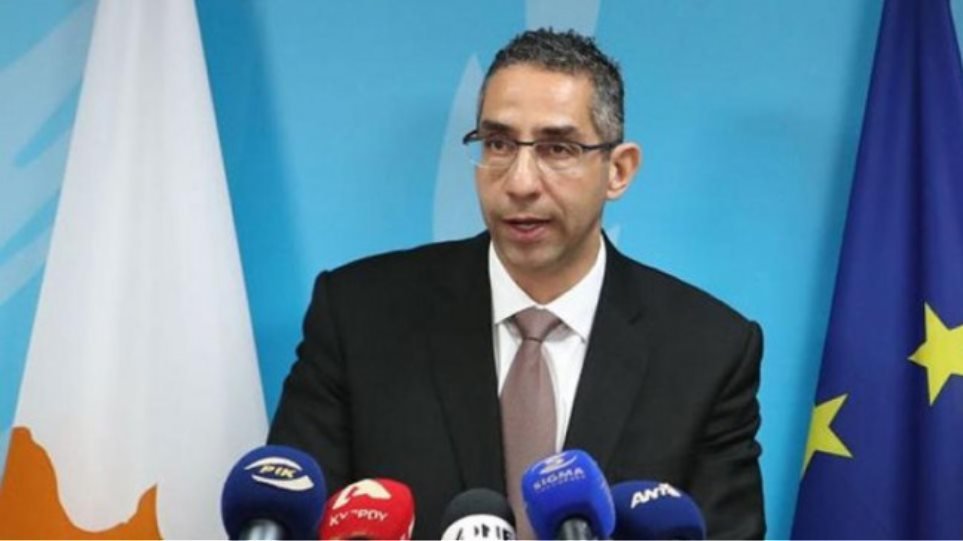
He will continue to serve responsibly from his appointed position, firmly keeping away from populism, stated Assistant Attorney General Savvas Angelides, in his first public reaction to a European Court of Human Rights ruling, questioning the validity of his decision to terminate the criminal process against a Cypriot politician for the alleged rape of a woman several years ago.
In a written statement following the announcement of the ECHR opinion in the case of N.T. v. Republic of Cyprus, he commits to continuing his work with “responsibility, seriousness and respect for the rule of law, away from political confrontations and populism.”
Angelides assumed responsibility on the handling of this specific case, clarifying however that such an action does not equate to or entail his departure from the Legal Service. Furthermore, he lists and analyses a series of actions and measures that will be aimed at compliance in the aforementioned case, with emphasis on improving processes and education on how to handle gender based crimes.
The complete text of the Assistant AG response follows:
“In regard to the recent decision of the European Court of Human Rights (ECHR) in the case of N.T. v. Republic of Cyprus, I wish to state the following:
This decision constitutes a serious reminder of the responsibility held by the state’s institutional bodies, and primarily the Legal Service, to fully ensure the protection of human rights and particularly victims of gender-based violence. Every judicial decision, especially if derived from international courts and contains criticism, constitutes an opportunity for institutional introspection and substantial improvement.
I assume responsibility in the handling of this specific case, acknowledging and emphasising the chronic absence of specialised procedures and protocols for investigating complaints of this nature.
On the other hand, we must not overlook the fact that each year a significant number of cases concerning gender-based violence crimes are registered before courts, a fact which demonstrates the great effort and on-going concern of Legal Service officials to bring them before Justice.
At this point, I must also mention that since 2022, a series of actions have been implemented in the Legal Service aimed at training our officials and police for the better handling of such sensitive cases.
Attempts to personalise institutional decisions serve neither Justice nor the victims who expect protection and support from us. I do not intend to engage in public confrontation that diverts discussion from the substance.
Practical assumption of responsibility does not equate to my departure from the Legal Service but rather to initiating a series of actions and measures, both for specific compliance in the N.T. case and for general improvement of our procedures.
We will proceed with the following:
- Thorough and in-depth evaluation of all parameters of the decision and the omissions that were highlighted.
- Re-evaluation of the criminal investigation of this specific case not only for full compliance with the ECHR findings but also for restoration of the specific victim, and to this end, we will call the victim’s lawyer for briefing and determination of actions.
- Development of a protocol for evaluating gender-based violence complaints, with the assistance of external experts.
- Strengthening of mandatory training seminars for Legal Service officials and investigators, with emphasis on secondary victimisation, the psychological dimension of complaints and avoidance of stereotypes.
- Establishment of an internal supervisory mechanism for cases involving vulnerable victims, to ensure institutional monitoring and transparency in management.
These actions do not constitute merely a reaction to a judicial decision, but confirmation of our commitment to continuous improvement and strengthening of citizens’ trust in the justice system.
My personal commitment, as an institution, is to continue working with responsibility, seriousness and respect for the principles of the Rule of Law, away from political confrontations and populism.”

