


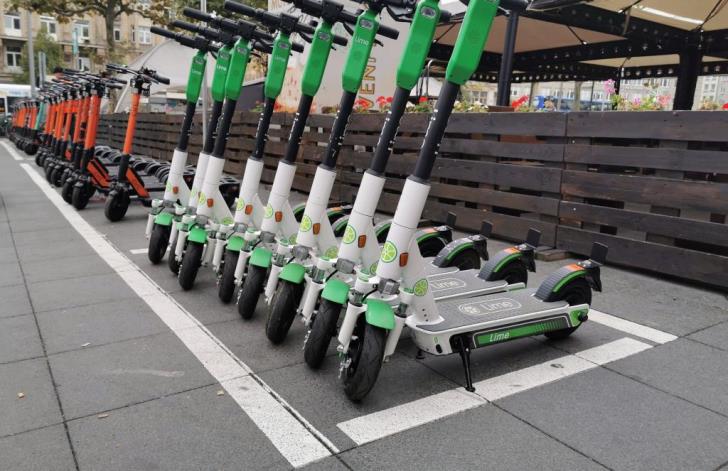
Police recorded 8,800 offences involving electric scooters between 1 January and 31 October 2026, the House Transport Committee heard on Thursday as it examined five bills to tighten the rules. Parliament members described the scooters as “mobile bombs”.
Two e-scooter users have been killed this year, and five people were seriously injured up to the end of August, two of them minors, Tasos Assiikis of the police traffic department told the committee. Of the offences, 2,800 involved riding in prohibited areas, which police consider the most serious, and the total reflected a sharp rise in out-of-court fines, he said.
Virginia Christou of the Cyprus Consumers Association told the committee about the case of 16-year-old Aris Papacharalambous, who died last September after a road collision involving a scooter.
A ministerial decree on impounding scooters, which the committee heard was key to enforcing the rules, is now with the Law Office of the Republic. A transport ministry official said it had been finalised after a public consultation in August, with changes reflecting the views of the police and municipalities. A Law Office representative said it had been received last week and that its legal review would take about a month.
The five bills
Two bills tabled by Chrysanthos Savvides would create a register of personal mobility devices and make it an offence for anyone under the minimum age to use them. They would also introduce an out-of-court fine for underage users and raise penalties for owners, those responsible for the devices, and parents or guardians who fail to stop under-17s using them.
A bill by Dimitris Souglis would set up a special register, introduce identification markings and make insurance compulsory. A bill by committee chairman Sotiris Ioannou would write the procedures for impounding and releasing scooters directly into the main law, instead of leaving them to a ministerial decree.
A fifth bill, by Andreas Konstantinou, would temporarily ban personal mobility devices within municipal districts or communities, until a sufficient and safe network for their use was in place.
Ioannou gave the bodies that asked for more time one week to submit their views in writing. He said the committee intended to complete its examination without delay, so the bills could go to the House plenary as soon as possible.
Reservations
The transport ministry, the Law Office and other bodies initially welcomed the proposals, but raised legal, administrative and practical issues and asked for more time.
On the register, senior transport ministry official Afroditi Kofterou said Transport Minister Evi Tsolaki supported it in principle. But it would be considered only after the impounding decree was issued, she said, because it would require a new administrative service with its own staff, technology and legislation. She also raised constitutional questions and concerns about the cost to the state budget. “We are not rejecting it, we are just not ready to proceed,” she said.
On fines, Kofterou said there had not been enough time to consult the Law Office and other services, and that fines must be proportionate. Filippos Theodorou of the Ministry of Justice and Public Order said the ministry agreed with the changes in principle, but considered raising the fine for under-17s from 85 euros to 300 euros excessive. “We consider it excessive, minors have no income,” he said.
On the proposed ban, Kofterou said it would amount in practice to an almost complete ban on scooters, adding that building the necessary infrastructure takes time and some of it is the responsibility of municipalities. Theodorou questioned whether such a ban could be enforced. Katerina Fragkoulidou of the Union of Cyprus Municipalities said users would need to be told clearly where scooters were allowed, and existing permits granted to companies for scooter parking could be affected.
Fragkoulidou said the union supported a register, identification markings and compulsory insurance, but legal gaps remained. A legal opinion obtained by the union found that municipal traffic wardens have no power under current law to impound scooters.
Assiikis said the police shared the two ministries’ positions and agreed that stricter rules were needed, but also asked for more time to study the bills.

