


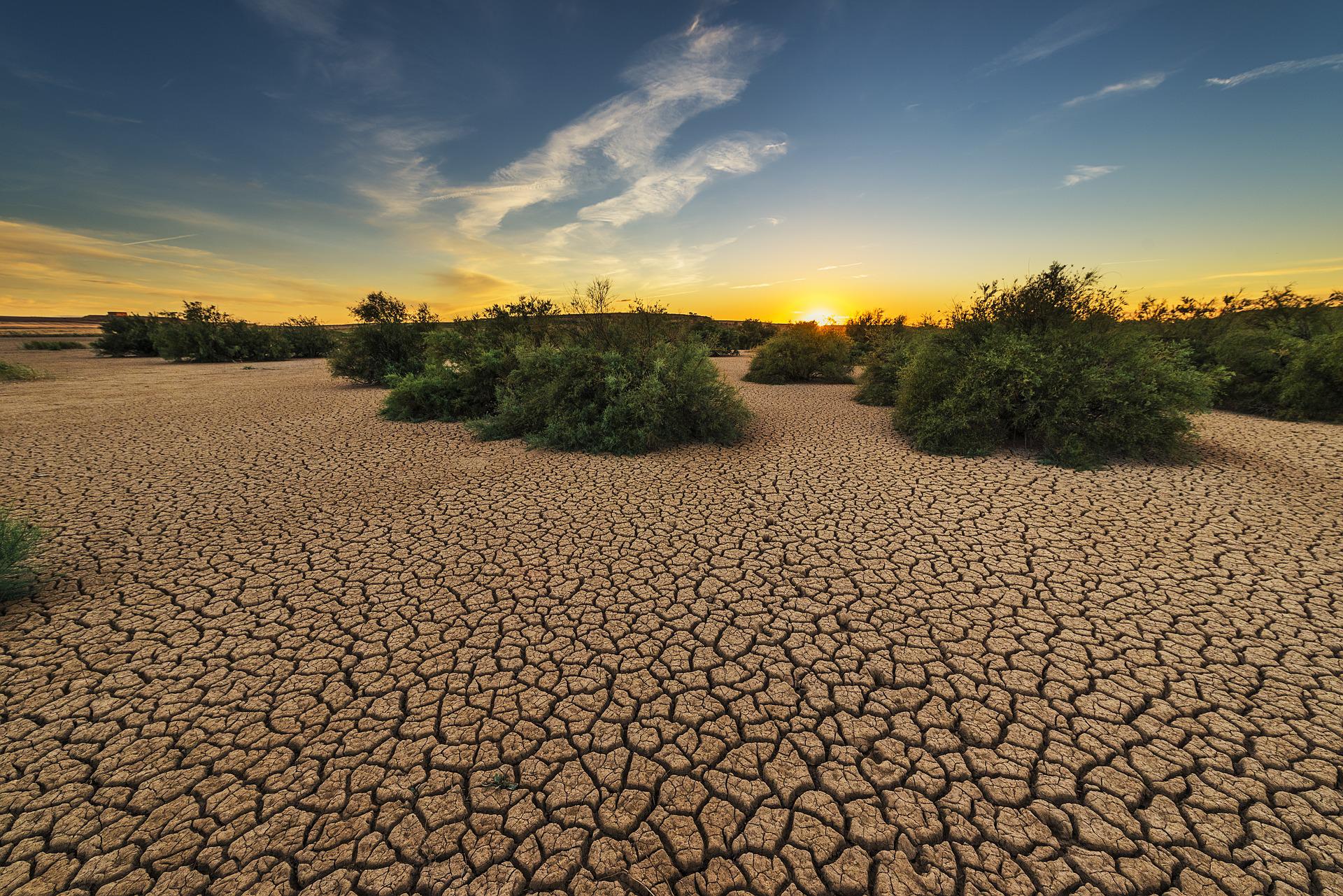
In 2022, water scarcity affected one-third of European Union countries, with the situation steadily worsening since 2010.
Demand for fresh water is expected to increase in coming years, as already half the world’s population faces water scarcity, while the climate crisis exacerbates the situation. In short, water—a resource we in the West largely take for granted—may not be available as we know it today.
Technology can provide solutions to the very serious water problem facing Cyprus, said Demetris Eliades, Assistant Research Professor at the KIOS Research and Innovation Centre of Excellence at the University of Cyprus, in his interview with Phileleftheros.
He explained that our country must adopt a holistic approach that takes into account all parameters and utilises available technologies to effectively address chronic droughts.
“When a country is at high risk of water scarcity, it must develop projects to manage this situation. These projects include both water production and ensuring it is distributed with high efficiency to consumers for both supply and irrigation,” he emphasised.
Demetris Eliades explained that the KIOS research centre collaborates with relevant authorities both at the national and local levels, providing information and expertise to address the water supply crisis as effectively as possible.
“Our proposals are already helping and will help even more in the future to better monitor systems. By using smart water meters and sensors that monitor both water quality and quantity in networks, we can make better decisions about locations, for example, where leaks are occurring or about pressure,” he noted.
At this point, we need additional efforts to ensure sustainable water use. This cannot be achieved through spasmodic measures such as increasing desalination or implementing water cuts, he explained.
“It is a long-term problem and requires teams of experts in various areas to propose solutions over time to manage the problem. It is perhaps one of the greatest crises Cyprus is experiencing”.
According to a recent EU report, water scarcity in 2022 affected 34% of European territory and the situation is worsening year by year. What is the situation in Cyprus?
Cyprus is currently in the worst position in the EU regarding water scarcity indices. This means that only a very small percentage of our water reserves are not consumed for both supply and irrigation.
Water quantities amount to 23% and are continuously decreasing dramatically. We are in a critical situation, and we estimate that by the end of the year, the quantities in dams will be minimal, and we will be forced to rely entirely on water produced from alternative sources, such as desalination, reused water from wastewater used for irrigation, and water from aquifers, like the one in Germasogeia.
How many litres of water does a person in Europe need daily for adequate nutrition and a decent life? And how much do they actually consume?
On average in the European Union, each of us consumes 160 litres of water daily. The same applies to Cyprus.
This is quite a large volume of water. Several European countries have set a goal to reduce this number and achieve around 100 litres per citizen daily.
For what reasons does a region or country experience water shortages, either for short or longer periods?
Shortages obviously occur because there is a negative balance between water that is either produced, processed, or collected and water that is consumed.
One reason this happens is because there are inadequate networks and appropriate infrastructure for water transport. In Cyprus, we face the opposite problem; while we have the infrastructure, we do not have sufficient quantities of water.
So when our needs are much greater than the water we have stored, it increases the risk of water scarcity, especially when this is something that repeats for a series of years. In Cyprus in recent years, the quantities of water from rainfall have been very small, resulting in our current point, where we are at 23% of the water capacity in dams.
It has been said that a country or region not having sufficient quantities of water is not because it didn’t rain but because appropriate engineering works weren’t undertaken. What is your view?
Both play a role. When a country is at high risk for water scarcity, meaning it knows it does not receive sufficient quantities of water every year, then it must develop projects to manage this situation. And these projects include both water production as well as ensuring it is distributed with high efficiency to consumers for both supply and irrigation.
How is the risk of water scarcity calculated?
We proceed with various scenarios for the future, for the next two to three years, and make estimates for how long we risk not having sufficient quantities of water.
These are clearly not accurate predictions—no one can do that—but what we do is ensure that decisions made today reduce the risk for something that will happen tomorrow.
We collect data over as long a time period as possible and create mathematical models that help us understand approximately where we will find ourselves.
And here I must say that climate change affects predictions and complicates risk assessment, precisely because the probabilities of when and how much it will rain are changing.
The Mediterranean is one of the regions considered a hot spot of climate change. Do you have any data or predictions on how it will be affected in the coming years regarding water scarcity?
Predictions show that the earth’s temperature will continue to rise. We estimate that an increase of one degree Celsius corresponds to a decrease in rainfall of around 4%.
So it is very likely that we will see Cyprus’s climate becoming more like that of North Africa or the Middle East, which increases the risk that we will no longer have the ability to collect the water reserves we have today and we will be talking about even more prolonged periods of drought.
This means we must change our strategy for climate change and make it one of our priorities, since in the end, the impacts will concern not only water management but the economy and public health.
We have climate change, as well as the fact that Cyprus has always been a place with long periods of drought. Therefore, what should a long-term plan for addressing water scarcity include, and what are your research team’s recommendations?
We have to manage, first, the aspect of water consumption and second, the aspect of supply and infrastructure management. Regarding consumption, a more efficient water pricing must be determined to better reflect its value, which requires cooperation with economic entities as well as making political decisions.
Regarding management, our team suggests converting water distribution systems across their entire spectrum from their current form into smart systems. That is, installing digital infrastructures and integrating data from various sources to optimise how they operate and to manage based on risk.
Also, on the supply issue, we can increase the availability of technologies, such as inevitably desalination plants, but also other techniques that increase the availability of drinking water. Our team focuses on the management of smart water management systems.
Have you made recommendations to the state or are you even implementing your proposals?
For the last twenty years, we have been collaborating with the Water Development Department as well as the Water Supply Boards of Limassol and Larnaca. We have implemented a series of technologies and projects, and some of these are subsidised by the EU Recovery and Resilience Plan.
These technologies are already helping and will help even more in the future to have better monitoring of systems. With the use of smart water meters and sensors that monitor both the quality and quantity of water in networks, we can make better decisions about locations, for example, where leaks are or about pressure.
Also, KIOS, the Centre of Excellence of the University of Cyprus, organises seminars and informs about how other countries manage water scarcity issues, while we have also prepared a roadmap for how Organisations in Cyprus can become more efficient with the aim of reducing losses.
Desalination and cuts are not the solution
Why is filling the country with desalination plants not the solution to our water problem?
Desalination plants are not a panacea because beyond the installation and operation costs, there is also the issue of energy. Good utilisation of Renewable Energy Sources must be made in water production, while at the same time there is the issue of desalination by-products.
Currently, they are transported to the sea, but we cannot know what the impacts will be on marine ecosystems.
We need a comprehensive strategy that takes into account not only the short-term needs we have for water supply but also the needs we have for irrigation, as well as environmental and energy issues, which are directly connected. We cannot solve the problem unilaterally with desalination plants.
Will the situation be helped if water supply cuts are made?
No, and this was shown in 2008 when similar measures were taken, when large shortages had also appeared. Cuts proved to be harmful to water networks and it took two to three years to return to the state they were previously, due to damages, breakages, and losses caused. And this is something that applies worldwide.
Even speaking with experts from abroad in countries with similar problems, they told us exactly that cuts are the worst possible solution for a water network. Instead of cuts, we can reduce water pressure, so that consumers have water without affecting the system. Lower pressures mean fewer chances for damages, as well as less consumption.
This, in fact, is one of the measures we can immediately take in Cyprus.
With dams at 23% of their capacity, do we have the ability for desalination water to be used in agriculture?
In my opinion, the water crisis is not about not having water to drink, but about not having sufficient quantities for agriculture. Our predictions say that by the end of the year, the quantities of water in dams will not be replenished, so we must see how agriculture will be protected.
And perhaps very strategic decisions need to be made, as we may not avoid reaching the point of producing water from desalination plants to give to agriculture. But before we get here, we must fully utilise the quantities we produce from treated water, which is not currently happening.
And we may need to make use of renewable energy for transporting and storing desalinated water in tanks for irrigation. And if we are heading to a future where Cyprus increasingly depends on desalination plants, then we must review, conduct appropriate studies, and make decisions to ensure that production and our GDP will not be affected, since the entire economy is connected.
It is a long-term problem and requires teams of experts in various areas to propose solutions over time to manage the problem. It is perhaps one of the greatest crises Cyprus is experiencing. However, we can cope with the minimum possible risk.
Do you have data on how large the losses are due to outdated networks in Cyprus? Have there been any discussions about improving pipes, and what else can be done to reduce losses?
Losses are estimated around 20% to 25%, which means that for every ten litres of water flowing into water supply networks, about two of them are lost to leaks because of connection points between pipes or because there are damages that are usually small and difficult to detect.
Daily, the relevant authorities have to deal with an enormous workload with hundreds of reports of leaks in water supply systems. And here I should note that networks are complex systems with a length of several hundred kilometres that are actually underground. When a leak occurs, it must be quickly identified without disrupting the system.
Smart systems contribute significantly to managing damages and problems that occur in networks. Thus, thanks to smart technologies, we can detect more quickly that something is wrong in a system and then with greater accuracy find where the problem is. At the same time, we can reduce the pressures a network receives, which also reduces leaks.
We must develop a water culture
At a societal level, what should citizens do?
We must realise that even our smallest habits have an impact. If all of us reduce just one minute in the shower every day, then we save 15 litres.
Taking into account that our population is around one million, then in total it’s about 15 million litres of water saved per day, a quantity that corresponds to the amount produced by a desalination plant.
So an imperceptible change has a huge impact. By reducing consumption below 150 litres of water per day, we help water supply organisations to request less water, which also means less pressure on the network, as well as fewer leaks.
And education can play a very important role. In our schools from a very early age, water awareness must be cultivated. Just as children learn about road safety or recycling from kindergarten, they should learn about the importance of water, the value of conservation, and develop a water culture.
Water is one of the most critical goods and currently it is absent from our education.

