


The future of the Cyprus issue hinges on upcoming reports being submitted to UN Secretary-General Antonio Guterres, with meetings between him and the two leaders expected in the autumn.
A pivotal element in the ongoing Cyprus issue is the report to be prepared by María Ángela Holguín Cuellar, which will assess her mission’s progress thus far. The outcome will depend on her findings and the decisions made by the Secretary-General.
The report is expected to be completed and sent to the UN Secretary-General by mid-next week. President Christodoulides remarked, “The Secretary-General will study the report and decide on the next steps.” If the Holguin report includes proposals beyond the established solution framework, Nicosia is optimistic that this will be avoided, as “everyone, the UN Secretary-General, Ms Holguín, and the members of the Security Council (SC) are bound by the same UN resolutions,” Christodoulides noted. He emphasised that “the framework is very specific and determined by the UN SC, and there is nothing to negotiate outside of this framework.”
Questions have arisen in Nicosia regarding the urgency of the President of the UN Security Council to assess the Cyprus issue before the body has been briefed on developments and before the Holguín report is prepared.
The Russian representative to the UN, Vasily Nebenzya, expressed that Holguín’s findings indicate “the parties are far from a compromise solution.” He mentioned the possibility of extending Olguin’s mandate, stating, “This is absolutely the prerogative of the Secretary-General because she is his personal envoy.”
The report is expected to significantly influence the report the UN Secretary-General will send to the Security Council on Good Offices in the Cyprus issue. In his report, the Secretary-General may outline his next moves.
The importance of these reports is evident from the positions of both sides, who call for objective reporting. Ersin Tatar, after meeting with Holguín in London, requested an “impartial and fair report.”
Tatar stated that Holguín’s six-month tenure has ended and her efforts to restart negotiations have been unsuccessful. He reiterated that “negotiations cannot continue from where they stopped at Crans-Montana,” adding that “a new negotiation process can begin if the dominant equal status of the Turkish Cypriot people is accepted.”
The third report shaping the Cyprus issue landscape will be prepared by Colin Stewart concerning the activities of the UN Peacekeeping Force in Cyprus.
Nicosia has already expressed that it expects an objective account of events on the ground, highlighting a divergence of views between the government and Stewart regarding buffer zone violations.
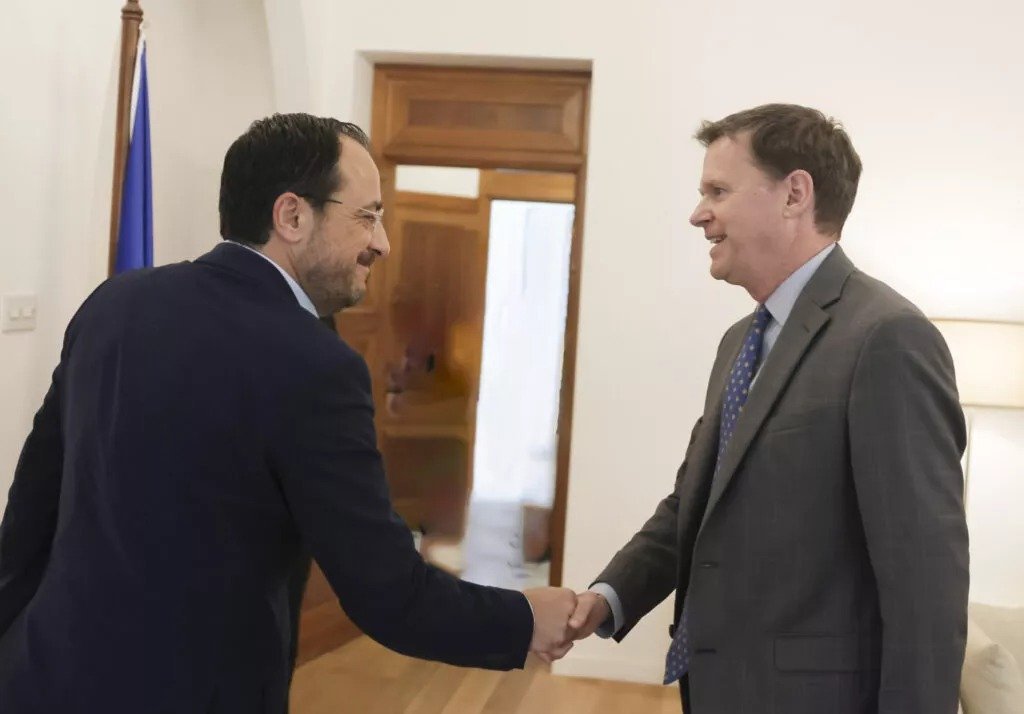
On Monday evening, after meeting with Colin Stewart, the President of Cyprus indicated that “everyone knows – including foreign diplomatic missions in Cyprus and the international community at large – who is militarising and who is constantly violating the buffer zone.” Pre-empting Stewart’s report, President Christodoulides noted that “UN reports have historically tried to maintain a balance.” Nicosia also stressed the need to “see who was attacked,” referring to events in Pyla and attacks against UNFICYP members.
Nicosia is concerned that Colin Stewart may attempt to equate the occupying army’s violations with the Republic of Cyprus installing observation cameras. Hence, Nicosia is keen to provide guidance to the UN.

