


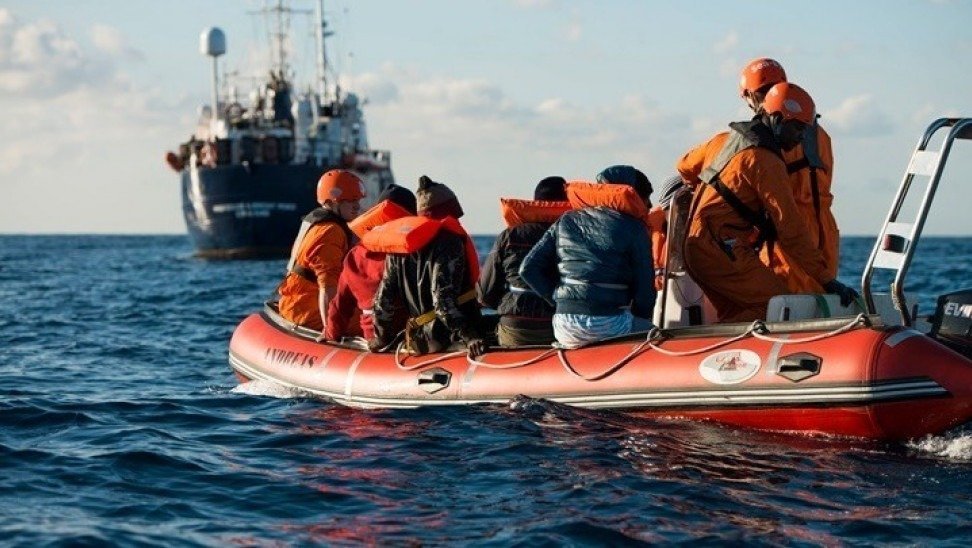
Three opposition parties have issued formal statements demanding accountability following a migrant boat disaster off Cape Greco that has claimed at least seven lives, with eleven people still missing.
The Movement of Ecologists-Citizens’ Cooperation movement and AKEL (Progressive Party of Working People) and Volt Cyprus all released announcements on Tuesday condemning the government’s handling of the incident and calling for a thorough investigation.
The vessel, reportedly carrying refugees from Syria or Lebanon, capsized or broke apart off Cyprus, prompting ongoing search and rescue operations by authorities.
“The Cypriot Republic itself admits it failed to effectively examine information regarding this shipwreck from a Non-Governmental Organisation,” the Green Party said in its statement, while calling for “a full and independent investigation” into allegations of failure or negligence by Cypriot authorities.’
The party was referring to reports by the non-governmental organisation Alarm Phone on March 16 which said it had alerted Cypriot authorities about a vessel in distress before the shipwreck on March 17.
The organisation followed this with another post the same day stating: “The @CyprusJRCC is informed but the officers only said they ‘are investigating’ and have no information to provide. We fear a #pushback is in the making! What is needed isn’t border violence but a rescue operation!”
The party directly challenged President Christodoulides’ claims about migration management, stating: “It is evident that the migration issue has not been resolved as the President claims.”
The @CyprusJRCC is informed but the officers only said they "are investigating" and have no information to provide. We fear a #pushback is in the making! What is needed isn't border violence but a rescue operation!
— @alarmphone (@alarm_phone) March 16, 2025
Volt Cyprus raised concerns about the timing of the disaster, stating: “What matters is that the Larnaca Search and Rescue Coordination Centre was reportedly informed the day before, prior to the shipwreck tragedy.”
The party expressed “not only sadness and pain for the loss of human lives, but also anger, since this tragedy could and should have been avoided,” noting that the incident occurred shortly after the President’s televised interview and the Migration Minister’s statements celebrating what he called the “solution” to migration issues.
AKEL similarly emphasised the need for “a reliable, objective and prompt investigation into the circumstances of the tragedy” while noting that “compliance with international law and relevant international conventions is not only a moral but also a legal obligation of the Republic of Cyprus.”
All three parties directly challenged President Christodoulides’ claims about successful migration management, with Volt Cyprus citing multiple recent incidents including allegations of pushbacks, extended detention of unaccompanied minors, and a European Court of Human Rights ruling against Cyprus.
“The government must immediately stop pushback practices at sea and along the Green Line and, with whatever humanity it has left, finally show the respect that is due to international law,” Volt Cyprus stated.
Search and rescue operations continue as authorities attempt to locate the eleven people still reported missing from the vessel.
What is a pushback
The term “pushback” refers to measures taken by states to forcibly return migrants, including asylum seekers, to the country from which they attempted to cross or have crossed an international border, without access to international protection or asylum procedures, or without any individual assessment of their protection needs.
Such actions often violate international laws, including the principle of non-refoulement, which prohibits returning individuals to countries where they may face persecution. Pushbacks can occur both at land and sea borders.
Cyprus accused of pushbacks
Cyprus has faced accusations of conducting pushbacks against migrants and asylum seekers. In July 2024, the United Nations High Commissioner for Refugees (UNHCR) reported that Cypriot authorities forcibly removed 25 migrants from government-controlled areas to the buffer zone, denying them access to asylum procedures. The Cypriot government denied these allegations, asserting that no such pushbacks occurred.
Additionally, in October 2024, the European Court of Human Rights ruled that Cyprus violated the rights of two Syrian asylum seekers by preventing them from applying for asylum and returning them to Lebanon without processing their claims. The court found this action amounted to degrading treatment.
(File photo)
Read more:

