


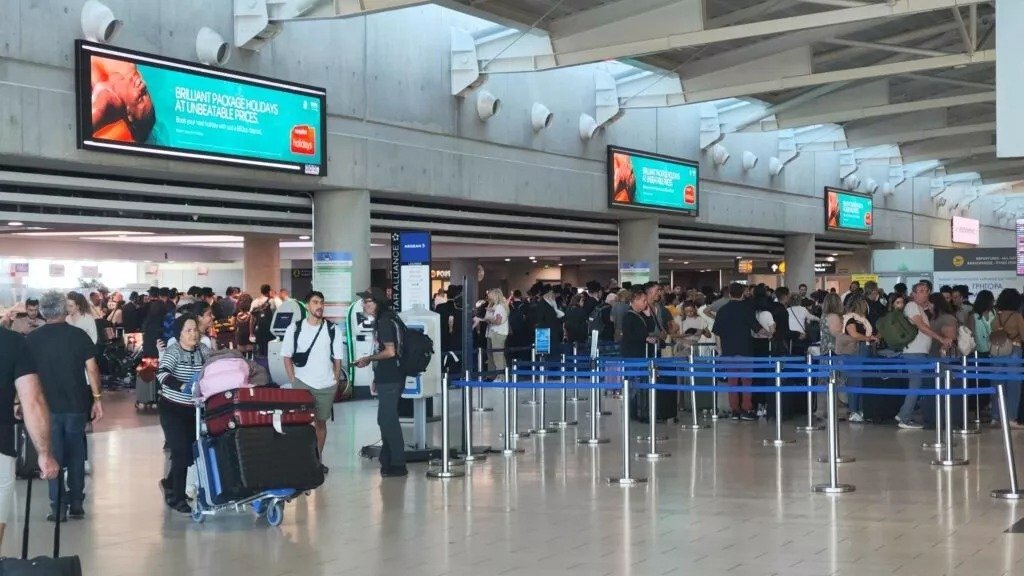
Efforts by Police to implement a “Photo Radar List” that would check individuals for outstanding traffic fines upon arrival and departure from Cyprus have been stalled by lawmakers.
Members of the House Legal Affairs Committee strongly criticised the Ministries of Justice and Transport, as well as the Police, over two initiatives related to unserved traffic tickets issued by speed cameras. MPs described the actions as unlawful and accused authorities of “cunning tricks and playing with citizens’ fears.”
The initiatives in question include a system for citizens to voluntarily check for outstanding fines online via the CYLOGIN service, and a proposal to use a list at airports and ports to identify individuals with unpaid penalties.
While relevant agencies stated that the voluntary online check was just that – voluntary – the legality of the airport and port list was unclear. The Personal Data Protection Commissioner reportedly gave her consent for the online platform, but the Legal Service representative stated they were not consulted on the matter.
MPs made it clear that while traffic offenders should pay their fines, they should not be tracked down using controversial methods. To address the issue of thousands of unserved tickets, the police had proposed legislative amendments allowing notification via SMS, but the relevant bill has yet to be sent to Parliament.
Addressing the Legal Affairs Committee, the head of Traffic Police Headquarters, Haris Evripidou, said the intention was to serve outstanding fines at entry and exit points of the Republic, including airports, ports, and checkpoints, for those who could not be reached by post or process server. This statement drew strong objections from MPs, who insisted there was no legal framework to support such action. The Law Office representative confirmed that their opinion had not been sought on the matter.
As a result, the chairman and members of the parliamentary committee requested the police representative to issue a statement confirming that the specific measure would not be implemented. They also called on all involved parties to discuss methods for serving fines (via mobile phone message or email) with the Law Commissioner.
Evripidou also stated that the aim of installing and operating the cameras was to prevent traffic accidents. He added that recent data showed a gradual decrease in serious traffic accidents over the past five years, while acknowledging an increase in fatal accidents last year, attributing the high number of deaths to two major incidents.
Law Office prosecutor Polina Efthivoulou informed the committee that citizens receiving a court summons could contact the Prosecutor’s Office to settle the fine and avoid court proceedings. She reiterated that the online platform was for informational purposes only and did not constitute formal serving of a fine.
Nikos Chrysostomou, representing the Ministry of Justice, noted that following problems with the serving of traffic fines, a bill was being drafted to simplify the procedures.
The Personal Data Protection Commissioner, Irene Loizidou Nicolaidou, stated that she had been informed by the police that procedures for implementing the technical solution they had proposed regarding the online platform, allowing citizens to be informed about photo enforcement fines only through the CYLOGIN service, were underway. Regarding the system for outstanding payment warrants at entry and exit points, she said the police had submitted an impact assessment to her Office and it had been approved.
However, Law Commissioner Luisa Christodoulidou-Zannettou stated that based on her research, no other country serves traffic fines via registered mail. Regarding the serving of warrants at entry and exit points, she said there was no relevant legislation, noting that this practice is reserved for warrants related to serious offences.
The chairman of the Legal Affairs Committee, Nicos Tornaritis, described the cameras as “slot machines” aimed at “fleecing” citizens. DISY party MP Fotini Tsiridou said the Ministries of Justice and Transport had been exposed for intimidating the public with threats of taking tens of thousands of people to court.
AKEL party MP Aristos Damianou argued that the operation of the photo enforcement system indicated a “kleptocracy” rather than a state.
Read more:

