


Cyprus has achieved the European Union’s highest return-to-arrival ratio at 179% whilst recording a 69% drop in asylum applications between 2022 and 2024, government officials announced on Wednesday.
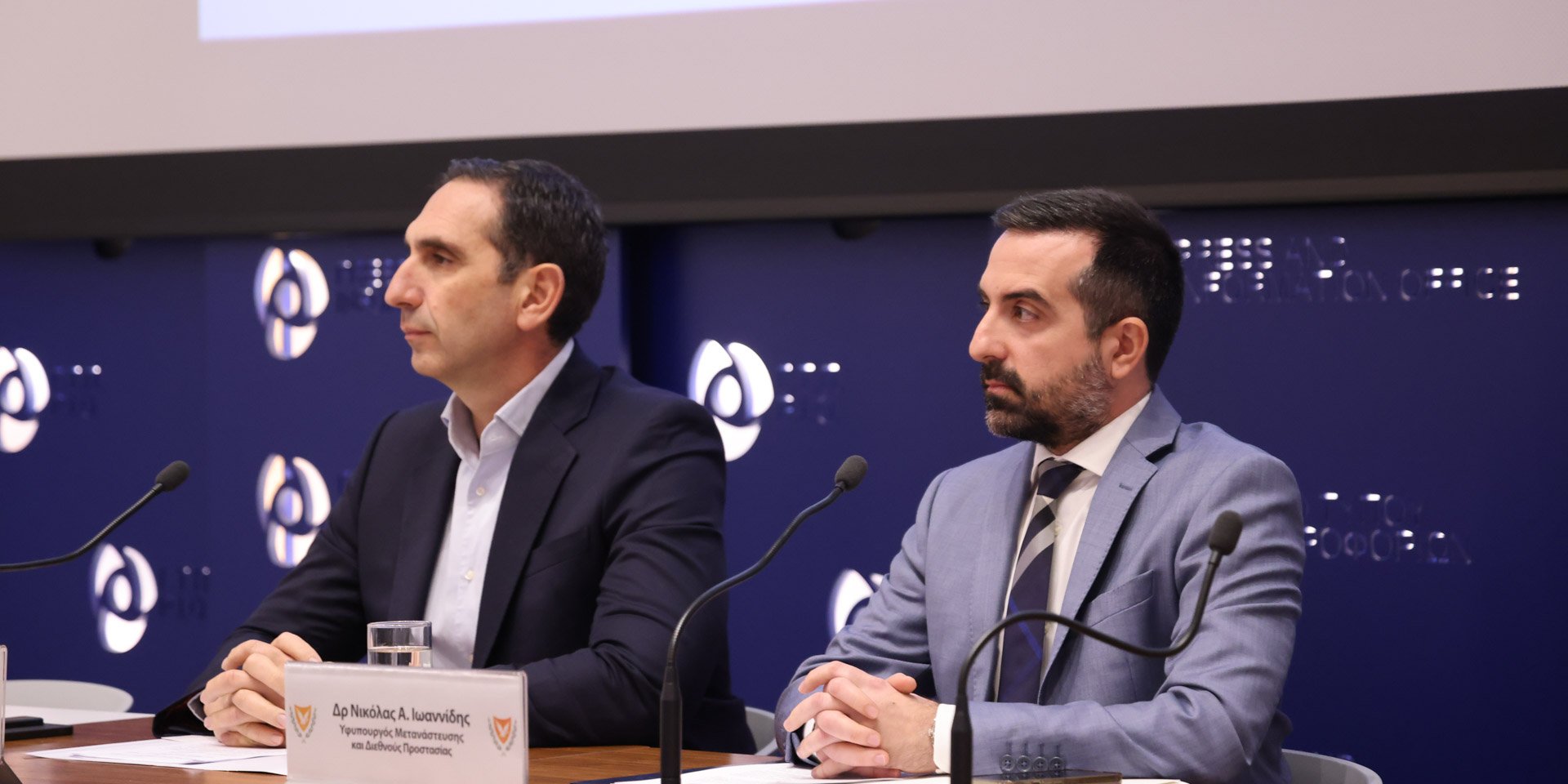
Interior Minister Constantinos Ioannou and Deputy Minister for Migration Nicholas A. Ioannides presented the results of the government’s migration strategy at a joint press conference, noting the reduction of migrant arrivals.
The number of asylum applications fell from a record 21,565 in 2022, with African applicants decreasing by more than 85%. Officials reported that 18,055 third-country nationals have departed Cyprus since the current administration took office.
“For the first time in Cyprus’s migration history, more people are leaving than arriving”, Ioannou said, noting that EU Commissioner Johansson has cited Cyprus as a model for other member states.
The government’s strategy focused on four main pillars: reducing arrivals, accelerating application processing, improving infrastructure, and increasing returns. Asylum application processing times have been reduced from 12-24 months to 1-3 months, the ministers noted.
A voluntary return programme offering incentives between 1,000 and 1,500 euros has contributed to 8,213 voluntary returns in 2024, compared to 4,636 in 2022. Additionally, 2,517 individuals have been relocated to other EU member states.
The Pournara reception centre has seen a 90% reduction in residents, dropping from 3,145 in 2022 to 359 by the end of 2024, demonstrating improved management of reception facilities.
Maritime arrivals of Syrian nationals, which increased following regional geopolitical developments, were effectively managed through a suspension of application processing, with sea arrivals dropping to zero since May, the ministers said.
Despite these improvements, officials cautioned against complacency. “There is no room for celebration given the fluid situation in our region”, Ioannou said, emphasising the complex international nature of migration challenges.
The government plans to enhance return capabilities by constructing a pre-departure centre with capacity for 1,000 people, addressing a current infrastructure gap in managing returns and deportations.

