


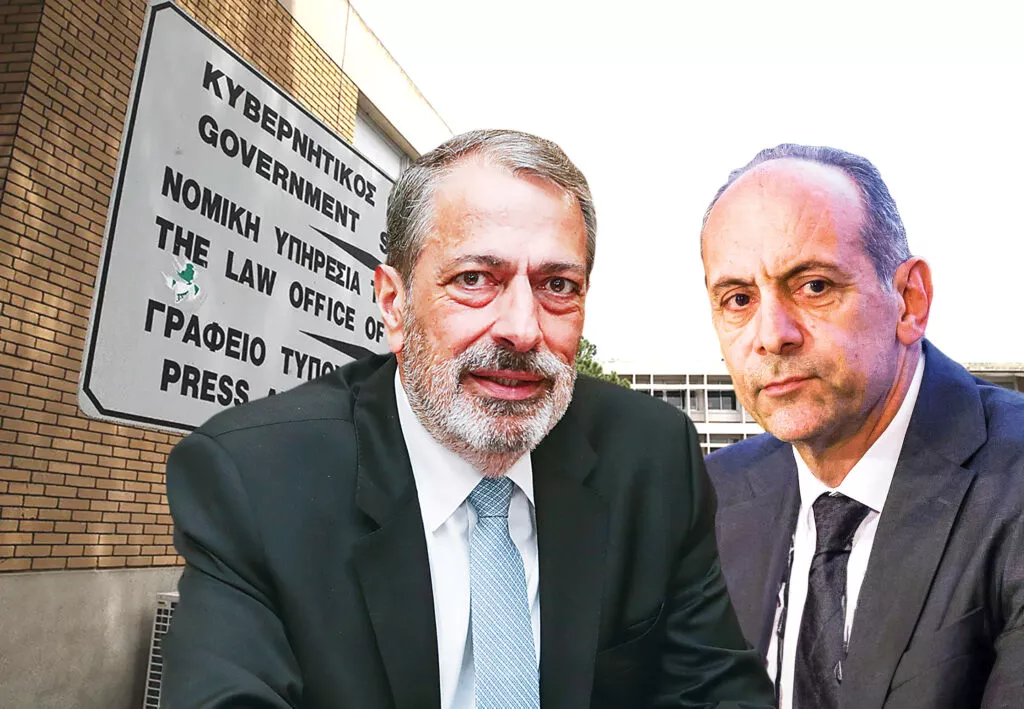
The cabinet yesterday approved bills to reform the country’s Law and Audit offices, despite the Attorney General’s reservations.
The package of legislation, presented by Justice and Public Order Minister Marios Hartsiotis, will now proceed to parliament for debate. The bills aim to separate the Attorney General’s powers and modernise the Audit Office, addressing long-standing structural problems that have left Cyprus with among the highest case resolution times in the European Union.
Attorney General Giorgos Savvides has expressed reservations about the bills’ constitutionality, arguing they affect the bi-communal nature of Cyprus’s constitution.
The reforms tackle what academics have described as “an overlap of functions concentrated in the institution of an all-powerful Attorney-General that blurs the line between advising and reform”. Cyprus is currently the only EU member state where no form of review – neither judicial nor hierarchical – is provided for Attorney General decisions not to prosecute.
Separation of powers
The legislation establishes a clear separation between prosecutorial and advisory functions within the Law Office. The Attorney General and Deputy Attorney General will retain their roles as state legal advisers, but their dual function will be abolished through the creation of an independent prosecution service.
New positions of Director and Deputy Director of Public Prosecutions will be established, taking over the criminal prosecution role currently exercised by the Attorney General’s office. There is currently no clear separation between staff entrusted with advisory tasks and those carrying out prosecutorial tasks.
All four senior officials will serve non-renewable eight-year terms to ensure institutional stability and independence, with appointments made by the President of the Republic.
EU pressure
The European Commission has highlighted the need for a clearer separation of powers in Cyprus’s legal system. The minister highlighted that modernising state institutions was one of President Christodoulides’ pre-election promises.
Audit Office reform
The legislation also creates an independent Audit Council comprising three members appointed by the cabinet to support the Auditor General’s work. The council will provide advisory oversight regarding the Audit Office’s general policy implementation and may comment on annual or special reports.
A key feature of the reforms is granting the Audit Office financial independence, a demand the service has pursued for years. The tenure of both the auditor-general and deputy auditor-general will be fixed at eight years under the proposed laws.
Implementation timeline
The reforms will take immediate effect upon parliamentary approval but will only be implemented when current office holders retire or resign. The bills include provisions ensuring existing officials’ constitutional powers remain unaffected during their current terms.
These reforms follow Cyprus’s 2023 separation of the Supreme Court into two independent courts – the Supreme Constitutional Court and the Supreme Court – as part of broader judicial modernisation efforts.
Sources indicate Cyprus has adopted a model similar to Malta’s system regarding the Attorney General and Director of Public Prosecutions’ respective powers. The bills will undergo extensive parliamentary debate before final passage, with the Supreme Constitutional Court expected to review the legislation before implementation.
Read more:

