


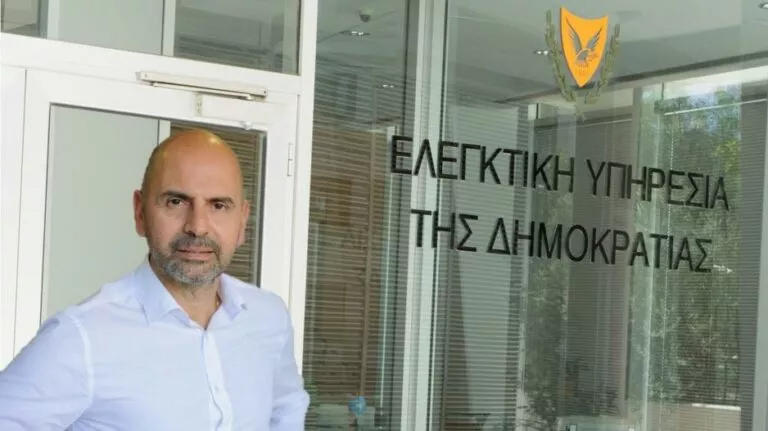
Auditor General has strongly opposed the proposed establishment of an Audit Council, branding it “Big Brother” and warning it represents the best way to paralyse the office during a parliamentary committee hearing on Wednesday.
Andreas Papakonstantinou appeared before the House Legal Affairs Committee to challenge government bills proposing the creation of a three-member Audit Council, arguing that no such system exists outside Cyprus.
Justice minister defends modernisation of audit oversight
“We will have a service within the Audit Office that will have no other work than being fed with cases without other duties,” Papakonstantinou stated, whilst supporting establishment of a council operating like those in other countries.
The auditor general endorsed the office’s independence and establishment of an eight-year tenure but engaged in heated verbal exchange with Justice Minister Marios Hartsiotis regarding whether the Audit Council would prepare reports or annual review reports.
“The minister’s presentation and references to the Audit Council are misleading,” Papakonstantinou said. “He cannot invoke the practice of other countries that implement the Audit Council. His provisions have no relation to what is applied elsewhere.”
Heated parliamentary exchange over institutional reforms
Papakonstantinou emphasised that other countries operate either single-person systems or audit councils, but the government’s current proposal bears no resemblance to an audit council. “Instead of the Auditor General deciding, the Audit Council will decide. No such system exists in the world,” he argued.
He warned against hasty modernisation efforts, noting the Audit Office enjoys high public trust that requires careful handling to maintain citizen confidence.
When the committee chair noted the Constitutional Court’s decision rendered the Audit Office inappropriate, Papakonstantinou clarified the decision concerned the Auditor General’s behaviour, not the office’s work.
Justice Minister Hartsiotis defended the proposals, arguing no institution is absolute or infallible. “It’s inconceivable in a modern European state for an institution like the Auditor General not to receive assistance in his work from a body that will advise and generally function supportively,” he stated.
Hartsiotis added that qualifications for an Auditor General in 2025 should exceed the 1960 requirement of being merely a “capable and suitable person,” noting no institution remains unchanged after 65 years without requiring modernisation.
He stressed the Audit Council would not have decision-making authority over the Auditor General’s powers but would be limited to recommendations whilst enhancing the role. “We do not touch the Auditor General’s constitutional powers whatsoever,” Hartsiotis concluded.
The Legal Affairs Committee will reconvene September 24 to continue discussions on the bill.
Read more:

