



Cyprus’s first national epidemiological study using wastewater analysis has revealed significant findings about alcohol consumption habits across the island, showing clear geographical variations between cities.
The research, published in Science of The Total Environment, was conducted by scientists Magda Psychoudaki, Dimitrios Tzelios, Maria Savvidou, Christos Minas, Kostas Michail and Despo Fatta-Kassinou from the Nereus International Centre, Cyprus National Addictions Authority and Ayia Napa-Paralimni Sewage Treatment Plant.
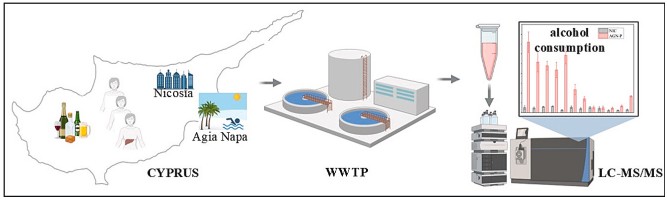
The researchers applied wastewater epidemiology (WBE – wastewater epidemiology) for the systematic monitoring of alcohol consumption in Cyprus, with the study recording variations in alcohol consumption between the capital, Nicosia, and coastal areas.
According to findings from the first epidemiological study based on wastewater, alcohol consumption in Nicosia throughout the year ranged from 0.31 to 10.60ml per day.
Conversely, the coastal Paralimni-Ayia Napa region showed significant fluctuations, with consumption varying from 0.58 to 60.85ml per day.
When comparing winter and summer consumption findings, no significant differences were found in Nicosia.
However, in the Ayia Napa-Paralimni area, average consumption during summer is nearly ten times higher than in winter.
Specific consumption patterns:
- Summer versus Winter in Coastal Areas: Average summer consumption was nearly 10 times higher than winter consumption
- Peak Consumption Days: The highest single-day consumption reached 51.18ml per day per resident in coastal areas during peak tourism period
- Lowest Consumption: Minimal levels of 0.26ml per day per resident were recorded in Nicosia during winter
Cyprus shows relatively low consumption compared to Mediterranean neighbours
Compared to other Mediterranean studies, Cyprus showed relatively low alcohol consumption levels. Nicosia’s average corresponds to 0.2 drinks per person daily, whilst the coastal area averaged 1.2 drinks per person daily.
Similar tourist patterns have been documented in Valencia, Spain, where festive periods showed consumption from 4.4 to 52.7ml per day per resident, comparable to Cyprus coastal peaks.
International comparisons:
- Turkey (Antalya): 25.9ml per day per resident average – significantly higher than Cyprus
- Greece (Lesbos): range 1.7-11.2ml per day per resident – similar to Nicosia levels
- Italy: range 3.8-22.9ml per day per resident across 17 cities
- Spain (Valencia): 1.1-18.31ml per day per resident (non-festive periods); 4.4-52.7ml per day per resident (festive periods)
Alcohol correlation with five narcotic substances
Additionally, four weekly campaigns were conducted to determine five illegal stimulant substances. Results showed a statistically significant correlation between alcohol and certain stimulants, namely methamphetamine, MDMA and ketamine.
This correlation does not imply direct causal connection or simultaneous consumption but underlines potential patterns of simultaneous presence in wastewater.
The research notes that traditional methods for assessing alcohol consumption, such as various population surveys, interviews and sales statistics, often face significant challenges, are prone to bias and cannot effectively capture unregulated, illegally imported or domestic alcohol.
The approach to overcome these limitations is wastewater-based epidemiology (WBE), which provides an objective and comprehensive measure of substance use across the entire community. This methodology has been used in several European countries.
Methodology
Once alcohol is consumed, the largest fraction rapidly converts to acetaldehyde in the liver and subsequently to acetic acid, with aldehyde dehydrogenase involved in both oxidation processes. A small fraction of consumed alcohol is excreted unchanged, and another, smaller fraction undergoes conjugation reactions leading to the formation of ethylglucuronide (EtG) and ethyl sulphate (EtS), which are ultimately excreted in urine. Both exist in detectable quantities in influent wastewater and have been used as biomarkers for determining alcohol consumption.
This specific study uses WBE to investigate alcohol consumption in two separate urban environments: the capital Nicosia and a smaller tourist area of Cyprus, the Ayia Napa-Paralimni region.
Tourism impact on consumption
The study notes that in tourist areas, alcohol consumption in wastewater is often closely linked to seasonal tourist influx, leading to significant fluctuations in consumption levels. During peak tourism periods, usually the summer months, alcohol consumption can increase significantly.

