


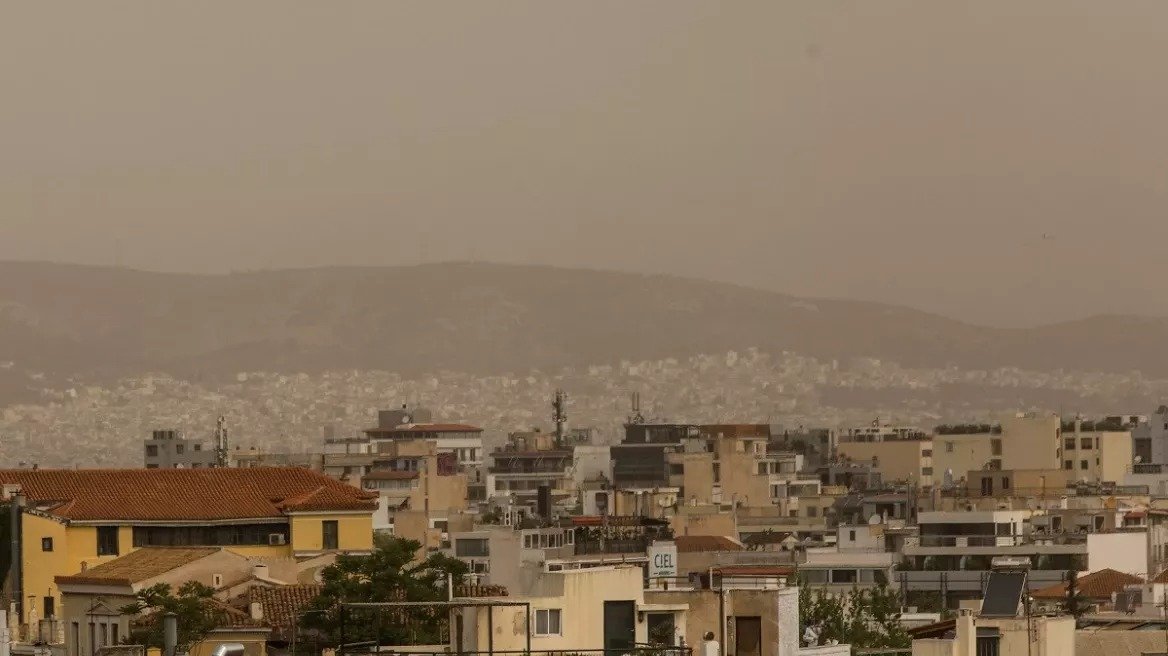
Air pollution, specifically from particulate matter (PM 2.5), is causing premature deaths and significantly impacting Cyprus’s gross domestic product (GDP), according to data presented by the President of the Cyprus Institute, Dr. Stavros Malas.
Dr. Malas delivered the data before the Parliamentary Committee on Internal Affairs, which was debating the opening and expansion of a road within the Athalassa National Forest Park in Aglantzia. The presentation highlighted that Cyprus’s current PM 2.5 levels already exceed the European Union’s (EU) forthcoming air quality standards, and implementing the proposed road project would exacerbate the health risks for local residents.
Dr. Malas stated, citing scientific data, that air quality in Cyprus has not improved over the last decade, unlike in many other EU countries. Key findings regarding PM 2.5 levels include that levels in Nicosia are up to 50 per cent higher than those recorded in Paris. Furthermore, Cyprus records high rates of premature deaths due to PM 2.5, with the total public health cost estimated at 3.7 per cent of GDP in 2023.
The new EU Air Quality Directive, set to take effect in 2026, will reduce the permissible limit for PM 2.5 from 25 micrograms per cubic meter to 10 micrograms per cubic meter. Dr. Malas noted that the current average readings from the Air Quality Monitoring Network in Cyprus stand at 15 micrograms per cubic meter, already exceeding the new limit. He stressed that this necessitates immediate and strong measures to reduce emissions, particularly from road traffic, which is the main source of pollution in Cyprus’s urban areas.
Proposed road and life expectancy
The expansion of the road within the Athalassa National Forest Park is projected to have specific, negative consequences on the local population. Dr. Malas warned that the new road would increase exposure to PM 2.5 by a factor of 2.5. Citing data from NASA and the European Environment Agency (EEA), he linked such a pollution burden to a six- to twelve-month reduction in life expectancy for a large part of the Aglantzia population.
The effects would be more intense for children, including students at the French-Cypriot School of Nicosia, which is adjacent to the proposed route.
Dr. Malas further warned that the road opening would damage the Athalassa Forest Park’s role as a recreational space, and would cause deforestation and ecosystem fragmentation in Nicosia’s most significant green space, leading to long-term, potentially irreversible impacts on flora and fauna.
Read more:

