


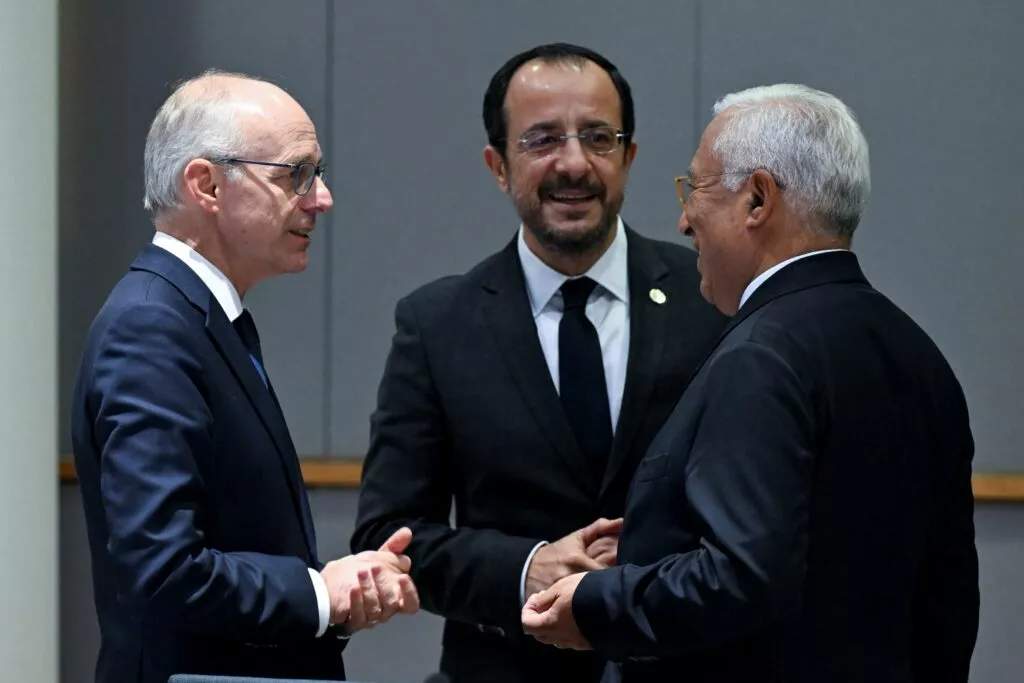
President Nikos Christodoulides will present data showing violations of sanctions against Russia at Thursday’s European Council session, with the evidence allegedly appearing to show Turkish involvement.
During the discussion on Ukraine, the president intends to present to other EU leaders a list with data concerning violations of European decisions in which Turkey appears to have involvement, according to sources. Christodoulides presented similar data during his recent trip to Kyiv in a meeting with Volodymyr Zelensky, sources said.
The European Council session is the last before Cyprus assumes the EU Presidency on 1 January. Christodoulides’s discussions will focus on strengthening coordination with heads of institutional bodies and European partners in promoting the European agenda and the Union’s major strategic objectives, which form part of the Cyprus Presidency priorities.
Before the session starts, the president will participate in a like-minded states meeting on migration and attend a European People’s Party summit.
Ukraine’s financial support for the 2026-27 period takes centre stage, with the goal of reaching agreement among all 27 partners. Hungary disagrees with the option of common borrowing. Discussions focus on a compensation loan using cash balances of frozen Russian Central Bank assets, through use of a special article requiring a special majority rather than unanimity.
The renewal of sanctions against Russia will keep Russian assets frozen until Russia compensates Ukraine and Ukraine in turn repays the loan to the EU, so member states do not need to pay guarantees. Several states maintain reservations about the compensation loan option.
The majority of states want to send messages of continued support for Ukraine and pressure on Russia to end its attacks, whilst keeping attention on peace efforts.
A political discussion on enlargement is expected in light of the approval of conclusions at the General Affairs Council. The Western Balkans’ progress, Ukraine and Moldova, and the relationship with Turkey are aspects expected to occupy the political discussion, based on the approval of Enlargement Conclusions by the General Affairs Council.
On Turkey, Nicosia notes that strong messages are being sent regarding the Cyprus issue. The EU welcomes the appointment of the UN Secretary-General’s personal envoy and restates its readiness “to play an active role, supporting all stages, under UN auspices, with all appropriate means at its disposal.” An important element is the Council’s readiness to work closely with the European Commission’s special envoy for Cyprus.
Geo-economics and competitiveness are expected high on the agenda, with institutions requesting a strategic approach from partners. The EU faces significant pressures mainly from China and the United States. Important issues include strengthening the EU’s strategic resilience and autonomy, strengthening its competitiveness, international role and trade relations. Discussion will address reducing EU dependence on China and strengthening European competitiveness in the shadow of new conditions in relations with the United States.
Discussion is expected on the first complete draft of the Negotiating Box for the Multiannual Financial Framework 2028-2034. The draft includes all sections and pillars. Most member states have expressed support for the goal of political agreement by the end of 2026. The MFF is the most important dossier of the Cyprus Presidency, which will lead negotiations for the next six months.
The Cyprus Presidency aims to advance negotiations to achieve progress on all pillars and deliver a mature negotiating framework considering the Union’s and member states’ calls and needs. Many aspects concern member states and different approaches exist, including the Commission’s proposal to enhance own resources revenue with new own resources, the role and importance of the Common Agricultural Policy and Cohesion Policy, allocation of funds and the role of regions, geographical distribution in the Competitiveness Fund, and implementation of the Global Europe pillar providing Ukraine support.
The Commission presented its MFF proposal with radical changes in structure, size, financing method through introducing new own resources, and policy priorities, emphasising competitiveness, strategic autonomy, defence and security reinforcement, housing crisis response, strengthening Ukraine support and repayment of Next Generation EU loans.
Significant divergences have emerged between member states on decisive aspects of the budget, both regarding architecture and prioritisation of priorities and regarding revenue and financing of the new budget. The new MFF amounts to 2 trillion euros in current prices.
Read more:

