


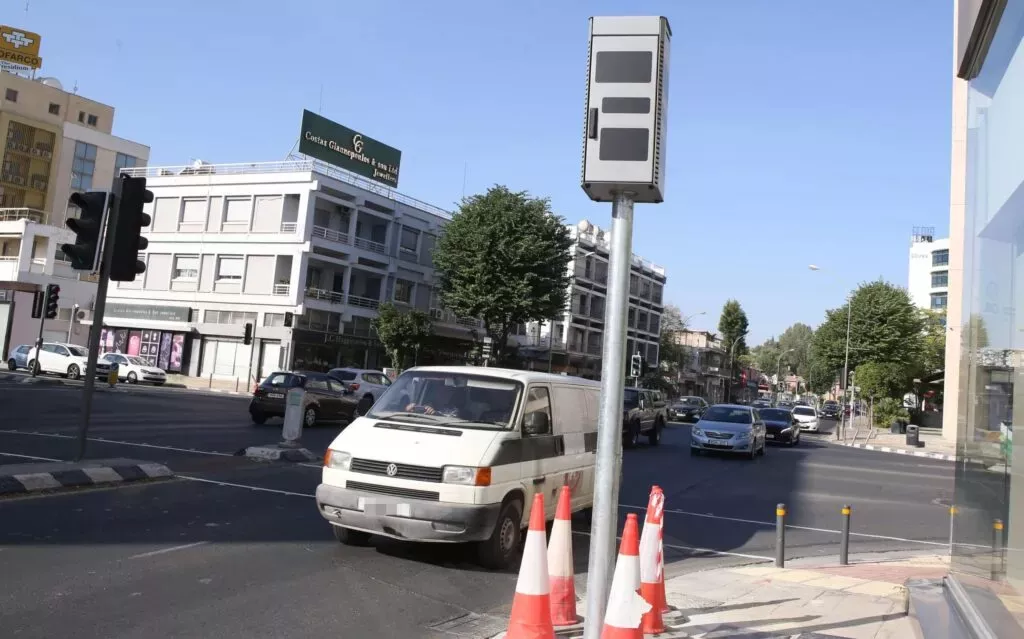
More severe consequences that authorities hope will solve the issue of most traffic camera fines going unpaid and equipment damaged or obstructed, have been introduced in the latest bill that will be submitted by the Transport ministry in late August or early September.
Failure to collect fines has been cited as one of the major weaknesses of the system installed almost three years ago and the latest upgrade proposals include notifying violating drivers via SMS or email, making driver identification mandatory, and criminalising not only damage to mobile camera vans but also obstruction, such as damaging warning signs indicating the presence of cameras.
This latest notification method is expected to unblock thousands of out-of-court fines that remain undelivered.
According to the bill, individuals who obstruct camera operations are subject to two years imprisonment and/or a fine of up to €5,000, while also paying for any damage to cameras or signs.
The revised bill regulates the following:
Video Recording Capability-That is the ability to record violations on video, in addition to photo evidence, when the device is activated.
Clarification that the fine issuance date is considered to be the date of notification delivery or receipt via regular or electronic mail, or the date the message was sent to the violator’s phone number.
Notifying offenders either by mail through registered personal letter, or by message to their phone number as declared to any competent state authority or government electronic application that may be used by vehicle owners.
Corporate Vehicle Procedures-When a vehicle is registered to a legal entity, a letter will be sent to the company’s managing officer for driver identification before implementing the violation notification procedure, so it can then be passed on to the actual driver.
In any case, the registered owner of the vehicle must indicate the violating driver and if they do not admit to the offence or cannot be located, the registered owner will be charged instead.
The ability to electronically register offending driver details in a relevant traffic cameras database, as well as the obligation for notification recipients to register their latest address in the database, if this has changed.
If the registered vehicle owner, though located, refuses to receive notification, it is nonetheless presumed that the notification has been received, in legal terms, and if the out-of-court fine stated therein isn’t paid, criminal prosecution may be initiated against them.
Electronic notification includes electronic registration of driver details through a website announced to the general public by the Photo-Enforcement Operating Officer.
If notification for an out-of-court fine is sent electronically and the fine is paid within 45 days of receipt, then both the postal registered letter procedure and personal service are terminated.
The notification recipient, as implemented under paragraph (a), is obliged to indicate an accurate address within 15 days of notification. Failure to comply constitutes an offense punishable by a fine not exceeding €3,000 or up to a year prison sentence.
Driver Responsibilities
The bill provides that if a registered vehicle owner (individual or legal entity) fails to act according to the new legislation—specifically, if they fail to notify that they weren’t the violating driver and this fact emerges after a 15-day period—they commit an offense punishable by imprisonment up to six months and/or a fine of up to €2,000.
If the registered owner notifies the operating officer of their claim that they weren’t the violating driver but doesn’t provide clear, sufficient, and complete details of the driver in question, they commit an offense punishable by imprisonment up to six months and/or a fine of up to €2,000.
The bill is subject to public consultation until August 25th and its most significant change is making camera obstruction a criminal offence, as authorities hope this will turn into a deterrent.

