


Building trust and supporting Cyprus’s reunification is the general objective of the aid programme run by the European Commission’s Directorate-General for Regional and Urban Policy (DG REGIO). The two main instruments DG REGIO has to support the Cyprus settlement process are EU assistance to the Turkish Cypriot community and the Green Line regulation.
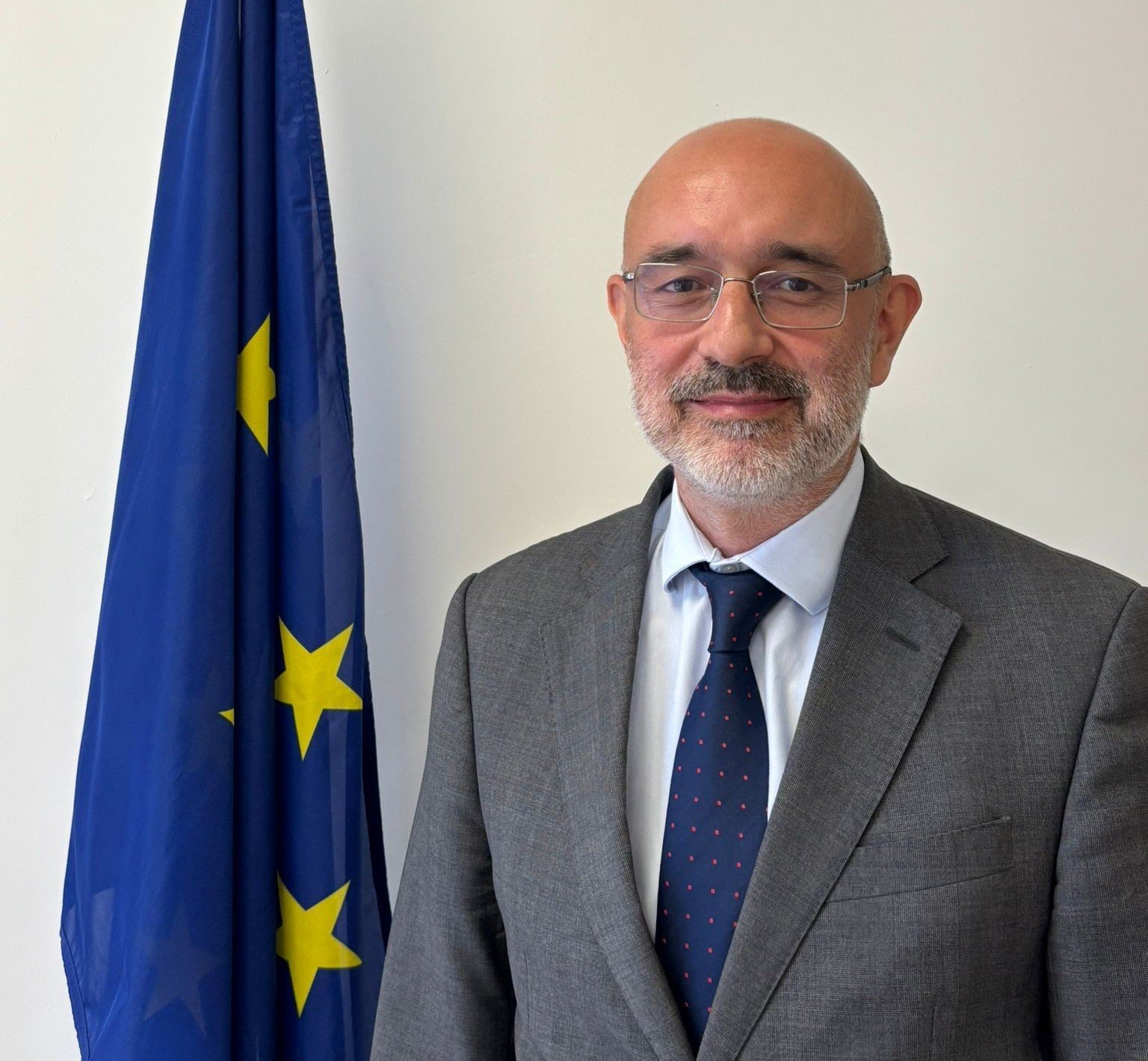
DG REGIO’s Deputy Director-General Hugo Sobral told Phileleftheros, following his recent visit to Cyprus, analyses the directorate-general’s involvement in the Cyprus issue. He notes that the Commission is working to bring the Turkish Cypriot community closer to the EU.
What is the purpose of your visit to Cyprus?
This was my first visit to Cyprus as Deputy Director-General of the Commission’s Directorate-General for Regional and Urban Policy (DG REGIO). Among my responsibilities is supporting the Cyprus settlement process.
The purpose of my visit was to engage with key interlocutors in Cyprus, both from the Republic of Cyprus and from the two communities. I also discussed the implementation of our key projects that aim to build confidence, foster dialogue, and encourage cooperation between the two communities. These include, among others, Green Line trade, the all-island Halloumi/Hellim Protected Designation of Origin (PDO) scheme, and the bicommunal solar power plant in the buffer zone.
What programmes are currently running for Cyprus under DG REGIO?
As regards support for the Cyprus settlement process, our two main instruments are the EU Aid Programme for the Turkish Cypriot community and the EU’s Green Line Regulation.
The Aid Programme is the EU’s main financial tool backing the UN-facilitated settlement process. Beyond Green Line trade, the Halloumi/Hellim PDO scheme, and the solar power plant, we support many other initiatives designed to build trust between the two communities. For example, we fund bicommunal civil society organisations working together on environmental protection and the promotion of human rights.
The Green Line Regulation, meanwhile, sets the terms under which people and goods can cross the Green Line into the areas under the effective control of the government of the Republic of Cyprus, where EU legislation applies. The Commission monitors its implementation to ensure that crossings are smooth, and that trade is facilitated in line with EU rules. For instance, Turkish Cypriot products can only enter the government-controlled areas if they comply with EU standards.
People-to-people contact and trade across the Green Line are essential to building trust and bringing the two communities closer. Last year, crossings reached a record 7.2 million in both directions. Trade also grew, with the highest annual value so far recorded in 2023 at €16 million. However, this remains modest compared to total imports to the Republic of Cyprus, which amounted to €12.4 billion, meaning only 0.13% originated from the Turkish Cypriot community. Yet intra-island trade not only makes economic sense, it also contributes to fostering a more peaceful and cooperative environment.
To further support this, the EU One-Stop-Shop provides advice and assistance to existing and potential traders from both communities. We are also working with both communities to expand the range of products eligible for Green Line trade.
DG REGIO is responsible for monitoring the Green Line Regulation. Do you agree with those who say the regulation must be changed? What is your position on this matter? Are there any discussions taking place during this period regarding changes to the Green Line Regulation?
So far, the Regulation has provided a workable framework regulating movements of people and goods across the Green Line. When there is a need to change certain aspects – for example, when new crossing points are opened, which must be added to Annex I of the Regulation, or when fresh fish and honey were admitted to Green Line trade – this is done through amendments or Commission Decisions. This will continue.
Can you elaborate on the aid program for the Turkish Cypriot community? What is the purpose of this program and how effective is it in helping the Turkish Cypriot community?
As mentioned, the overall objective of the Aid Programme is to build trust and support Cyprus’ reunification. This includes supporting socio-economic and infrastructure development to reduce disparities between the two communities.
We are also working to bring the Turkish Cypriot community closer to the EU, including through funding scholarships for Turkish Cypriots to study at EU universities and gain first-hand experience of the EU, as well as promoting EU values and standards within the community.
A key part of the Aid Programme is building bridges between Greek Cypriots and Turkish Cypriots to foster coexistence. One of the most successful initiatives targets the younger generation: a programme that allows students from both communities to attend the World United College (UWC), where they form lasting bonds across communities.
The Aid Programme is the only EU funding available to the Turkish Cypriot community. For the EU, this presence is also crucial, as a way to highlight and demonstrate the tangible benefits of EU membership.
During the recent high-level talks undertaken by the UN Secretary-General, one of the agreements reached by the two leaders was the construction of a photovoltaic park. Since we have not seen any movement yet, how do you see the EU helping to ensure this project moves forward?
The project of a bicommunal solar power plant in the buffer zone is a Commission initiative. We launched the idea a few years ago because such a project would have many benefits: firstly, support the greening of the electricity systems, secondly generate knowledge for other solar projects, and thirdly strengthen bicommunal cooperation on the energy sector.
There are various aspects that need to be agreed by the two communities, such as the exact technical configuration, ownership structure, the sharing ratio between the two communities, financing etc. The negotiations have been lengthy, but I am encouraged that the two Cypriot leaders proposed this project as one of the confidence-building initiatives agreed with the UN Secretary-General. Negotiations are still ongoing, and I am hopeful that there will be agreement soon.
Read more:

