


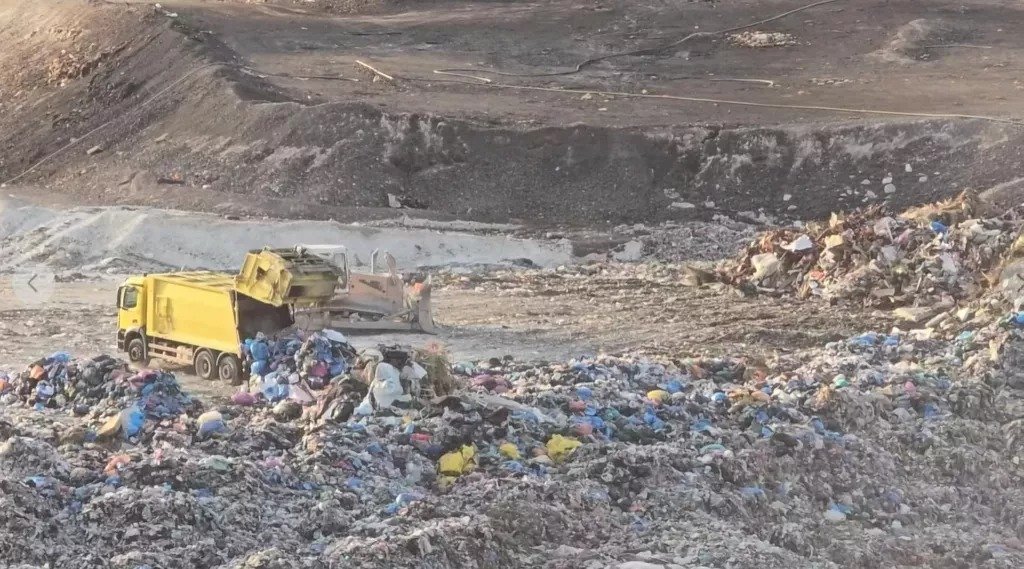
The Ministry of Agriculture, Rural Development and Environment has implemented its plan to combat illegal waste disposal across Cyprus, supporting local authorities in cleaning up illegal dumping sites while adopting a zero-tolerance approach to systematic waste dumping in municipalities and communities.
Department of Environment inspectors, working alongside police, will conduct inspections to enforce legislation. The ministry is supporting over 100 local authorities in cleaning more than 250 sites across Cyprus.
The ministry is also expanding its network of green points to provide citizens with more options for disposing of special waste streams like bulky items and mattresses.
These efforts are part of a broader plan to complete the network of mixed municipal waste treatment facilities and separately collected waste.
Agriculture Minister Maria Panayiotou announced that upgraded processing units for mixed and separately collected waste at Koshi and Pentakomo facilities will begin operations in 2029.
She outlined challenges in the Municipal Waste Management Plan 2022-2028, emphasising targets including separate collection of organic waste, increasing municipal waste recycling to 55% by 2025, 60% by 2030 and 65% by 2035, and reducing landfill waste to 10% by 2035.
The minister addressed operational issues at existing facilities.
The Koshi unit, serving Nicosia, Larnaca and Famagusta districts, needs equipment replacement after 14 years of operation.
The Pentakomo facility, serving Limassol, faces equipment problems, requiring 90 contracts worth €1.2 million since the Water Development Department took over in December 2023.
Regarding the “Pay As You Throw” programme, Panayiotou noted that Aradippou municipality has implemented it in 2024, with 12 municipalities and nine community clusters expected to follow in 2025, and seven municipalities and 21 community clusters in 2026.
The programme, an EU obligation that should have been implemented last summer, has received €25 million in funding covering equipment (40%), inspections (30%), local awareness campaigns (20%), and support for vulnerable groups (10%).
Read more:

