


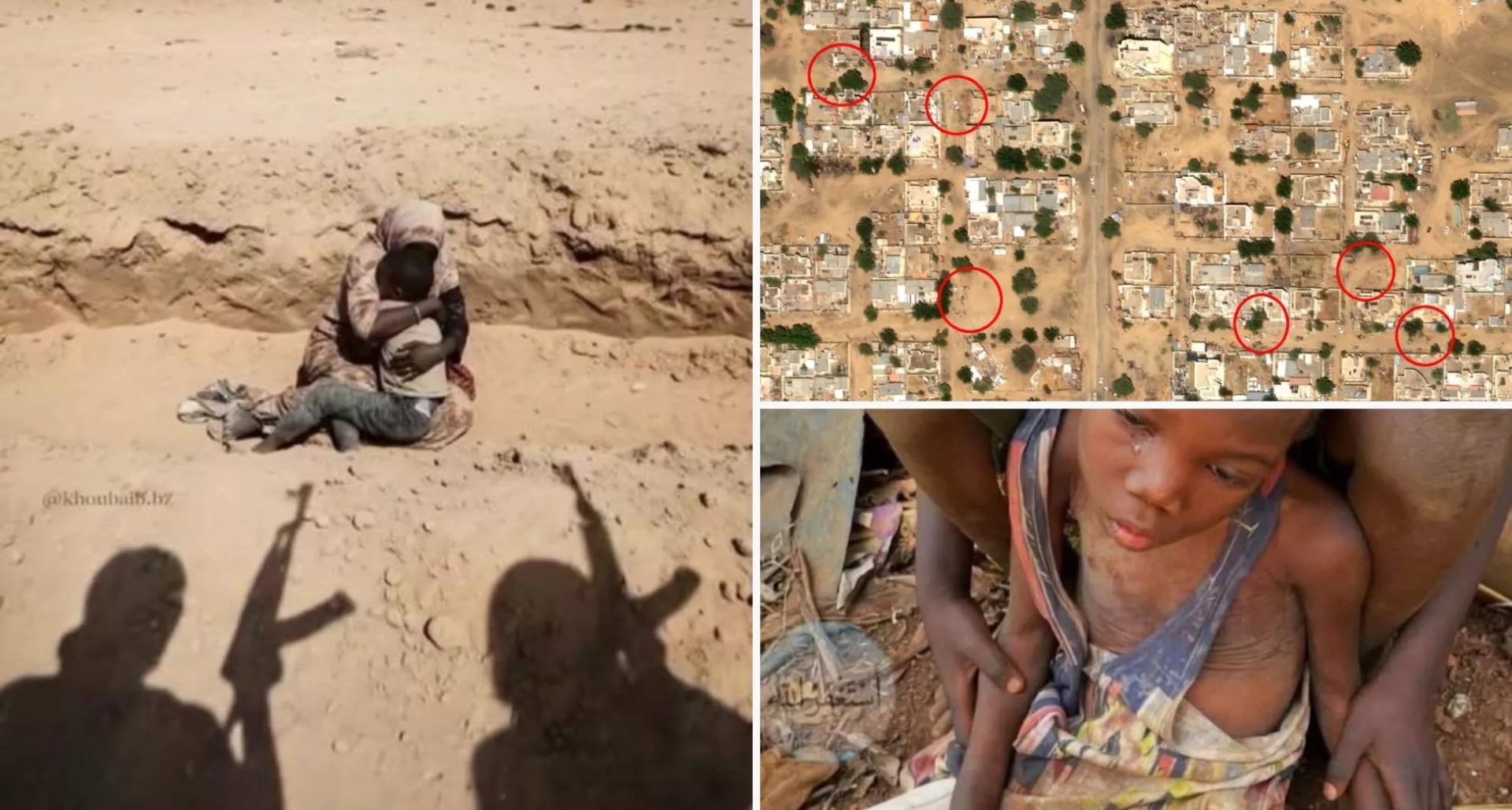
The World Health Organisation has expressed shock at reports that hundreds of patients and staff were killed inside a hospital in El Fasher, Sudan, after the Rapid Support Forces (RSF) took control of the city on Sunday, according to a Guardian report.
WHO Secretary General Tedros Adhanom Ghebreyesus said he was “appalled and deeply shocked” by reports that more than 460 people had been killed at the Saudi maternity hospital, according to a post on X.
The Sudan Doctors Network, a medical group monitoring the civil war, said in a Facebook post on Wednesday: “The Rapid Support Forces yesterday… killed in cold blood everyone they found inside the Saudi hospital”.
Fighting has raged between the Sudanese armed forces and the RSF since April 2023, when a power struggle within the military regime erupted into open conflict in Khartoum before spreading across the country.
With the army’s retreat from El Fasher, the RSF now controls all five of Darfur’s regional capitals. Sudan’s army still holds most of the country’s north and east, having recaptured Khartoum in March 2025, while fighting continues in the southern region of Kordofan.
El Fasher, once home to more than one million people, had been under siege by the RSF since May 2024. In August that year, famine was declared in the Zamzam displacement camp south of the city.
The RSF reportedly killed as many as 2,000 people when it seized that camp in April, which at the time housed 500,000 people.
On Tuesday, the Joint Forces, a coalition of armed groups allied with Sudan’s military, claimed the RSF had executed more than 2,000 unarmed civilians since taking El Fasher.
RSF leader General Mohamed Hamdan Dagalo, known as Hemedti, acknowledged there had been “abuses” by his forces in his first comments since the fall of El Fasher, posted on Telegram on Wednesday.
Dagalo said an investigation had been opened, without providing further details.
The Yale Humanitarian Research Lab analysed satellite imagery of the hospital on 27 and 28 October.
On Tuesday, three clusters of white objects and “reddish discolouration on the ground” appeared next to the hospital that had not been there the day before. In two clusters, the objects were 1.1-1.9 metres long, the lab said in a report.
The report also found “evidence consistent with mass killing” at an RSF detention site at a former children’s hospital in eastern El Fasher, as well as continued “systematic killing” at the city’s eastern earth walls, originally built as defence by the army and later reinforced by the RSF.
“We’re not looking at small numbers, we’re looking at dozens and hundreds and, eventually, there will be thousands,” said Caitlin Howarth, director of conflict analytics at the Yale lab.
Civilians who escaped El Fasher have reported being stripped of belongings and extorted for ransom by RSF fighters, with many women reporting sexual assault.
Many are believed to have died in the desert while attempting to reach displacement camps, with the true death toll potentially never known.
The Associated Press spoke to witnesses who described RSF fighters going house to house, beating and shooting people, including women and children. Many civilians reportedly died of gunshot wounds in the streets while trying to flee.
“It was like a killing field. Bodies everywhere and people bleeding and no one to help them,” said Tajal-Rahman, a man in his late 50s, speaking by phone from Tawila, a displacement camp about 60km west of El Fasher that now houses more than 650,000 people.
The RSF grew out of the Janjaweed Arab militias, which were accused of committing genocide against African ethnic groups in Darfur in 2003 under former president Omar al-Bashir. In January, the US government formally declared that the RSF had committed genocide.
(information from The Guardian)

