


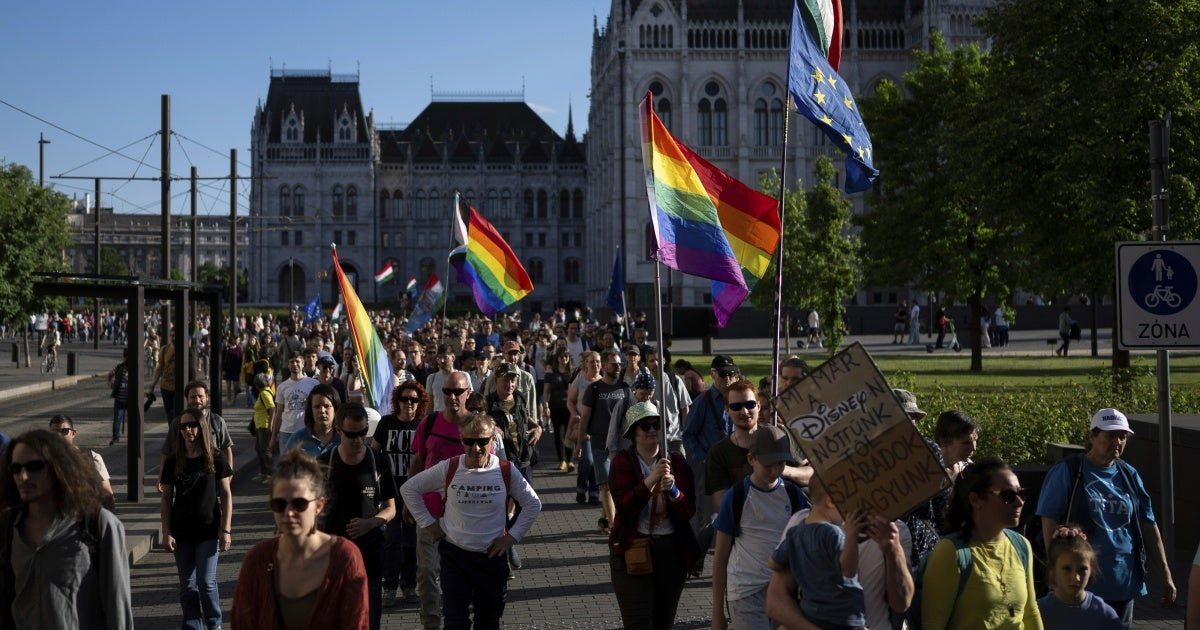
Tens of thousands took part in Budapest Pride on Saturday as Hungarians joined forces with campaigners and politicians from across Europe in a march that has become a symbol of pushback against the Hungarian government’s steady rollback of rights.
“This weekend, all eyes are on Budapest,” Hadja Lahbib, the European commissioner for equality, told reporters in the Hungarian capital on Friday. “This is bigger than one Pride celebration, one Pride march. It is about the right to be who you are, to love who you want, whether it is in Budapest, in Brussels or anywhere else.”
The 30th anniversary march comes after the country’s ruling Fidesz party – led by rightwing populist Viktor Orbán – backed legislation creating a legal basis for Pride to be banned, citing what critics describe as a widely criticised need to protect children.
Budapest now. Pride 25. Enormous turnout! pic.twitter.com/IL6w3qXy2S
— liam cunningham (@liamcunningham1) June 28, 2025
Government threatens fines and surveillance
The Hungarian government said it would use facial recognition software to identify people attending any banned events, potentially fining them up to €500 (£425).
Organisers of Budapest Pride said the government was attempting to restrict peaceful protests by targeting them. “This event was one of the important milestones of the LGBTQ community,” said spokesperson Máté Hegedüs.
The country’s main Pride march was cast into doubt earlier this year after the legislation was passed, creating uncertainty about whether the event could proceed.
Thousands of people are marching for pride in Budapest. A 200 pp @Amnesty delegation is here from around Europe. Against repression we stand and rise. We resist. This is trans-national civil disobedience. #BudapestPride pic.twitter.com/8qSYr1K0rC
— Agnes Callamard (@AgnesCallamard) June 28, 2025
European officials call for protection
Nicolae Ștefănuță, the vice-president of the European parliament, on Friday called on police to respect those attending the Budapest Pride march. “I would like to say that the police and institutions of the state have a duty to protect the citizens,” he said. “It’s as clear as possible.”
The European Commission president, Ursula von der Leyen, this week joined calls for Hungarian authorities to allow the event to go ahead. Hungarian Prime Minister Viktor Orbán was swift to hit back, likening the intervention to receiving orders from Moscow in communist times.
(Featured image from Human Rights Watch)
Read more:

