


Turkey’s relations with Central Asian members of the Organisation of Turkic States (OTS) have hit their lowest point as Kazakhstan, Turkmenistan, and Uzbekistan pledged support for Cyprus’s sovereignty, effectively burying Ankara’s efforts to use the OTS as a vehicle for recognition of the occupied north.
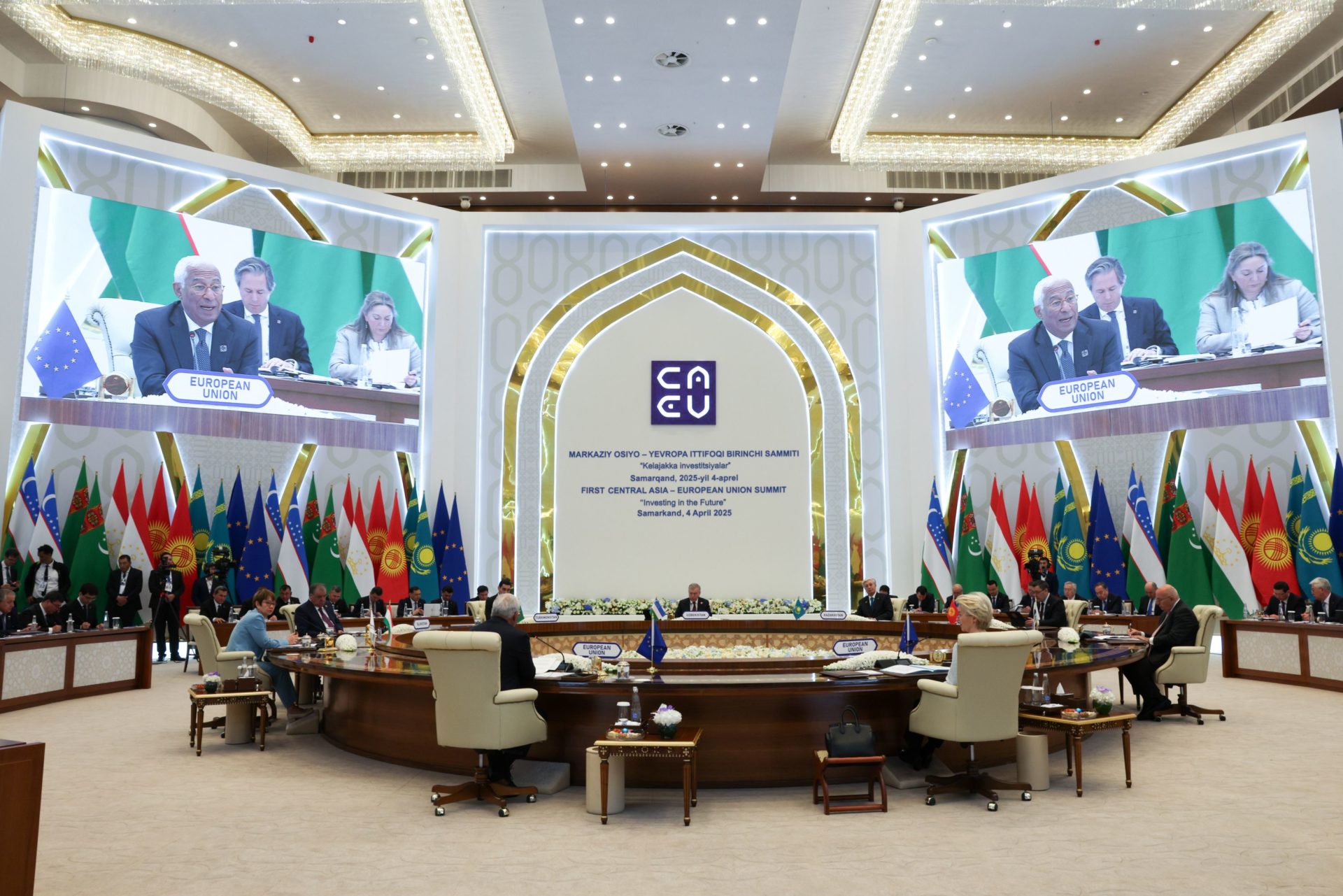
In a joint declaration at the European Union-Central Asia summit in Samarkand on April 4, the three Central Asian nations explicitly endorsed UN Security Council resolutions 541 (1983) and 550 (1984), which condemn the declaration of the self-proclaimed Turkish Republic of Northern Cyprus and call on UN members not to recognise it.
The declaration states: “The EU and Central Asian countries confirmed their strong commitment to UN Security Council resolutions 541 and 550 and noted that the development of their relations depends on adherence to this principle.”
While Turkish Cypriot authorities had anticipated OTS officials travelling to occupied northern Cyprus as steps toward recognition, they instead witnessed three OTS member countries opening embassies and upgrading diplomatic relations with the Republic of Cyprus.
Paragraph 4 of the declaration emphasises the parties’ determination to respect the sovereignty and territorial integrity of all states in international forums and to avoid measures that would violate this principle.
The Turkish Foreign Ministry has maintained striking silence on both developments, making no public statements about the embassy openings in Nicosia or the summit declaration, though this does not rule out diplomatic initiatives behind closed doors.
The timing holds particular significance as it follows the first informal conference on Cyprus in four years. UN Secretary-General Antonio Guterres announced on March 18 in Geneva that talks would reconvene in late July, despite efforts by Turkey and Turkish Cypriot leader Ersin Tatar to block UN initiatives for resuming Cyprus negotiations.
Since the 2021 Geneva conference, Turkey and Tatar have refused to discuss anything with the United Nations beyond recognition of the occupied north, promoting a two-state solution and leveraging Turkey’s influence within the OTS to advance this position.
Tatar attended the OTS summit in Bishkek in 2024 as an “honorary guest,” appearing in official photographs alongside other OTS leaders, which prompted strong objections from both Cyprus and the European Union.
Turkish media outlet “Turkiye” documented reactions to these developments. Professor Faik Alibekmerli from Azerbaijan’s national academy of scientists stated: “We all expected that ‘Cyprus’ would join the Organization of Turkic States and that brotherly countries would open embassies in the ‘Turkish Republic of Northern Cyprus’. To be honest, at first we couldn’t believe it.”
Osman Kepenek, president of the Academic Research Institute, indicated that the three countries’ recognition of the Republic of Cyprus creates problems for the collective will of OTS members, noting: “In a sense, this step means it is the legitimate administration of the island.”
Azerbaijan’s President Ilham Aliyev, during a forum in Baku, reaffirmed his support for the occupied north: “We are always by the side of our brothers. Our policy has always been clear. We have no other agenda from this perspective. We only think about how we can help our brothers maintain their ‘state’. They deserve it historically and for what they have done.”
Aliyev and Turkish President Recep Tayyip Erdogan remain the only two leaders who meet with Tatar and address him as “president.” Aliyev maintains this relationship while carefully avoiding cutting ties with the European Union.
Cyprus’s diplomatic efforts have yielded significant results, with the European Union factor proving decisive. Critics of the diplomatic developments between Central Asian countries and Cyprus blame the EU for these outcomes, while Turkey’s restrained response appears influenced by its unwillingness to distance itself from the EU.
This marks the first time that UN Security Council resolutions have been referenced in a joint EU-Central Asian summit declaration with the agreement of Turkic states, representing a significant diplomatic achievement for Cyprus.

