


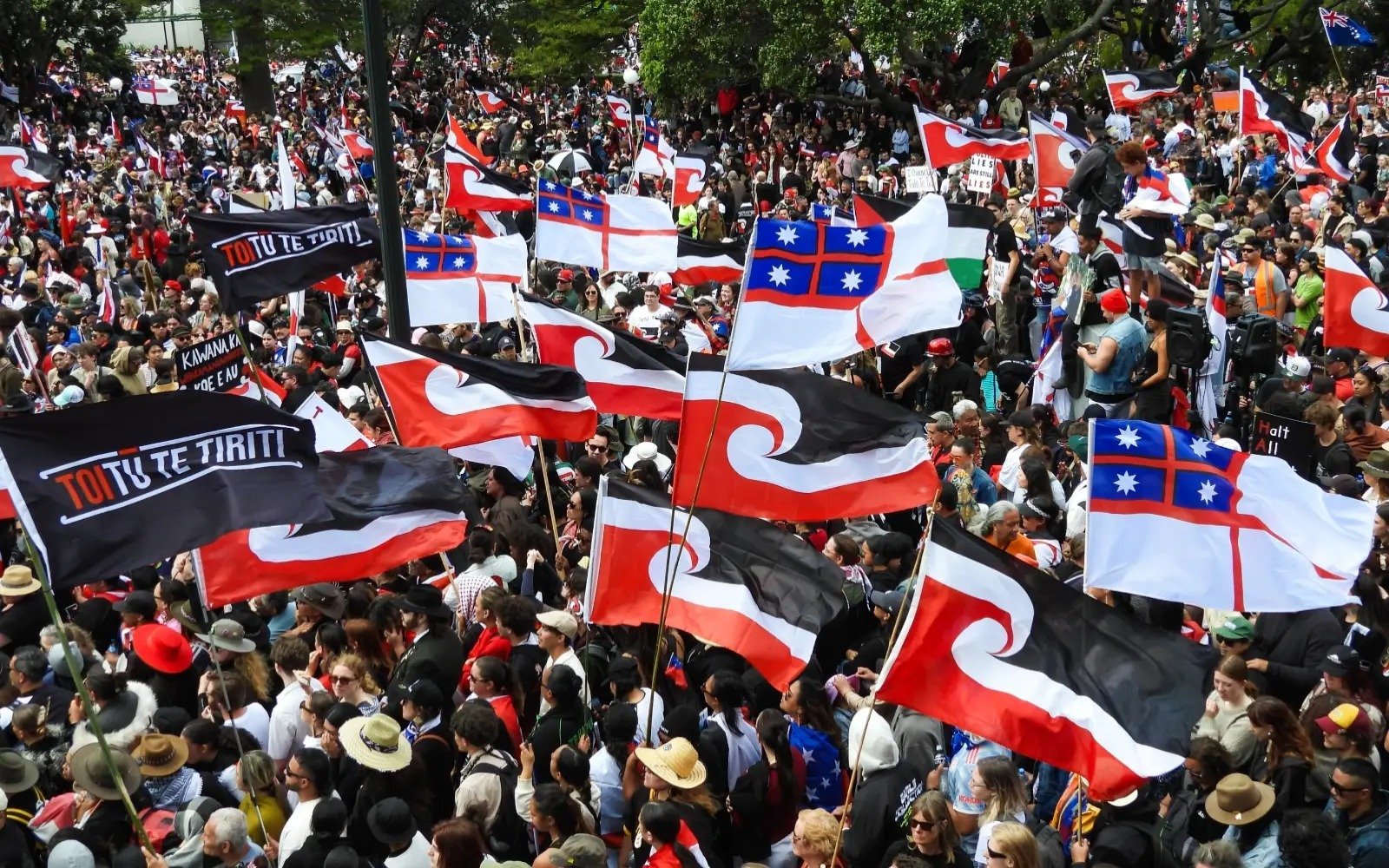
One of New Zealand‘s largest-ever protests saw an estimated 42,000 people march to parliament on Tuesday, opposing controversial legislation that would redefine the interpretation of the country’s founding treaty with its Indigenous Māori people.
The nine-day march, known as hīkoi mō te Tīriti (march for the treaty), began at Cape Reinga in the country’s far north before culminating in the capital Wellington.
Protesters bearing the red, white and black tino rangatiratanga flag formed a two-kilometre line through the city.
The demonstration targets the treaty principles bill, a flagship policy of the coalition government’s libertarian Act party.
The legislation would alter how the 1840 Treaty of Waitangi, signed between the British Crown and more than 500 Māori chiefs, is interpreted.
“The Māori nation has been born today”, said protest leader Eru Kapa-Kingi, addressing the crowd at parliament.
The peaceful demonstration drew both Māori and non-Māori participants, including the Māori Queen, Nga wai hono i te po.
Act party leader David Seymour, who authored the bill, made a brief appearance outside parliament but dismissed the protest’s significance, telling Radio New Zealand that “the overwhelming majority of New Zealanders are at work, going to school”.
The bill, which passed its first reading last week, faces significant opposition and is unlikely to become law.
Both major coalition partners, the National Party and New Zealand First, have indicated they won’t support it beyond the initial reading.
Legal experts, academics and Māori rights groups argue the legislation would undermine the treaty’s principles, developed over 50 years to guide relations between Māori and government authorities.
The justice committee will now hear submissions on the bill over six months before its second reading.

