


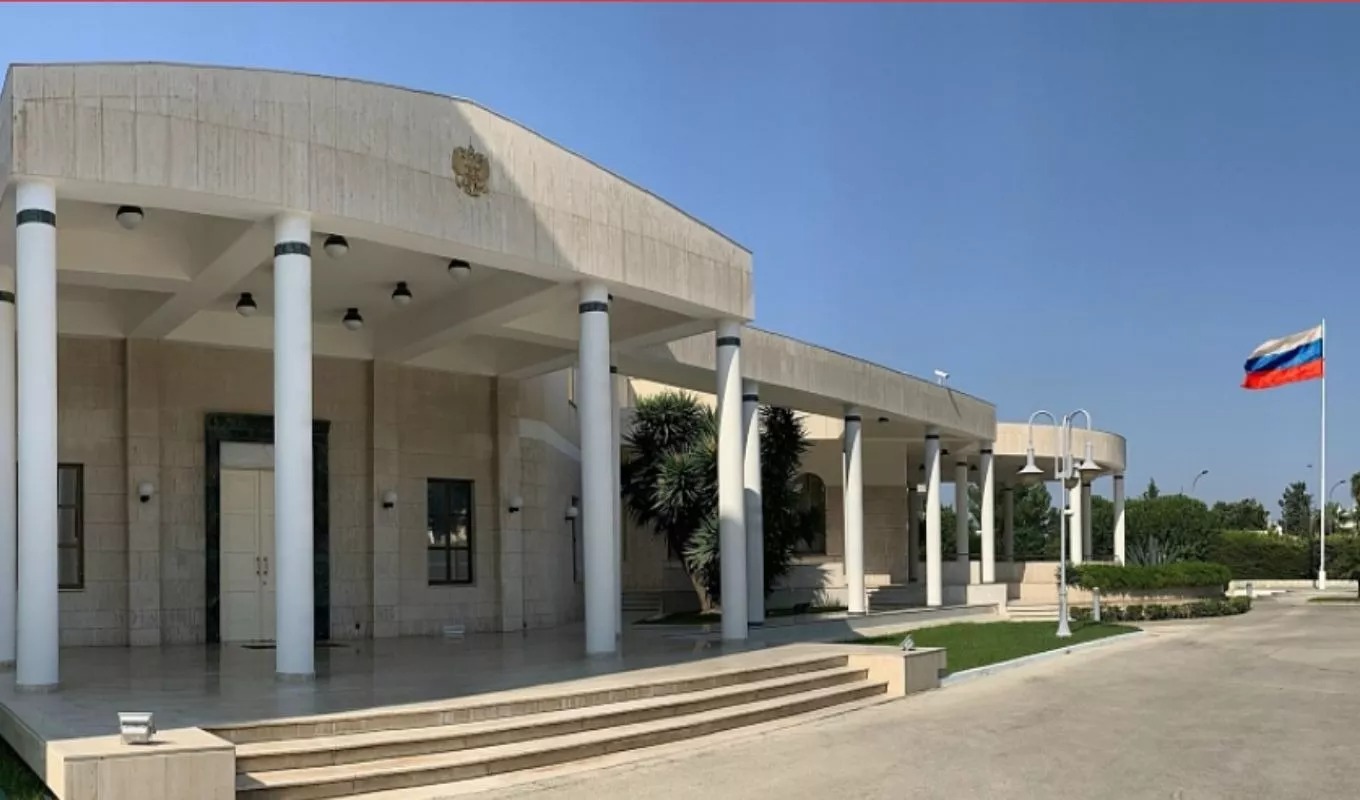
The concentration of NATO forces near Cyprus is contributing to tensions in an already volatile region rather than easing them, Russia’s Ambassador to Cyprus Murat Zyazikov said on Wednesday.
His comments came as European warships converged on the Eastern Mediterranean following the drone strike on the British base at Akrotiri on 2 March. France redirected its aircraft carrier Charles de Gaulle and dispatched frigate FS Languedoc with ground-based air defence units to the island. Greece sent two frigates — Kimon and Psara — and four F-16 fighter jets. Britain deployed Type 45 destroyer HMS Dragon, while Italy, Spain and the Netherlands also committed frigates to the region. The United States, meanwhile, has more than 30 warships operating in the broader area.
Speaking to the Russian TASS news agency, Zyazikov said the Akrotiri drone attack had served as the formal pretext for the alliance’s naval build-up. He argued the incident had only reinforced the view among Cypriots that the presence of military facilities belonging to NATO nuclear powers on the island created security threats rather than offering protection.
“The reaction of the Cypriot authorities, who unambiguously expressed their concern about this, was logical,” he said.
Zyazikov noted that Cyprus itself is not a NATO member, and that the European Union — of which Cyprus is a part — is a political and economic alliance, not a military one. He added that the UN remained the only platform for equal dialogue in resolving international conflicts.
The ambassador welcomed repeated statements by Cypriot leadership that the country was not participating in any military operations during the current regional conflict, saying this stance strengthened Nicosia’s position as it pursued one of its goals during Cyprus’s six-month EU Council presidency — bringing the EU closer to Middle Eastern and Eastern Mediterranean states.
He said the region’s populations, including Cyprus’s own residents — among them, he noted, more than 150,000 Russian nationals — were watching the arrival of NATO military assets near the island with concern. “It is hard to imagine that a show of military force would contribute to de-escalation of tensions in this specific region, or on our planet as a whole,” he said.
Moscow, he added, consistently advocated abandoning force-based approaches to conflict resolution and called for political and diplomatic solutions that balanced the interests of all sides.
Read more:

