


An unusual surge in oil futures trading minutes before President Donald Trump announced talks with Iran has triggered questions from market experts about possible insider dealing.
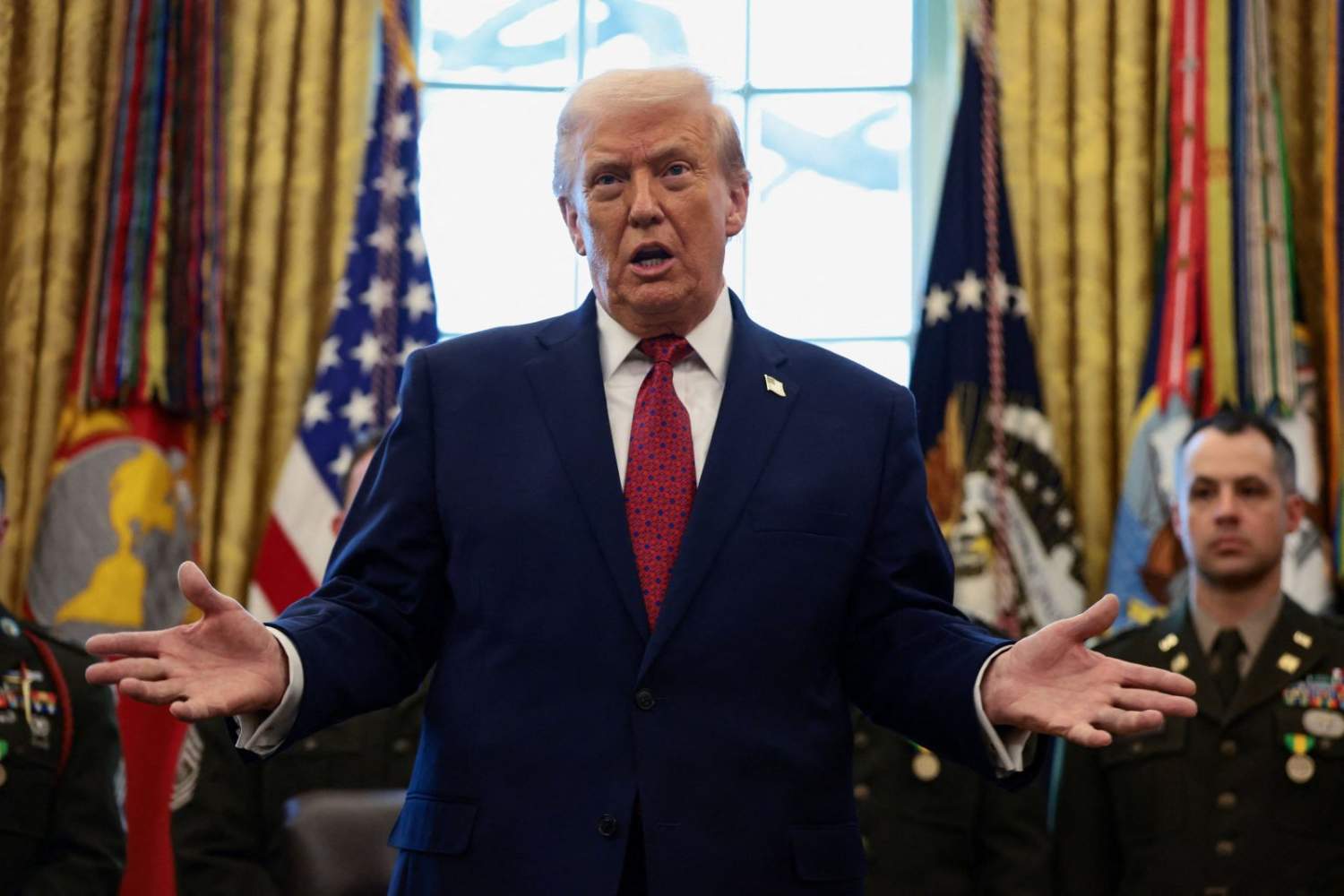
Trump’s post, published on Truth Social shortly after 7am EST on Monday, sent oil prices sharply lower and pushed the Dow Jones Industrial Average up by more than 1,000 points, according to the source text. He also described the talks with Iran as “productive”, easing investor fears over rising oil prices and their effect on inflation and growth.
The move marked a sharp shift from Trump’s post on Saturday, when he threatened to “obliterate” Iran’s power plants unless Tehran reopened the Strait of Hormuz to shipping.
That abrupt change caught investors off guard and drew attention to unusual trading activity shortly before Monday’s market-moving announcement.
According to Bloomberg News and the Financial Times, there was a spike in oil futures trading in the minutes before Trump’s Monday morning post. Between 6:49am and 6:50am, about 6,200 Brent and West Texas Intermediate futures contracts changed hands, with a notional value of $580 million, according to the Financial Times’ analysis of Bloomberg data.
Bloomberg reported that average trading for the same one-minute period over the previous five trading days was about 700 contracts.
Market experts said the volume in crude oil futures early on Monday was higher than usual for that time of day.
“The massive spike in volume of trades right before that post is certainly enough to raise eyebrows, and I think to launch an investigation into what was behind that,” Stephen Piepgrass, a lawyer specialising in futures trading at Troutman Pepper Locke, told CBS News.
Insider dealing, when individuals or firms trade on material non-public information, is illegal because it undermines market integrity and investor confidence, CBS News business analyst Jill Schlesinger said in the source text.
“Does it seem fair that someone is trading and making money and profiting on information that you and I don’t have? Yeah, that kind of stinks,” she said.
Schlesinger said, however, that she did not expect US market regulators to investigate the oil trading, partly because Trump has previously backed a lighter regulatory environment.
The Commodity Futures Trading Commission, which oversees futures markets, did not immediately respond to requests for comment, according to the source text. The White House also did not immediately comment.
One reason the trading surge drew suspicion was that no market-moving announcements were scheduled for Monday morning, such as US economic data or speeches by Federal Reserve officials.
The trading “was especially bizarre because there were no major news items — no major publicly available news items — to drive sudden big market transactions,” Nobel Prize-winning economist Paul Krugman wrote in a March 24 blog post, according to the source text.
He added: “The story would be baffling, except that there’s an obvious explanation: Somebody close to Trump knew what he was about to do, and exploited that inside information to make huge, instant profits.”
Despite those suspicions, it remains unclear whether the trading was initiated by a person or by an algorithm of the sort widely used in computerised trading, Tim Skirrow, head of energy and derivatives at Energy Aspects, told CBS News.
Skirrow said his data showed that trading at 6:50am on Monday was six times the typical volume for that time.
“In terms of size, this is not exceptionally large — just unusual for this time of day,” he said.
Other recent trades have also raised questions about whether some people may have acted on confidential or even classified government information.
According to the source text, one trader using the name “Magamyman” made nearly $600,000 on the timing of US and Israeli strikes on Iran through Polymarket. Another prediction market user made $967,000, including many trades involving Iran, CNN reported, with a reported success rate of more than 93% on bets above $10,000.
The source text also said a Polymarket trader made more than $436,000 in January by betting that former Venezuelan President Nicolás Maduro would be captured by US forces.
Oil markets have been unusually volatile in recent weeks as the Iran war escalated. Brent crude, the international benchmark, was trading at about $100 a barrel, up 37% from before the conflict began on February 28, according to the source text.
Oil futures trading volumes have also stayed high since hostilities began. More than 3 million contracts were traded on several days in March, compared with a more typical 700,000 to 1.4 million contracts in the three weeks before February 28, according to CME Group data cited in the source text.
“The volume [on Monday] was a bit more normal than the usual time of the day, but there’s a lot going on in the market,” Darrell Fletcher, managing director of commodities at Bannockburn Capital Markets, told CBS News.
Concerns over possible market manipulation are also spreading to prediction market platforms, where users bet on political, sporting and other future events.
The Guardian reported on Monday that bets totalling $70,000 by eight Polymarket users on a US-Iran ceasefire pointed to possible insider dealing, according to the source text.
Piepgrass said the CFTC appeared to be taking a more hands-on approach as concerns about market abuse grew. The agency has recently opened a proposed rulemaking process that partly focuses on what prediction markets should do to prevent insider dealing.
He said the outcome could have implications beyond prediction exchanges and extend to oil markets as well.
“My sense is the CFTC is undergoing a sea-change right now because of this. They’re seeing more activity than they have seen in decades, maybe since they were created,” he said. “They’re reassessing everything.”
Lawmakers are also examining prediction markets more closely. According to the source text, a bipartisan group of senators and House representatives last week introduced a bill that would ban bets on government actions, war and events where a person knows or can control the outcome.
The lawmakers said their aim included stopping government officials from placing bets based on inside information.
As regulators tighten scrutiny, prediction market companies Kalshi and Polymarket are moving to strengthen their own rules on insider dealing, the source text said. Both companies said on Monday that they already had safeguards in place to detect suspicious activity.
Information taken from CBS

