


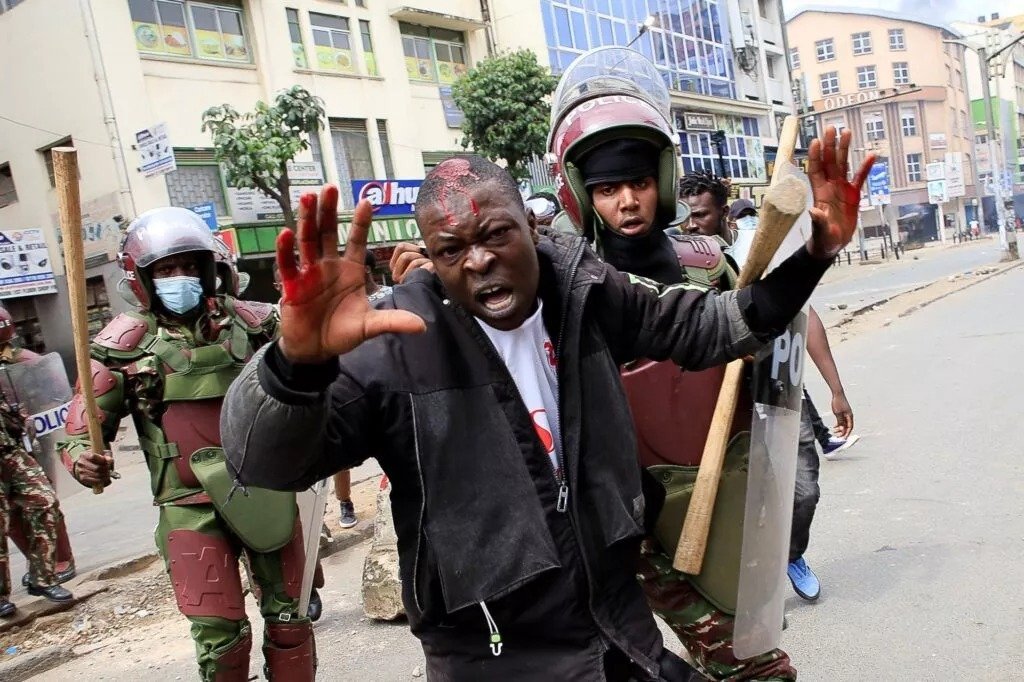
Fresh anti-government protests erupted on Tuesday afternoon (July 2) in Nairobi, Kenya’s capital, and the coastal city of Mombasa.
According to foreign media reports and circulating images and videos, tensions ran high with police deploying tear gas to disperse the demonstrators.
The protests began two weeks ago in response to a controversial government tax bill, and since then, 39 people have been killed by authorities.
Bill withdrawn
Although Kenyan President William Ruto eventually withdrew the proposed tax increases, protesters are now calling for his resignation and are demonstrating against police violence.
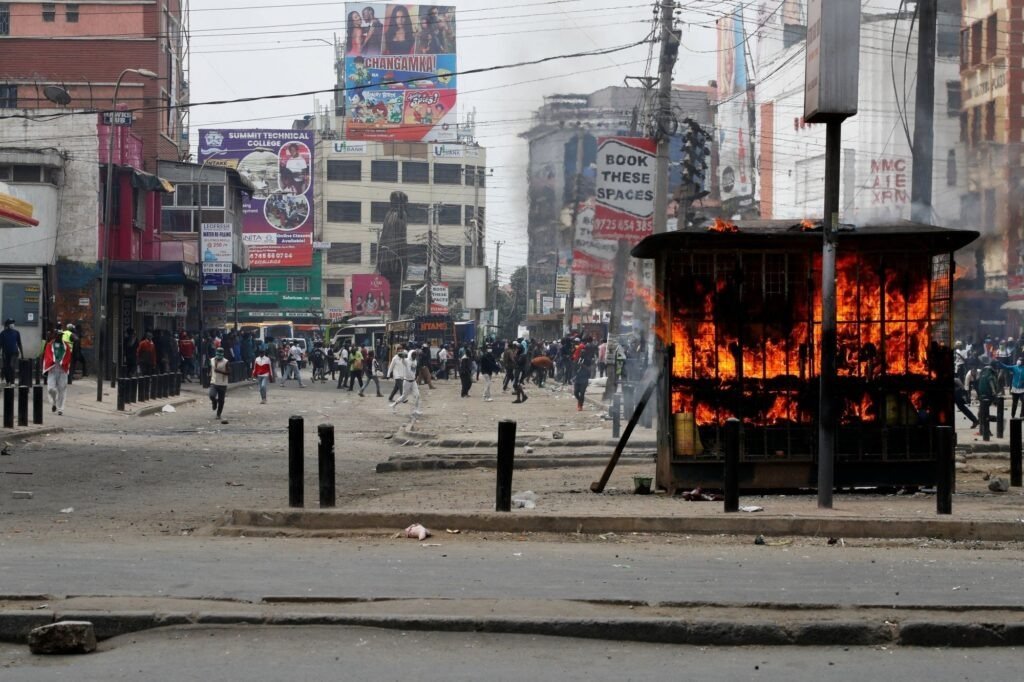
The scale of the demonstrations is smaller than last week’s, but they continue, and scenes like cars being set on fire as protesters clash with police are making the rounds online.
Increased security forces
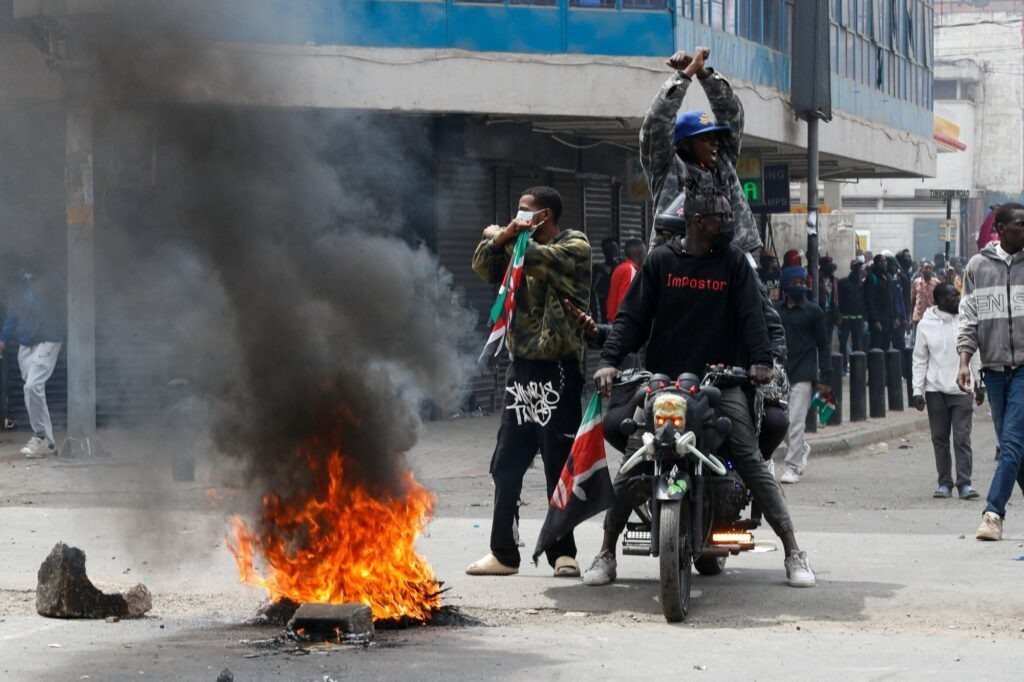
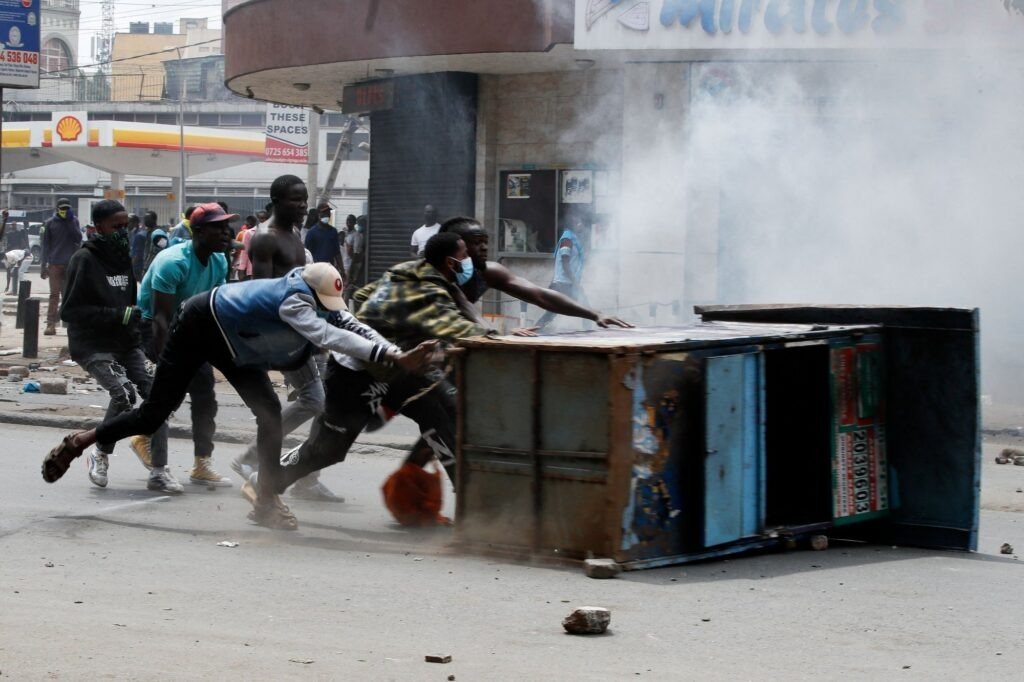
A massive security presence is noted in Nairobi, with battles occurring along some of the main roads leading to the city centre. Groups of protesters lit fires and threw stones at police officers.
In the central business districts of Nairobi and Mombasa, some shop owners hired guards to patrol with batons to protect against looting.
“We wanted him to hear our cries”
Astin Kibowen, a 21-year-old who guards the music store where he works in Nairobi, told the BBC that he wanted the president “to hear our cries, our voices”.
Since President Ruto came to power two years ago, promising to revitalise the economy, Kenyans have been hit by a cost-of-living crisis with more taxes on wages, fuel, and gross sales.
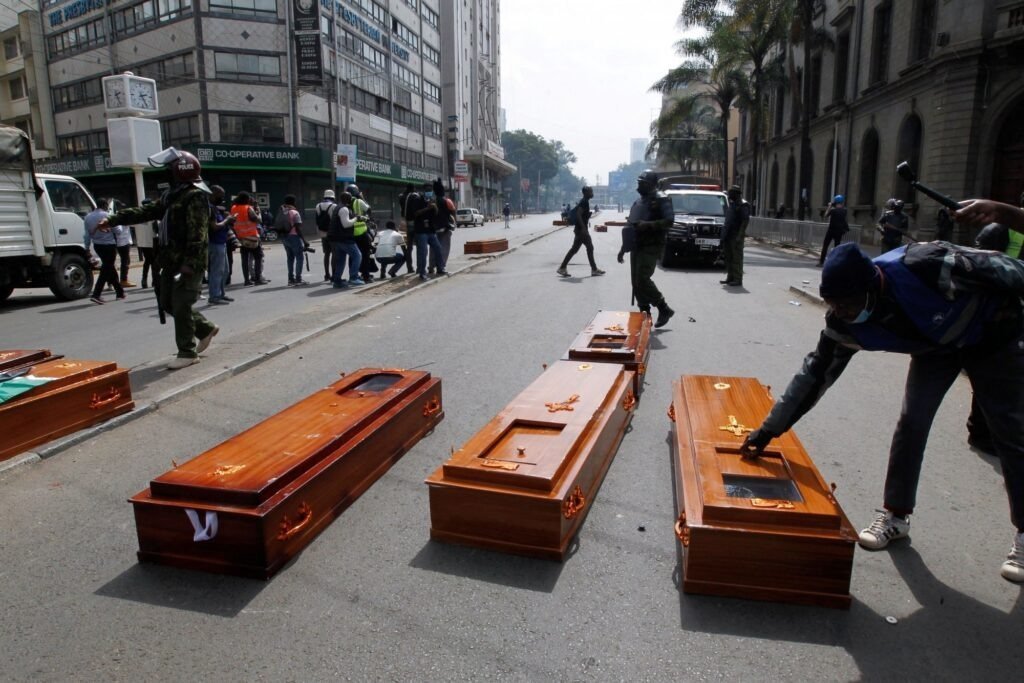
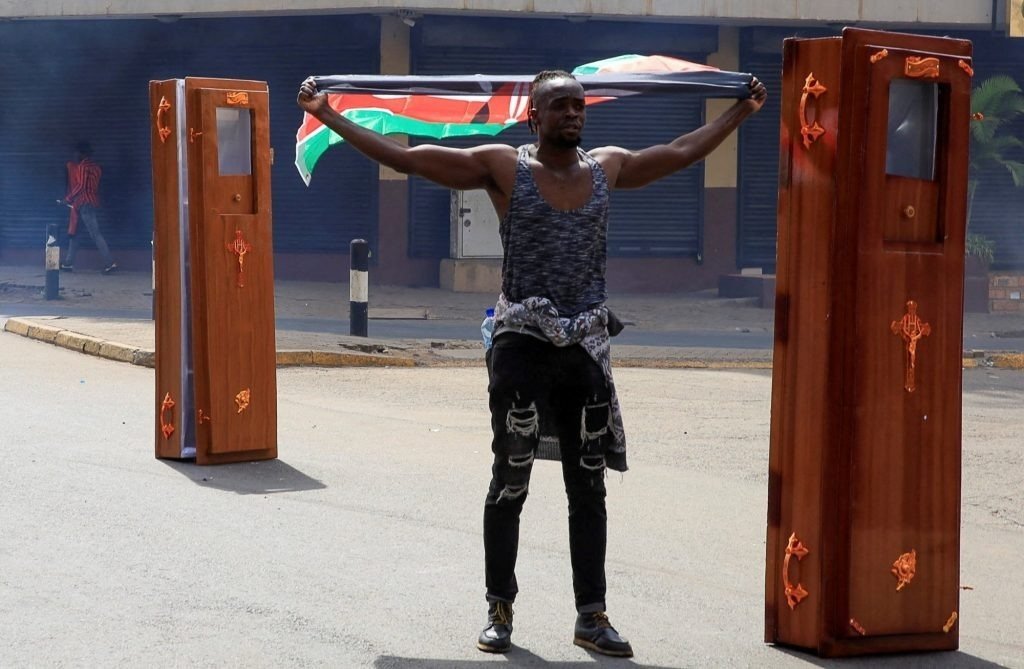
On one of the main roads in downtown Nairobi, activists placed empty coffins in front of riot police to draw attention to the excessive violence used during demonstrations across the country.
Murder, injuries, disappearances
The state-funded Kenya National Commission on Human Rights (KNCHR) reports that most protesters were killed last Tuesday when MPs voted to pass the bill, and huge crowds gathered to demonstrate.
17 people lost their lives in Nairobi, and another 22 were killed in other parts of the country, the commission said in a statement late Monday.
There were also 361 injuries, 32 cases of “forced or involuntary disappearances”, and 627 arrests, it said.
Amnesty International reported that 24 protesters lost their lives, while police put the figure at 19.
KNCHR condemned “in the strongest terms the unjustified violence perpetrated against protesters, medical personnel, lawyers, journalists, and in safe spaces such as churches, emergency centres, and ambulances”.
The commission characterised the violence as “excessive and disproportionate”.
President Ruto said the police “did their best” in a press conference on Sunday. He added that if there was any “excess” used, they would be addressed through “existing mechanisms”.
The president also outlined the implications of the rejection of the fiscal bill, saying it meant that Kenya would have to borrow one trillion shillings ($7.6bn, £6.1bn) just “for our government to be able to function” – an increase of 67% from what had been planned. It would also affect the education, health, and agriculture sectors, he pointed out.
(information from philenews/in.gr)

