


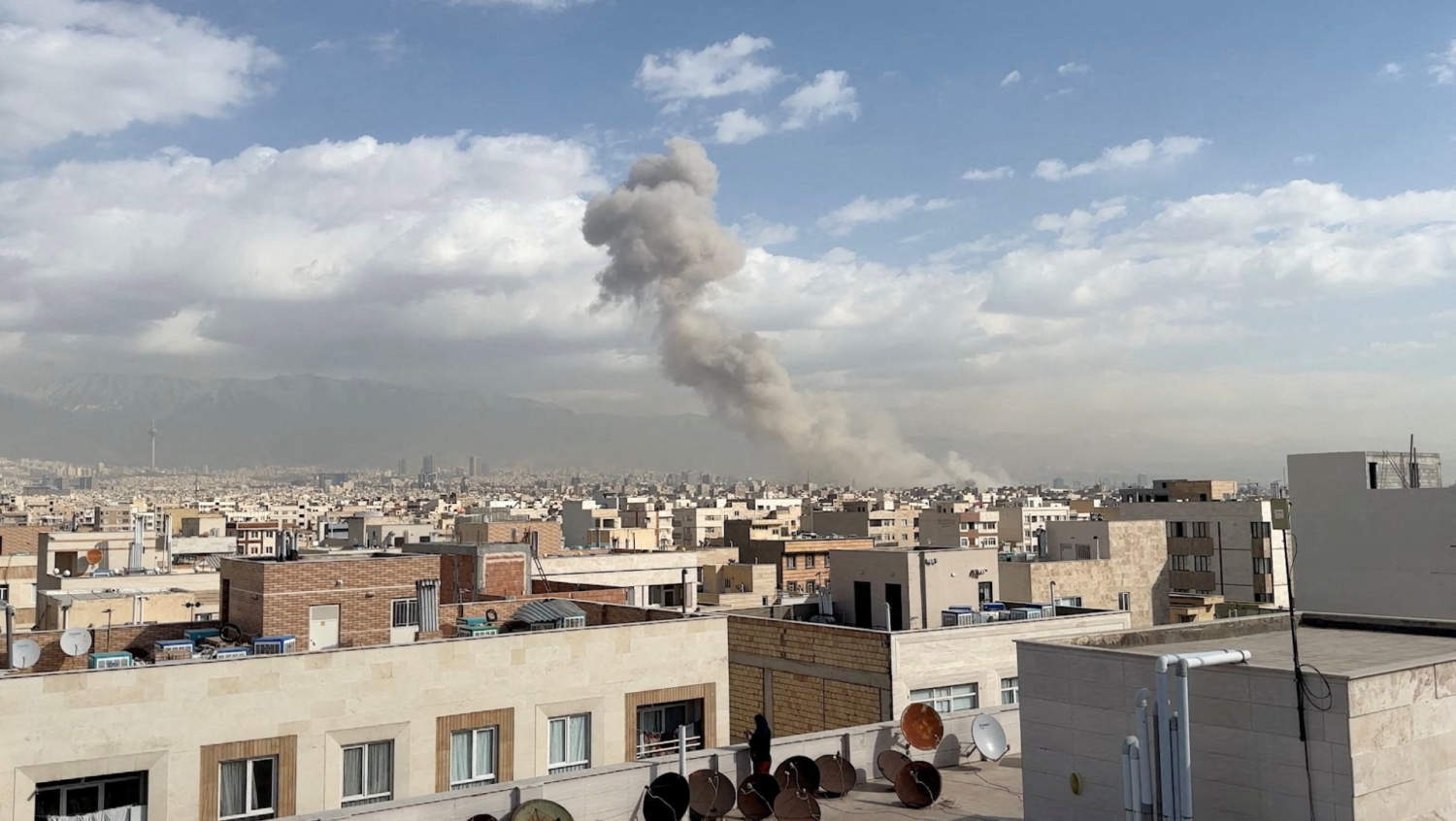
Israel said on Monday it had detailed operational plans for at least three more weeks of war as it pounded sites across Iran overnight, while Iranian drone attacks temporarily shut Dubai International Airport and struck a key oil facility in the United Arab Emirates.
The US-Israeli war on Iran, now entering its third week, shows no clear sign of ending, with the Strait of Hormuz remaining largely shut to tanker traffic carrying 20% of the world’s oil and liquefied natural gas, pushing up energy prices and raising fears of a spike in global inflation.
Israeli military spokesperson Lieutenant Colonel Nadav Shoshani told reporters that operational plans extended beyond three weeks and that Israel still had thousands of targets to strike inside Iran. “We want to make sure that they are as weak as possible, this regime, and that we degrade all their capabilities, all parts and all wings of their security establishment,” he said. Israel has said its objectives include striking ballistic missile infrastructure, nuclear facilities and the security apparatus.
The Israeli military said it carried out overnight strikes on Tehran, Shiraz and Tabriz, and also targeted sites linked to Iran’s space programme, including a research facility in Tehran involved in developing a satellite launched in 2024. Iran’s Mehr news agency reported five people killed and seven wounded in strikes on Markazi province in central Iran, adding that a boys’ school in Khomein city had been targeted with damage to the surrounding area. Fars News Agency reported civilian casualties in a strike near Tehran’s Martyrs’ Square. Rescue workers in the capital pulled people from the wreckage of a building in what an Iranian Red Crescent worker described as an entirely residential alleyway.
One Tehran resident, Shahnaz, 62, told Reuters via WhatsApp that internet had been cut overnight and that people felt isolated. “People are being killed. Just days before Nowruz, but people are not in the mood to celebrate. When will this end?”
Iran’s Revolutionary Guards said Tehran had launched retaliatory attacks on Tel Aviv, the US al-Dhafra air base in Abu Dhabi, the US naval base in Bahrain and Bahrain’s Sheikh Issa air base. Oil loading operations at the UAE port of Fujairah — a key exit point for Murban crude representing roughly 1% of global demand — were suspended following a separate Iranian drone strike. Saudi Arabia intercepted 34 drones in its eastern region within one hour, state media reported, with no injuries in either incident. Reuters reporters also heard explosions in the Qatari capital, Doha.
Flights at Dubai International Airport, one of the world’s busiest, were suspended for several hours after a drone strike on a nearby fuel storage facility sent plumes of black smoke into the sky.
Iranian Foreign Minister Abbas Araqchi said Tehran had not requested a ceasefire or exchanged messages with the US, and accused unnamed neighbouring states that host US forces of actively encouraging the killing of Iranians. He said 200 children were among the hundreds of Iranian civilians killed in US or Israeli strikes.
Despite the overnight turbulence, oil prices — which had been above $100 a barrel — fell sharply and stocks rallied after US Treasury Secretary Scott Bessent said Washington was prepared to allow some Iranian fuel vessels to sail through the strait, and that Indian and Chinese tankers had also passed through. Ship-tracking data showed a Pakistan-bound oil tanker had transited the strait over the weekend, indicating some countries were able to negotiate safe passage.
Israel also continued strikes on Lebanon and Gaza, with its military saying ground operations had begun against Hezbollah positions in southern Lebanon.
(Reuters)

