


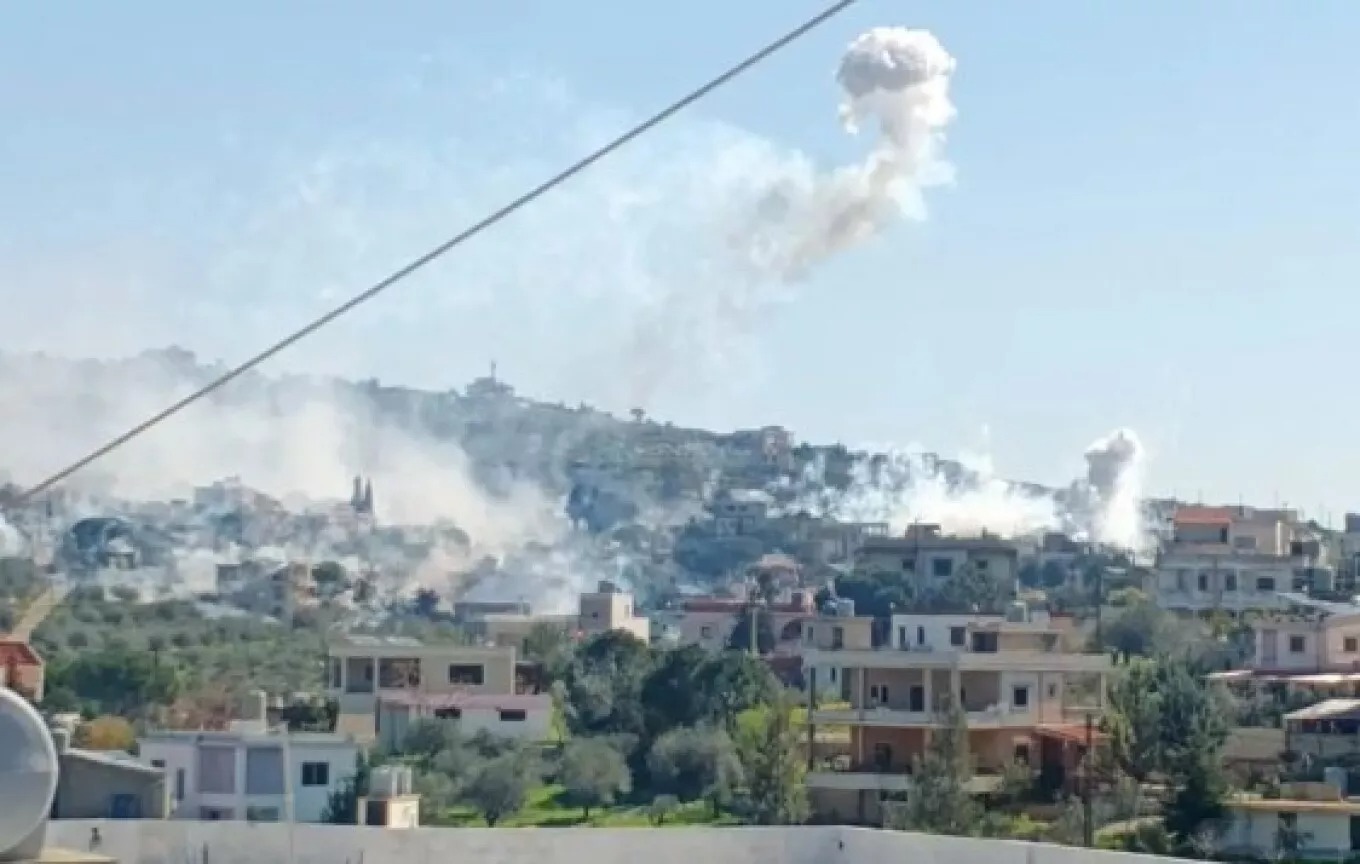
Israel escalated its military offensive against Lebanon on Tuesday, hammering Beirut’s southern suburbs with air strikes and advancing armoured columns into southeastern towns, as the country’s health ministry said nearly 500 people had been killed since the conflict began — among them more than 80 children.
Lebanon was drawn into the war last week after Iran-backed Hezbollah opened fire on Israel in response to the killing of Iran’s supreme leader. Israel has since struck targets across the country’s south, east, and the suburbs of Beirut.
Thick columns of smoke rose over the capital on Tuesday afternoon following strikes on its southern outskirts. Two hours before the bombardment began, an Israeli military spokesperson ordered residents to evacuate three newly specified districts.
A member of the municipal council for the affected area told Reuters that families were fleeing, adding to the nearly 700,000 people Lebanese authorities say have already been displaced. Lebanon’s Minister of Social Affairs Haneen Sayed warned on Tuesday that displacement figures were on course to exceed those of 2024, when more than a million people were forced from their homes during the last Israel-Hezbollah war.
“We expect that the needs, the numbers of displacement, will be higher than in 2024,” Sayed told Reuters at Beirut’s airport, where the European Union had delivered 45 tonnes of emergency supplies including medical kits and blankets. “Now on the other side in terms of resources, there’s far less resources this year given the global situation, the regional war that’s happening.”
She appealed for international support, noting that Gulf partners were themselves “under stress.”
Israel’s ambassador to France, Joshua Zarka, said on Tuesday that Lebanese President Joseph Aoun’s signalled openness to direct negotiations — expressed the previous day — was insufficient on its own.
“At this stage, I’m not aware of any decision to enter negotiations to end this war,” Zarka said. “What would end it is the disarmament of Hezbollah — and that is a choice for the Lebanese government.”
He added that Lebanon’s government was “making very good statements,” but needed to follow them with action.
Lebanon’s government last year pledged to establish a state monopoly on arms and confiscated part of Hezbollah’s arsenal in the south without objection from the group. However, Hezbollah has refused full disarmament, and Lebanese authorities have been wary of forcibly seizing its weapons for fear of reigniting civil conflict.
(Reuters)
Read more:

