


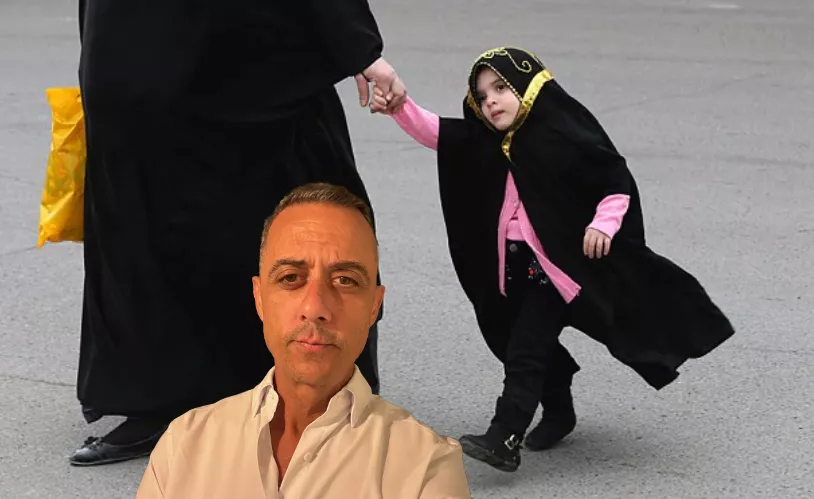
A controversial bill that could reduce the legal marriage age for girls to nine years has sparked outrage in Iraq, drawing fierce criticism from women’s rights advocates and human rights organizations. The proposed legislation, reportedly supported by Shiite lawmakers closely aligned with Iran, reflects deepening concerns over a growing erosion of women’s rights in the country.
Under Saddam Hussein’s rule, Iraqi women enjoyed relatively equal rights under secular law, although still within the constraints of a dictatorship. Today, activists say, these rights are at risk as Iraq’s political and legal systems fall increasingly under the influence of conservative religious groups.
The bill, which would align the marriage age with certain interpretations of Islamic law, cites the example of the Prophet Muhammad, who reportedly married Aisha when she was nine. Critics argue this precedent is being used to justify the normalization of child marriage.
“This is nothing less than the legalisation of child abuse,” said one female lawmaker who opposes the bill. A coalition of 25 female MPs has been lobbying against it, but their efforts are reportedly being thwarted by a majority dominated by pro-Iran factions, known as the Coordination Framework.
Women’s rights activists across Iraq have staged protests, describing the proposed law as part of a broader assault on their freedoms. The bill is being debated in tandem with other measures, including shifting jurisdiction over marriage, divorce, and child custody to religious courts, and enforcing harsher penalties for homosexuality.
“These laws are a return to the dark ages,” said a Baghdad-based activist. “They are stripping women of their rights and normalizing harmful practices in the name of religion.”
The issue has sparked wider debates over the influence of Sharia law in Iraq. While proponents argue that such measures are consistent with Islamic values, critics warn of their potential to enshrine systemic inequality and erode democratic freedoms.
Meanwhile, Western governments and human rights organizations have remained relatively muted, a silence some commentators attribute to fears of appearing culturally insensitive. Observers warn that Iraq may serve as a harbinger for other conservative shifts in the region, further jeopardizing progress in women’s rights.
As the debate intensifies, Iraqi women continue to rally against what they view as an existential threat to their rights and freedoms. For them, this is not a question of culture, but of basic human dignity.

