


Cyprus needs to change its economic model by reducing its dependence on property-driven investment and creating stronger incentives for technology, innovation and productive sectors, former finance minister Michalis Sarris said on Tuesday.
Speaking at a Cyprus Forum 2026 panel titled “Beyond Resilience: Choosing the Region’s Next Economic Model in an Age of Geoeconomic Risk”, Sarris argued that excessive reliance on real estate investment was limiting the creation of higher-value jobs and contributing to growing inequality.
“One of the most serious problems in a country like Cyprus is the rising income inequality,” said Sarris.
He warned that the concentration of wealth among a relatively small number of people, who also hold economic and political influence, could undermine confidence in the liberal democratic model.
Sarris said Cyprus had invested heavily in capital accumulation, but too much of that investment had flowed into housing rather than sectors capable of creating new employment opportunities for younger generations.
“We don’t create business investment so they can employ these young people,” he said, arguing that Cyprus needed to redirect incentives away from property development and towards areas such as technology, shipping, education and information technology.
The former minister said the transition would require greater availability of venture capital, banks that were less risk-averse and an education system capable of producing the workforce required by emerging industries.
Moving beyond GDP growth
Economist and Cyprus Economic Society president Ioannis Tirkides said Cyprus needed to rethink how it measures and distributes economic growth, placing greater emphasis on national income rather than GDP alone.
He said Cyprus’ economic model had historically relied heavily on foreign capital, while the regulatory environment had changed significantly following the 2013 financial crisis.
Tirkides argued that the country needed to examine how much of the value created by economic activity remained within Cyprus and benefited society.
“We must take care of our national income, what is produced and stays on the island, and how it is divided across the population,” he said.
He also raised concerns about housing pressures and speculative investment in property, arguing that policymakers needed to address the impact of rising demand on affordability.
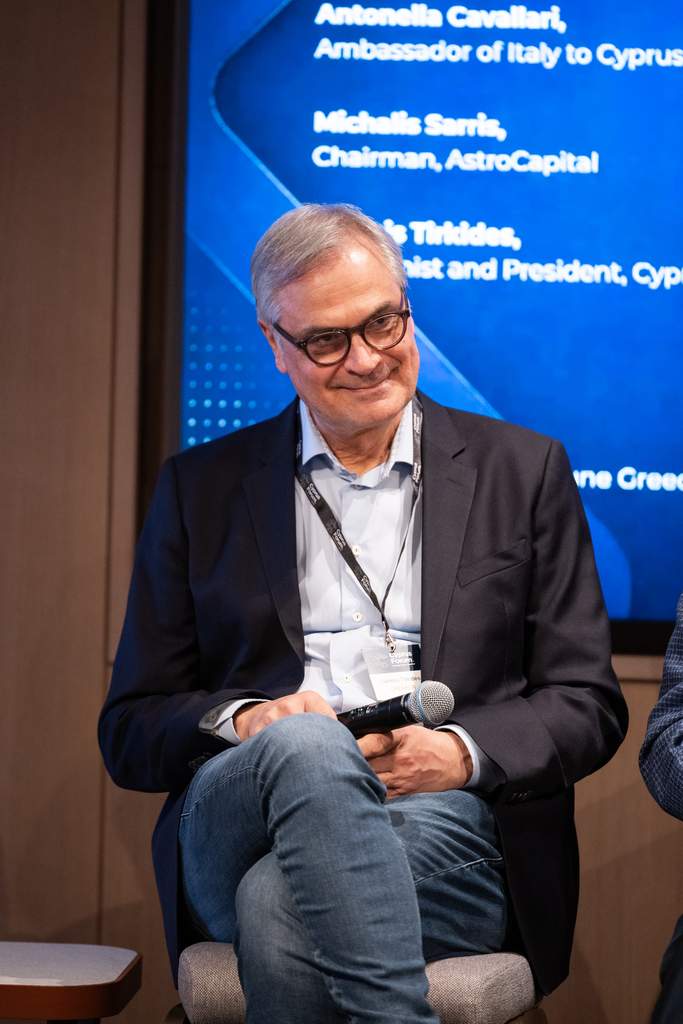
Cyprus should be seen as a hub, not a market
Italy’s Ambassador to Cyprus Antonella Cavallari said Cyprus should focus on transforming its geographical position into an economic advantage by becoming a regional hub.
“Cyprus should be looked at as a hub slash bridge, not as a market,” she said, arguing that the size of the domestic market should not be the main factor considered by international investors.
She said Cyprus’ strengths lay in services, digital technology, fintech, shipping and connectivity infrastructure.
Cavallari stressed that human capital would be central to the island’s future economic model.
“You need human resources and you need investment, and you need to be careful in choosing where those investments are coming from,” she said.
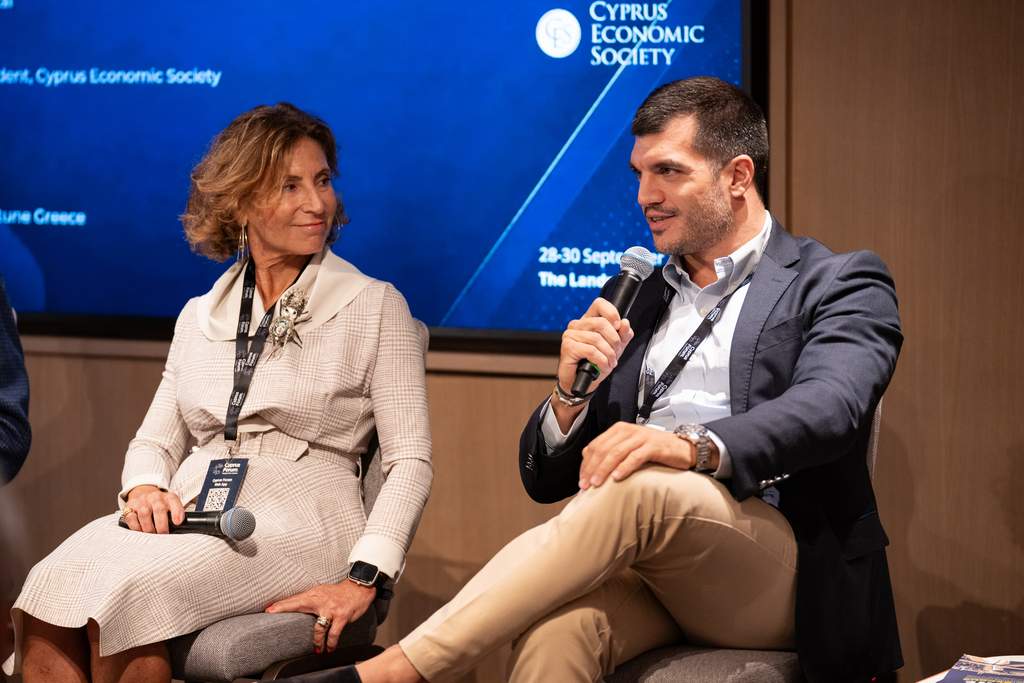
Education and skills key to future growth
Education and skills were the central themes in the closing part of the discussion.
Sarris said Cyprus needed to address weaknesses in its education system to prepare young people for the changing labour market.
“We are now experiencing what is sometimes called the fourth industrial revolution,” he said, arguing that economies would increasingly compete through services and skilled workers.
Tirkides said education should become a stronger driver of growth, while Cavallari said human resources were among the most important assets available to countries without large natural resources.
Read more:

