


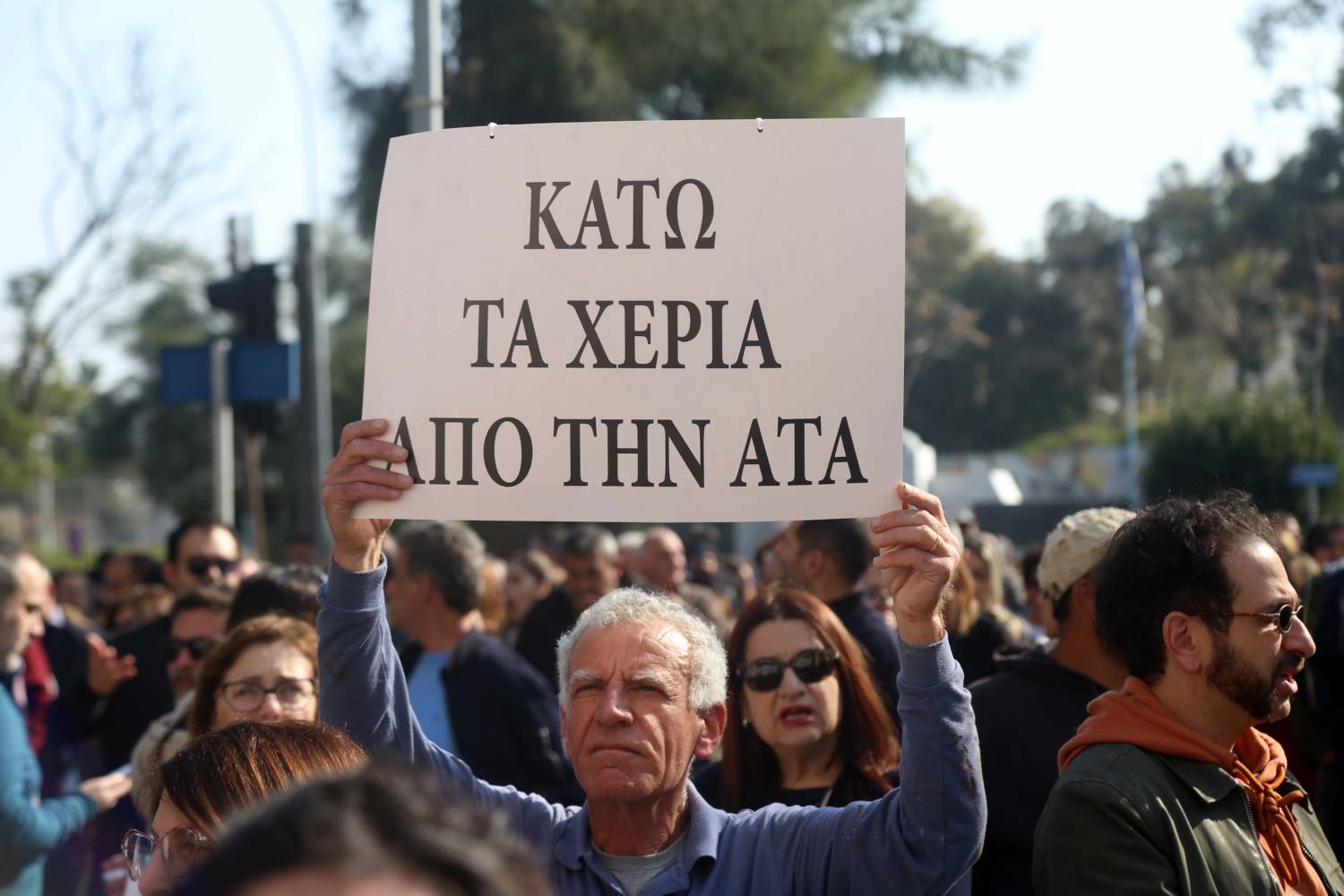
The readiness of the Pancyprian Federation of Labour (PEO) to defend the Cost of Living Allowance (CoLA) and its philosophy, as well as to engage in new struggles in this direction, was recorded yesterday by the general secretary of the trade union, Sotiroula Charalambous, within the framework of the anniversary conference of PEO on the occasion of the 80 years since the strike of March 1, 1944, which established the Cost of Living Allowance.
In her speech at the conference, Ms. Charalambous indicated that the CoLA cannot be disconnected from factors unrelated to inflation, essentially rejecting its correlation with productivity and other economic indicators, positions that have recently been voiced by government officials.
The general secretary of PEO made a historical review of the institution secured by the strikes of 1944 and of the “war” waged against the CoLA by employers’ organizations throughout the years, reiterating the demand for its application to all workers. “
Throughout the 80 years of the institution’s operation, employers’ organizations, in conjunction with prevailing political conditions and economic data, have repeatedly targeted the abolition of the institution,” she said, stating that the CoLA continues to be contested today, despite the agreement that was recently signed.
As she argued, there is no doubt that the effort initiated by employers in 1985 to abolish the CoLA continues. “The pattern of arguments, with some variations, remains the same: the CoLA undermines the competitiveness of the economy, the CoLA must be linked to productivity. The CoLA fuels inflation,” she added, expressing her annoyance that such positions are also heard from government officials.
“Despite the fact that we have scientifically documented the fallacy of these arguments over time, we are once again obliged to comment on these positions. It is the main argument of employers’ organizations, demanding either abolition or modification of the system and introduction of these parameters in the evaluation of CoLA performance, and because, as in the past, officials of the Government flirt with these positions, as evidenced by the recent statement by the Minister of Finance regarding the link between CoLA and competitiveness and productivity,” she said, adding that there is no room for ambiguities or generalities on the issue.
In this context, she questioned whether the Government respects the content of the 2017 agreement, which is an annex to the 2023 agreement and provides for the application of CoLA based on its philosophy. “And how does this reconcile with the position of linking CoLA to competitiveness and productivity?” she continued, also asking what practical measures the Government will take to expand coverage with collective labor agreements. CoLA, she indicated, cannot be disconnected from factors unrelated to inflation.
“Workers and vulnerable groups of the population, those who live on their wages and have no other resources, do not seek inflation to receive CoLA, which is paid retrospectively to compensate for what they have already paid,” she added, concluding that in continuation of the struggles that have taken place “we are ready for new struggles to maintain CoLA, to preserve its role and philosophy, and to extend CoLA to every worker.”

