


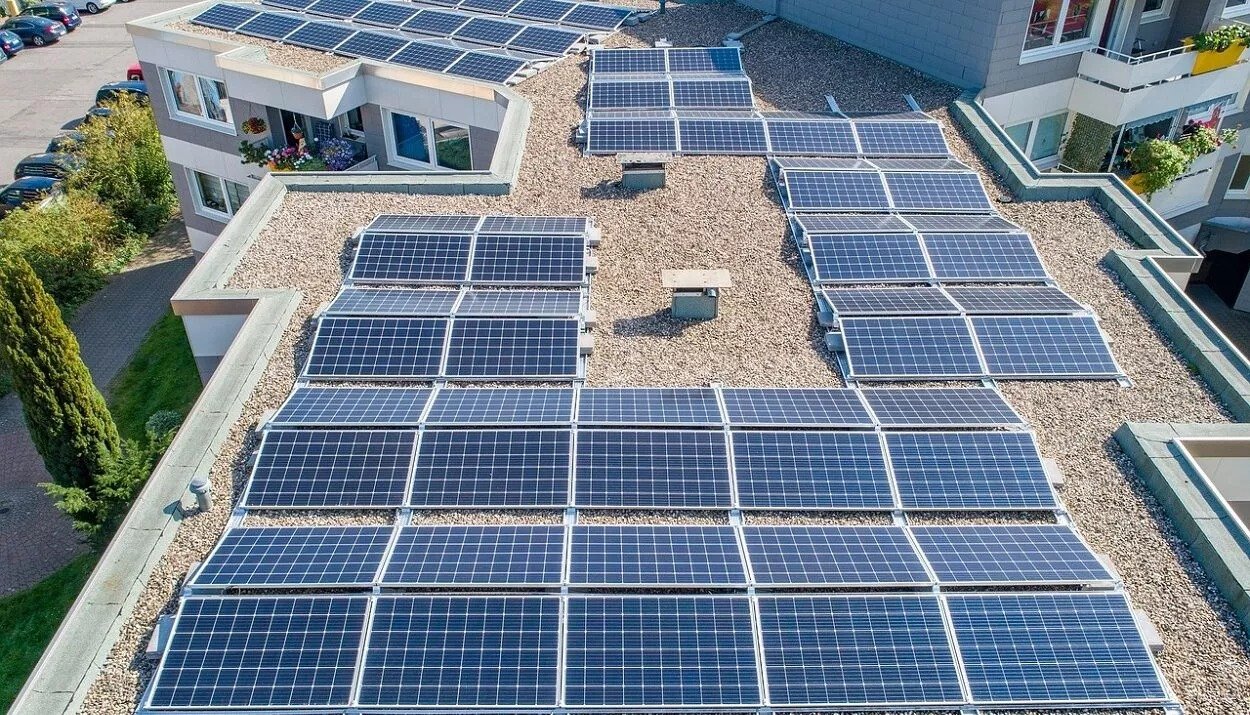
Homeowners may face additional costs to install special equipment on their residential solar photovoltaic systems to prevent disconnections from the electricity grid, if a proposed amendment to the Renewable Energy Sources Promotion Law is approved.
The legislative proposal, put forward by MP Kyriakos Hadjiyiannis, was discussed on Tuesday in the parliamentary Energy Committee and would require the Cyprus Energy Regulatory Authority (CERA) to issue regulations ensuring domestic renewable energy producers are not disconnected during periods when power input to the grid needs to be reduced for system security reasons.
Most stakeholders and political parties expressed support for the proposal, which aims to protect consumers’ rights to uninterrupted self-consumption of renewable energy in their homes without compromising grid stability.
“The proposed regulation is deemed necessary to safeguard consumers’ right to uninterrupted self-consumption of energy from renewable sources in their homes, solely for covering their premises’ needs, without jeopardising the safety and reliable operation of transmission and distribution systems,” Hadjiyiannis said.
Following discussions, lawmakers are considering revising the proposal to make installation of the special equipment optional rather than mandatory, provided that the electricity is consumed within the premises.
This suggestion was put forward by AKEL MP Costas Costa and will be clarified in a future committee meeting.
CERA President Polyvios Lemonaris supported the proposal but noted technical challenges identified in meetings with equipment distributors.
He emphasised that the Transmission System Operator’s ability to disconnect solar systems during emergencies should be preserved, adding that reduction in disconnections would ultimately be achieved through storage systems.
Electricity Authority of Cyprus (EAC) Chairman George Petrou stated the authority favours the proposal if technically feasible, estimating conversion costs for household solar systems between €800 and €1,000.
The Renewable Energy Association disputed this figure, claiming the legislation would apply to 2023 systems and that adding zero-injection equipment would cost a maximum of €150.
Consumer associations argued households should not bear additional costs, while the Energy Ministry’s Director General Marios Panagides expressed conditional support if the proposal could be practically implemented.
The Transmission System Operator did not oppose the initiative but stressed the need to maintain final control over disconnecting renewable sources during grid emergencies.
“If this tool (of cuts) is removed from us, we won’t be able to deal with emergency situations,” a representative said, prompting lawmakers to indicate this aspect of the proposal would be modified.
The Distribution System Operator (under EAC) stated all households should install the special equipment but maintained operators should retain disconnection capabilities when unavoidable.
Industry associations, including renewable energy companies, the wind energy association, and business groups OEB and KEBE, all supported the legislative proposal, which is expected to reach parliament for a vote in April.
Read more:

