


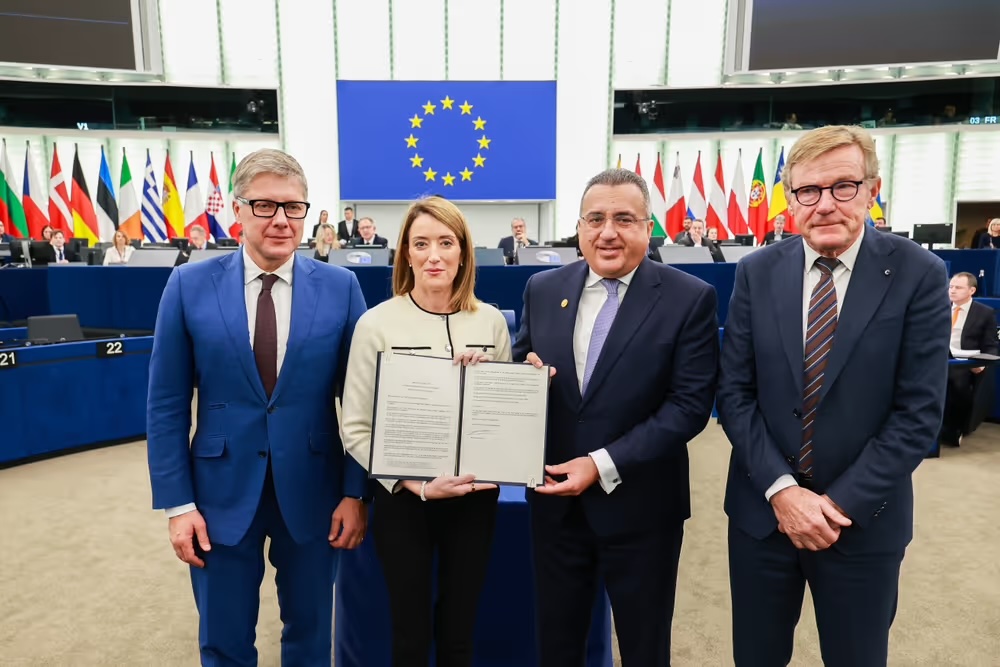
The European Parliament today approved the European Union’s 2027 budget, with 406 votes in favour, 184 against and 69 abstentions, during a plenary session in Strasbourg, completing the final stage of the budgetary procedure.
Following the vote, European Parliament President Roberta Metsola proceeded to sign the budget, making it legally binding and paving the way for its implementation from 1 January 2027.
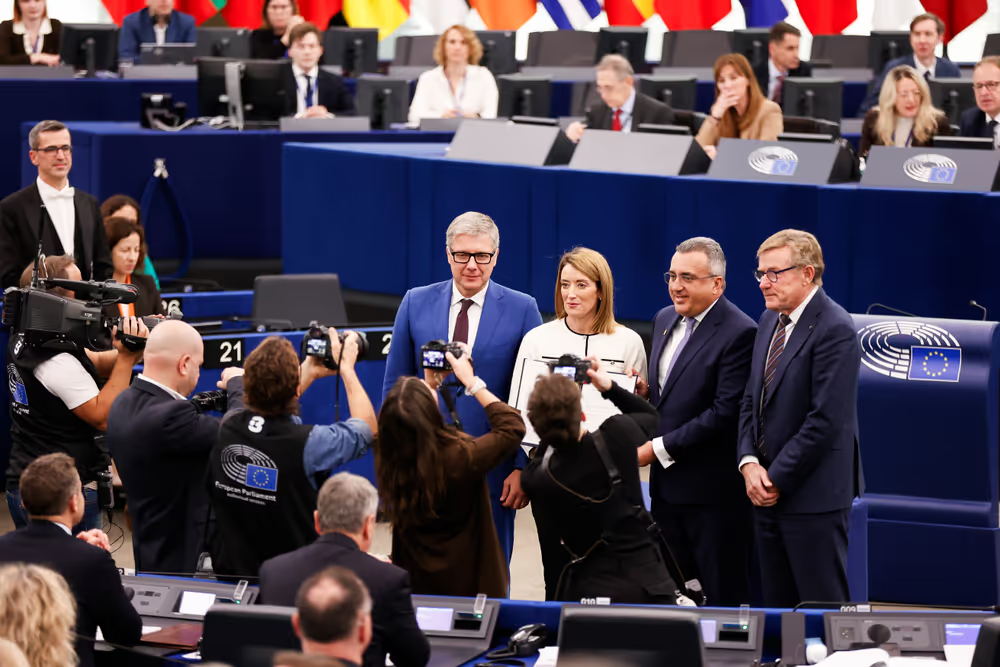
The budget follows an agreement reached between Parliament and the Council during budgetary conciliation negotiations earlier this month. It sets the EU’s total commitment appropriations at €199.7 billion and payment appropriations at €211.5 billion.
European Commissioner for Budget, Anti-Fraud and Public Administration Piotr Serafin welcomed the agreement, praising all parties for acting responsibly and making the necessary compromises to reach an agreement on time.
The agreement represents a compromise between the two institutions and reflects Parliament’s priorities for a predictable, robust, citizen-centred and investment-oriented EU budget.
Speaking during the debate in Strasbourg, MEP Michalis Hadjipantela, who served as rapporteur for the other sections of the 2027 budget, highlighted the difficult final stages of the negotiations, stressing that the agreement had been at risk before the institutions managed to find common ground.
He said that responsibility and cooperation had ultimately prevailed, allowing the negotiations to reach a balanced outcome.
An additional €300 million for European priorities
During negotiations, the European Parliament secured more than €300 million in additional funding beyond the European Commission’s original proposal, strengthening several key EU policy areas.
Among the programmes receiving additional resources are Horizon Europe, Erasmus+, transport and energy networks, civil protection, border management, asylum policy, neighbourhood policy and humanitarian assistance.
Additional funding will also reinforce the cybersecurity and security capabilities of EU institutions, including EU delegations, to protect staff and ensure secure communications.
Hadjipantela emphasised the importance of strengthening the security and operational capacity of EU institutions, particularly in light of Europe’s changing security environment, geopolitical uncertainty and rapid technological developments.
“Secure institutions, effective digital capabilities, and the proper implementation of European policies help protect citizens’ rights and strengthen democratic accountability,” he said.
Final budget under the 2021–2027 financial framework
The 2027 budget is particularly significant as it represents the final annual budget under the EU’s current Multiannual Financial Framework (MFF) for 2021–2027.
Hadjipantela stressed that European institutions must have the resources to fulfil their responsibilities today while preparing for future challenges. He also reminded MEPs that a budget is not simply about figures and allocations, but about the priorities Europe sets and the results it delivers for its citizens.
“We are managing taxpayers’ money. This demands transparency as well as accountability,” he said.
Read more:

