


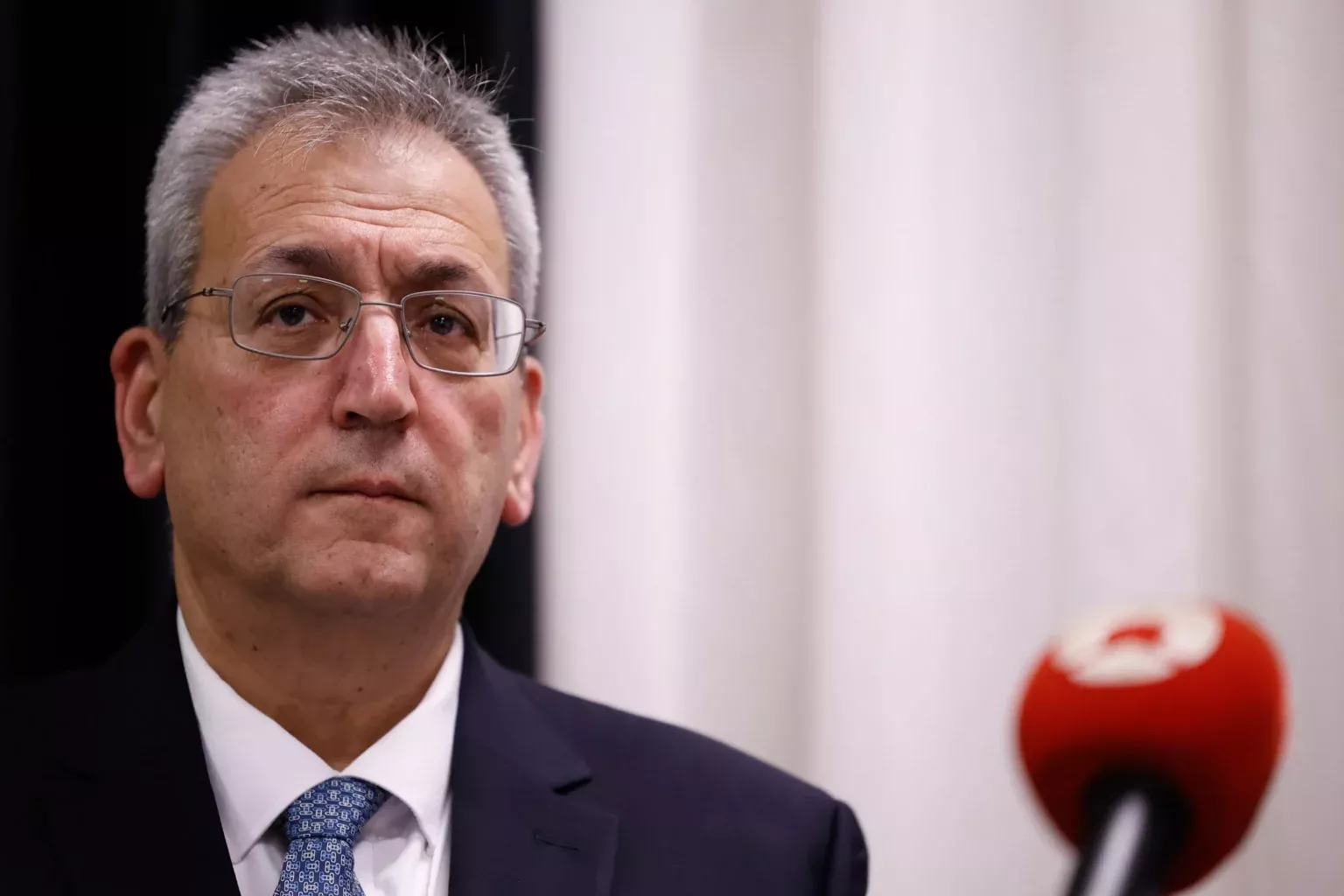
Labour Minister Marinos Mousiouttas will return to parliament on Tuesday with a revised proposal to write off €64.3 million in late-payment penalties imposed on employers and self-employed workers over undeclared work.
The minister will make a final attempt to persuade MPs to accept the government’s counterproposal after a majority of political parties blocked a key provision of the original bill.
The legislation, submitted last summer, proposed capping the total amount payable for overdue undeclared work fines at twice the original penalty.
It also included a provision for retroactive application from 2 June 2017, which would have resulted in the cancellation of €64.3 million in accumulated late-payment penalties.
Under the existing system, outstanding fines increase by €50 for every day they remain unpaid. As a result, fines and additional penalties accumulated since 2017 now exceed €73 million, owed by 706 employers and self-employed workers.
At its previous meeting, the parliamentary Labour Committee decided to remove the controversial retroactivity provision, meaning the cap would apply only from the date the new legislation comes into force.
What Mousiouttas will propose
The Labour Ministry’s counterproposal, aimed at securing parliamentary approval for the bill, includes the following measures:
- Debtors who pay an amount not exceeding twice their original administrative fine within six months will have their remaining late-payment penalties cancelled. The ministry will also accept repayment in instalments.
- The legislation will explicitly stipulate that the total amount payable cannot exceed twice the original financial penalty.
One employer, for example, was fined €500 in 2017. With additional charges of €50 a day, the outstanding debt has since risen to €147,500.
Under the ministry’s revised proposal, the employer would be required to pay €1,000, after which the debt would be considered fully settled.
Mousiouttas also has an alternative plan should parliament reject the revised proposal.
Under this option, the accumulation of additional penalties would stop. From the date the new legislation is passed, the daily €50 charge for non-payment of the original fines would no longer apply.
Government seeks to protect businesses and jobs
The Labour Ministry believes the alternative proposal would protect businesses from being forced to close, preventing potential job losses while allowing the state to recover part of the outstanding debts.
The government also believes the revised proposal would help avoid moral hazard and discourage a culture of non-compliance with financial obligations.
A government source considers full repayment of the outstanding fines and accumulated penalties impossible and expressed dissatisfaction that debts amounting to millions of euros had been allowed to accumulate.
Political parties remain divided
Mousiouttas will again make the case for the revised proposal before the parliamentary Labour Committee, although a majority of political parties appear unconvinced.
MPs from DISY, AKEL, ELAM and Direct Democracy oppose the retroactive provision that would allow penalties accumulated since 2017 to be cancelled.
They insist that any cap on financial penalties should apply only after the legislation is approved.
DIKO and ALMA, meanwhile, have changed their positions. Although both initially opposed the bill, they now support the Labour Ministry’s alternative proposal.
List of debtors could be classified as confidential
A majority of political parties are also demanding a list identifying the debtors.
According to information obtained by Phileleftheros, following objections raised at the Labour Committee’s previous meeting, the ministry is considering providing parliament with the names of employers and self-employed workers who owe money to the state and would benefit from the write-off.
The list would be classified as confidential, with parliament following the required procedures, as public disclosure of the names would violate personal data protection legislation.
Several weeks ago, following a request from the Labour Ministry, the Commissioner for Personal Data Protection informed the ministry that it could submit the list to parliament provided that individuals could not be identified directly or indirectly.
What information MPs already have
The list previously submitted to parliament did not include the names of businesses or individuals.
Instead, it provided information on the businesses’ sectors of economic activity, the date and original amount of each administrative fine, outstanding debts as of 17 September 2026 and the number of employees working for businesses that had committed undeclared work offences and failed to pay their fines.
The list contains information on outstanding debts owed by 111 self-employed workers and 595 employers and businesses.
The table covering debts owed by legal entities includes 658 cases in which administrative fines were imposed but debtors have not paid anything, as well as 136 cases in which only the original fine was paid while additional penalties continue to accumulate.
An analysis of the list shows that businesses with outstanding debts employ around 12,000 people, prompting government concerns about the potential consequences for these companies.
According to the anonymised list provided to MPs, businesses with outstanding debts operate in the following sectors:
- Construction: 231 businesses.
- Food and catering services: 141.
- Wholesale and retail trade and repairs: 78.
- Transport and storage: 23.
- Service activities: 21.
- Administrative and support services: 20.
- Manufacturing: 18.
- Arts and entertainment: 11.
- Agriculture: 10.

