


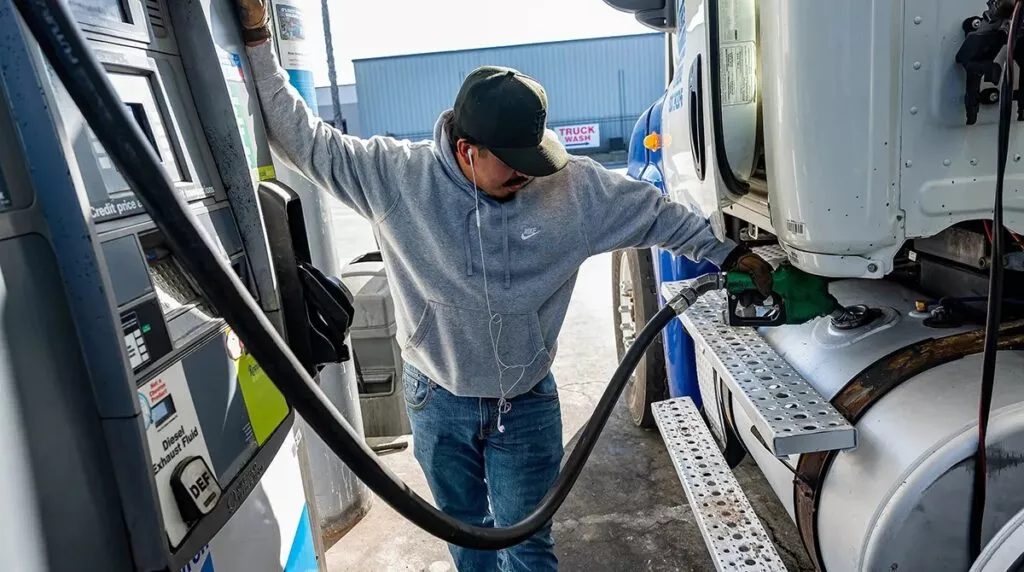
Consumers are watching fuel prices climb with growing concern as their purchasing power shrinks and household budgets come under increasing pressure. The outlook for the coming weeks offers little cause for optimism, with experts warning that the current pressures could persist until mid-2027.
Authorities are also on alert as Cyprus and other EU economies face the risk of stagflation, alongside concerns about possible fuel supply problems after moves in the United States to restrict exports.
Diesel reaches record high
The average price of diesel in Cyprus climbed to a record €1.997 per litre on Friday, with more than 100 petrol stations already charging above €2.
According to the Consumer Protection Service’s Fuel Price Observatory, diesel is selling for between €1.879 and €2.098 per litre.
The average has surpassed the previous record of €1.989, recorded on 12 July 2022, Cyprus Consumers Association president Marios Drousiotis told the Cyprus News Agency.
Drousiotis estimated that the average diesel price could rise above €2 per litre by Saturday as increases continue to feed through to petrol stations. He explained that fuel companies do not announce price increases simultaneously across all stations, and stations generally pass them on gradually over two or three days.
Petrol Station Owners Association president Savvas Procopiou said stations that had not yet adjusted their prices could do so on Monday rather than over the weekend.
Heating oil has also been trading above its previous record level in recent weeks.
Its average price stands at €1.608 per litre, compared with €1.515 in July 2022, with individual stations charging between €1.489 and €1.735.
Unleaded 95 petrol costs an average of €1.718 per litre, ranging from €1.613 to €1.798. It therefore remains below its July 2022 record of €1.828.
Calls for government support
Both the Cyprus Consumers Association and the Petrol Station Owners Association are calling for VAT on fuel to be reduced and for the additional tax revenue generated by higher prices to be returned to consumers.
Drousiotis said the price increases mean the government is collecting an additional 7.5 cents in VAT per litre of petrol, 11 cents per litre of diesel and 12.34 cents per litre of heating oil.
“The additional state revenue resulting from the increases should be returned to consumers,” he said.
The Consumers Association president proposed reducing VAT from 19% to 5%, as has been done for electricity, arguing that such a move could be made without European Commission approval.
Drousiotis also described an expected heating-oil subsidy as a “one-way street”, pointing out that its price has risen by 65 cents per litre since March. He stressed, however, that safeguards would be needed to ensure the subsidy benefited consumers rather than being absorbed by petrol stations.
Procopiou said that because rising fuel prices had become a Europe-wide problem, an EU-wide reduction in VAT on fuel should be considered, with Cyprus potentially taking the initiative.
If a VAT reduction were not possible, he said, governments should consider returning the additional revenue to consumers.
He also pointed to the lack of realistic transport alternatives in Cyprus, saying fuel consumption does not decline in line with rising prices to the same extent as in other countries.
“We could ask for an exemption as a country,” he said, arguing that public transport in some other EU member states can serve 90% of the population.
Consumer Protection Service director Constantinos Karagiorgis said in comments several days ago that “we cannot predict what will happen in the future” when asked about the prices of fuel shipments expected in the coming period.
However, referring to current conditions and continuing increases in refinery prices, he added that “we cannot say the situation is very optimistic”.
Ellinas warns pressure could last into 2027
The outlook could become more difficult still.
Diesel prices in Cyprus could exceed €2.10-€2.20 per litre within the next one to two months, according to energy expert Charalambos Ellinas.
In recent comments to the Cyprus News Agency, Ellinas warned that high prices for petroleum products, particularly diesel and aviation fuel, could persist until mid-2027.
He attributed the pressure to damage sustained by Russian refineries in Ukrainian drone attacks and a fall of more than 50% in diesel and petroleum-product exports from the Gulf because of the war.
“We should expect problems and be prepared to deal with them for quite some time,” he said, adding that the reduction in excise duty should continue into 2027.
Stagflation fears grow
Concerns over stagflation are growing across Europe as persistently high oil and natural gas prices point to renewed inflationary pressure.
The European Central Bank has raised eurozone interest rates twice, taking its deposit rate from 2% to 2.5%, as it seeks to bring inflation back towards its 2% target. The ECB raised its three key rates by another 25 basis points in September and said Middle East tensions continued to generate inflationary pressure.
The ECB has stressed that its future decisions will remain data-dependent and taken meeting by meeting rather than committing to a predetermined interest-rate path. Its September projections put eurozone inflation at an average of 3% in 2026, 2.5% in 2027 and 2.1% in 2028.
High inflation combined with elevated borrowing costs risks weighing on economic growth and squeezing household incomes across EU member states.
If the Gulf crisis continues into early 2027, concerns will remain over the extent to which European growth could weaken in the coming quarters.
US export restrictions raise supply concerns
Only 15 days ago, the European Commission had sought to reassure Europeans that the EU was not facing a diesel supply problem, with demand being covered by increased European production and alternative imports.
The picture has since become more uncertain as the United States considers measures to keep more diesel at home amid soaring domestic prices.
US Energy Secretary Chris Wright initially argued that an export ban could create a temporary domestic diesel surplus and reduce prices at the pump, but could also prompt American refineries to cut production, eventually reducing fuel supplies and pushing prices back up.
Pressure for restrictions has also grown among Republican politicians ahead of the 3 November midterm elections, with high diesel prices becoming an increasingly prominent economic issue.
European economies are meanwhile confronting the broader impact of expensive imported energy, which is feeding inflationary pressures and eroding households’ real incomes.
EU countries have increasingly begun introducing measures to support consumers and their economies.
Germany is cutting the energy tax on petrol and diesel by 14 cents per litre until the end of 2026. Once the associated VAT reduction is included, the relief amounts to about 17 cents per litre and is due to take effect from 1 October.
In Cyprus, the 8.3-cent reduction in excise duty has been extended until the end of November.

