


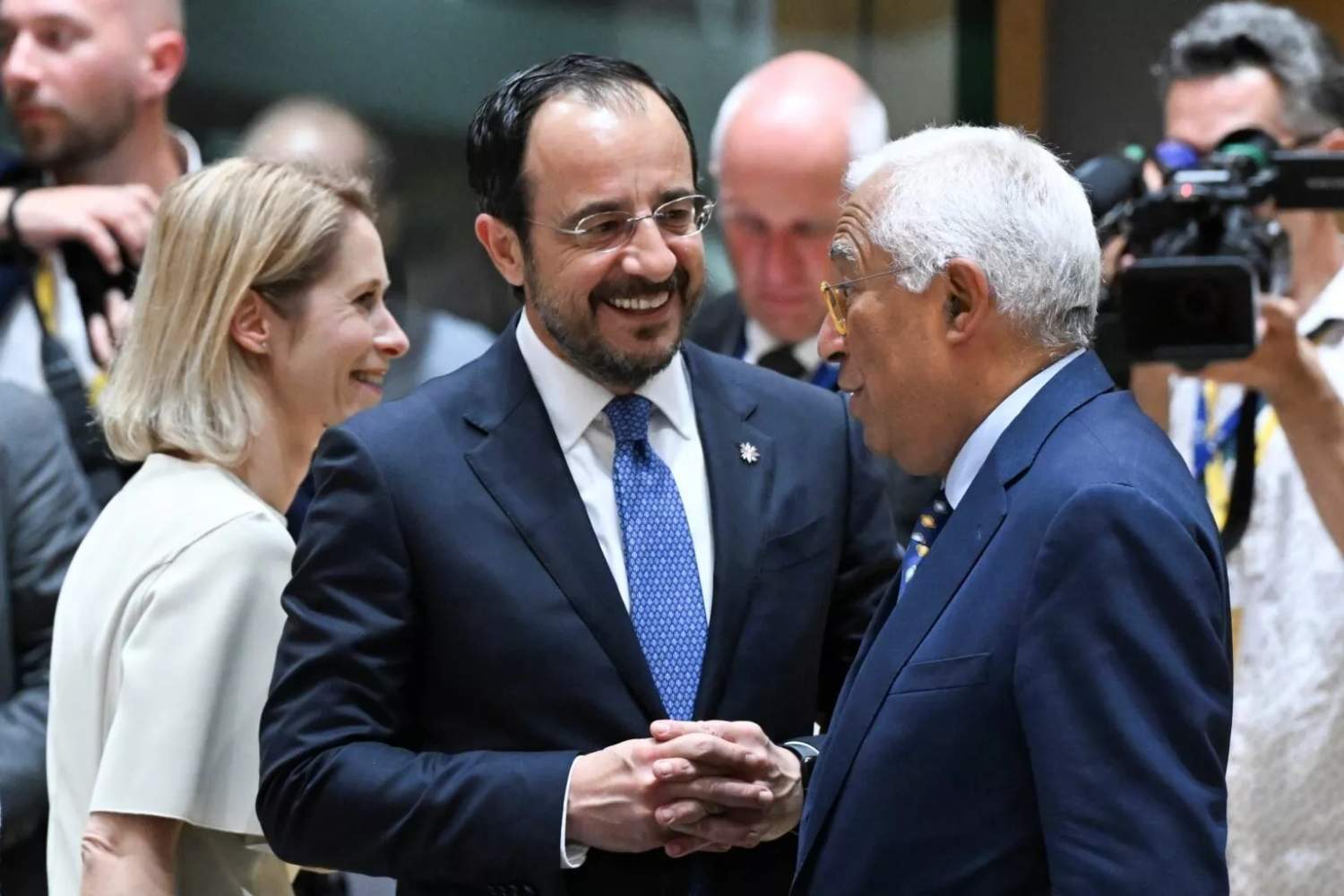
President Nikos Christodoulides called on Thursday for the EU to shorten the seven-year period its long-term budget covers, and said he was optimistic that leaders could reach a political agreement on the next one by the end of December.
Speaking as he arrived at an extraordinary European Council, he also rejected German Chancellor Friedrich Merz’s proposal to link Ukraine funding to the budget, known as the Multiannual Financial Framework (MFF). He said he would raise Turkey’s breaches of Russian sanctions with fellow leaders.
Christodoulides said it was not right to discuss the EU’s budget for the next seven years when nobody knew what conditions would be like over that period. He said he understood the need for stability and planning, but believed seven years was too long, and he called for a political debate on shortening it. He said he believed the EU treaties made some provision for five years.
He said he hoped the summit would send the message that a political agreement was possible by the end of December. Failing to reach one would send a very negative message to member states, to citizens and to the rest of the world, he said.
Ukraine and Turkey
The leaders’ discussion would end with Ukraine’s funding, which Cyprus would support, Christodoulides said. He described Cyprus as a member state that understands better than any other what the illegal Russian invasion means.
However, he said he did not agree with linking that support to the MFF, as Merz has proposed. He said he fully understood the German Chancellor’s approach, given that it came from countries that want the EU budget cut further. But the more issues were linked, the harder it would be to reach a political agreement, he said.
It was put to him that Merz’s letter had been sent in the knowledge that the link would complicate the negotiations, and that Germany and the Netherlands were aligned on the issue. Christodoulides replied that he believed most member states shared his view.
On sanctions, he cited a recent report on their implementation by David O’Sullivan, the European Commission’s special representative. “Turkey is the champion when it comes to breaching Russian sanctions,” he said. The EU should not simply note this but should take the next step, he added, and he intended to raise the issue with the other leaders.
Cohesion and cuts
Christodoulides said the President of the European Council had decided to group the budget discussions. In the first, Cyprus would mainly be on the side of the countries that back cohesion policy. He said Cyprus supported continuing these policies, which he said showed citizens the EU’s added value.
The EU should keep investing in cohesion while also strengthening policies that lead to strategic autonomy, he said. By this he meant not only defence and security, but also competitiveness, entrepreneurship and cutting red tape.
The cohesion countries were due to meet just before the summit to coordinate, and they made up the majority of member states, he said. That, he argued, gave them room for manoeuvre in the negotiations.
He repeated his expectation that the final cut would be a double-digit figure, but one very close to single digits. He said the current figure of 10 per cent was satisfactory. He also described as excellent the proposal made under Cyprus’s EU Council presidency, which had included a reduction.
Asked whether Cyprus had red lines on how much it contributes to financing the budget, he said it did. However, he said the most important thing was working with other countries to build alliances. He also said every leader needed to understand that the outcome would be a compromise, and that nobody would get everything they wanted.
Christodoulides said he remained optimistic about a deal by the end of December. Despite difficult negotiations, he said, the EU had shown time and again, especially in recent years, that it understands the cost of failing to agree.
On the EU’s own resources and a digital tax, he said Cyprus had seen the proposals and noted Ireland’s strong and clear opposition. Cyprus had asked for more information so it could assess them, he said.
Economy
Christodoulides welcomed the European Commission’s autumn forecasts, which he said showed Cyprus was one of only four EU member states with growth above 3 per cent. This allowed the government to return the benefits of growth to society, he said, pointing to the measures it announced on Wednesday to support families, including students, low-income pensioners and the middle class.
He said the agenda also included a Euro Summit, the last to be attended by Christine Lagarde. He praised her work and said he hoped her successor would continue in the same direction.

